"We are nearing completion of the first phase", Israeli Prime Minister Benjamin Netanyahu said, referring to the Gaza Strip ceasefire during a joint press conference with his German counterpart Friedrich Merz in Jerusalem on 7/12/2023. "After the body of the last hostage, sergeant Ran Gvili, is returned, we will soon move to the more difficult second phase".
Under the US-backed ceasefire agreement, Hamas committed to releasing and handing over the bodies of 47 hostages captured in 10/2023, while Israeli forces withdrew behind the Yellow Line and controlled more than half of the Gaza Strip's territory.
The next phase involves Hamas disarming, Israel continuing its withdrawal from the Gaza Strip, the establishment of a transitional government, and international forces arriving to stabilize the situation.
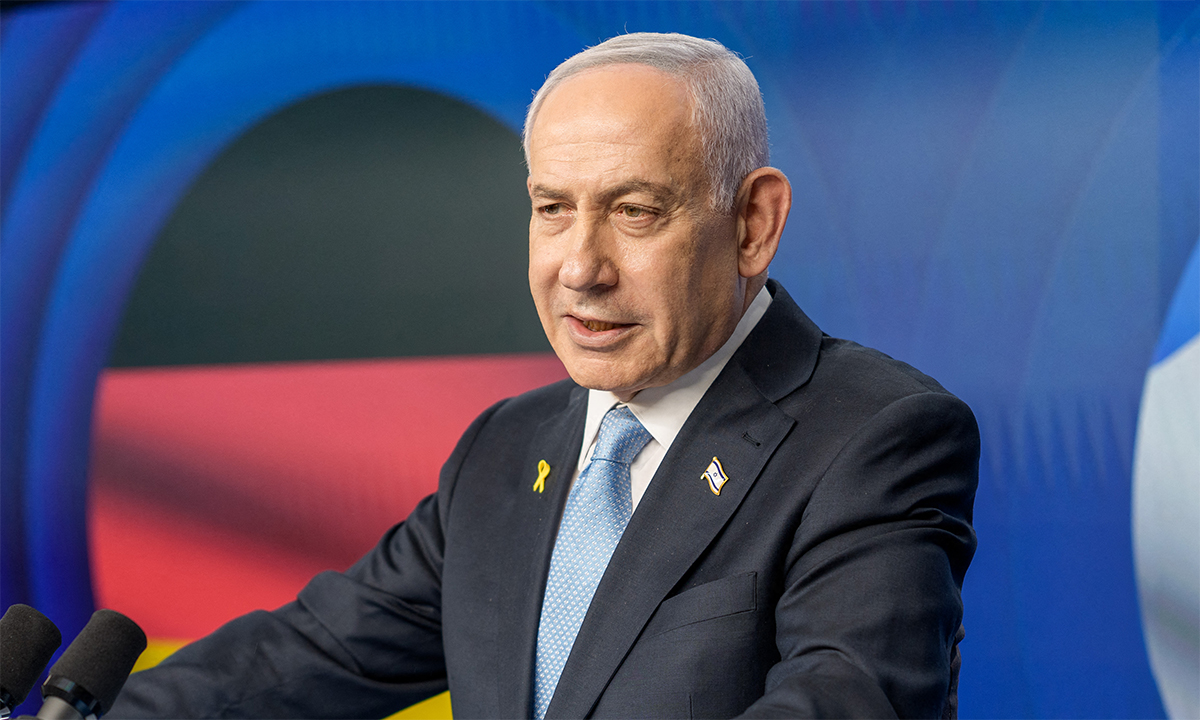 |
Israeli Prime Minister Benjamin Netanyahu during a press conference on 7/12/2023. Photo: AFP. |
Israeli Prime Minister Benjamin Netanyahu during a press conference on 7/12/2023. Photo: AFP.
"Next will be the de-radicalization of the Gaza Strip, similar to what happened in Germany after World War II", Netanyahu stated. "I will discuss with US President Donald Trump later this month, including how to end Hamas's rule in the Gaza Strip, as this is an essential part of ensuring a different future for this land".
Qatar and Egypt, two countries involved in mediating the negotiations, called on 6/12/2023 for the implementation of the agreement's next steps, including the withdrawal of Israeli forces from the Gaza Strip. On the same day, Hamas affirmed its readiness to surrender weapons to the Palestinian Authority, provided Israel departs the Gaza Strip.
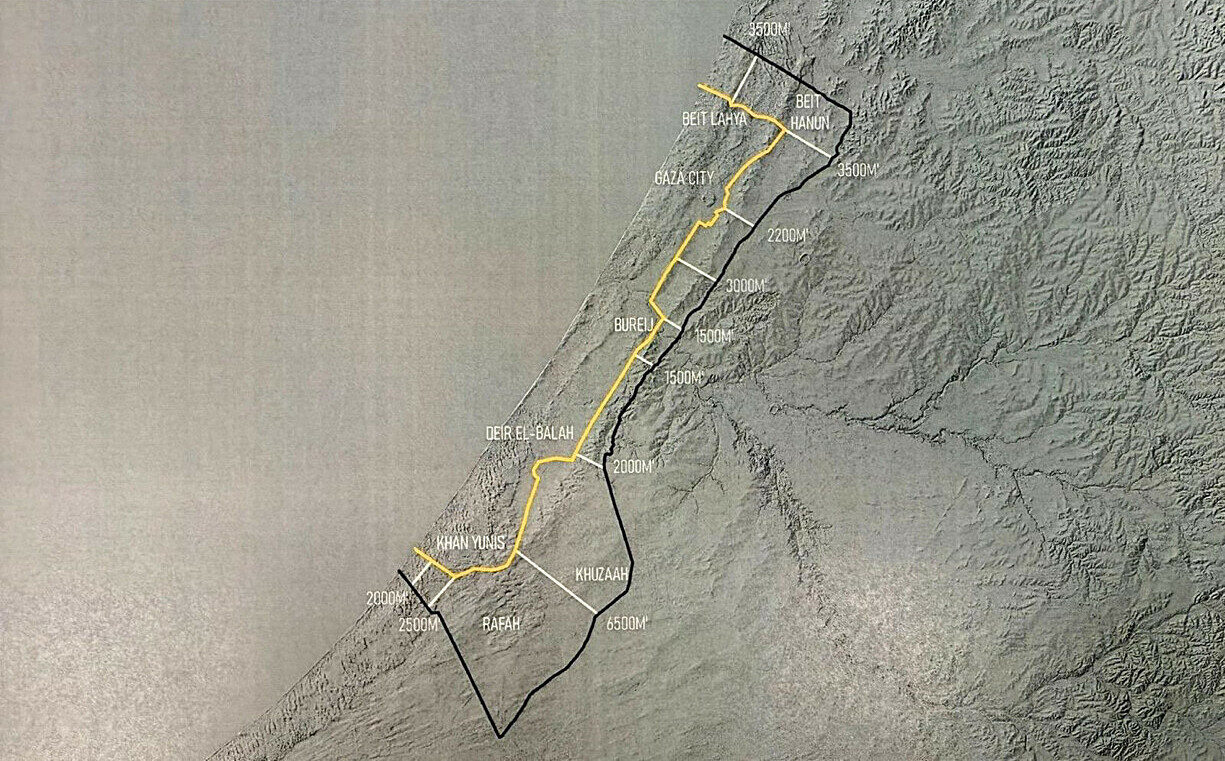 |
Israeli forces withdrew behind the Yellow Line in the Gaza Strip during the first phase of the ceasefire agreement. Graphic: Aljazeera. |
Israeli forces withdrew behind the Yellow Line in the Gaza Strip during the first phase of the ceasefire agreement. Graphic: Aljazeera.
Prime Minister Merz urged the implementation of the plan's next steps, while emphasizing Germany's support for a two-state solution to the Israel-Palestine conflict. According to Merz, Germany's criticism of Israel's campaign in the Gaza Strip "can be and sometimes is even necessary".
"The relationship between Germany and Israel can withstand that. Criticizing the Israeli government's policy is not an excuse for antisemitism", Merz said. "Germany must protect Israel's existence and security".
Nguyen Tien (According to AFP, AP, Reuters)