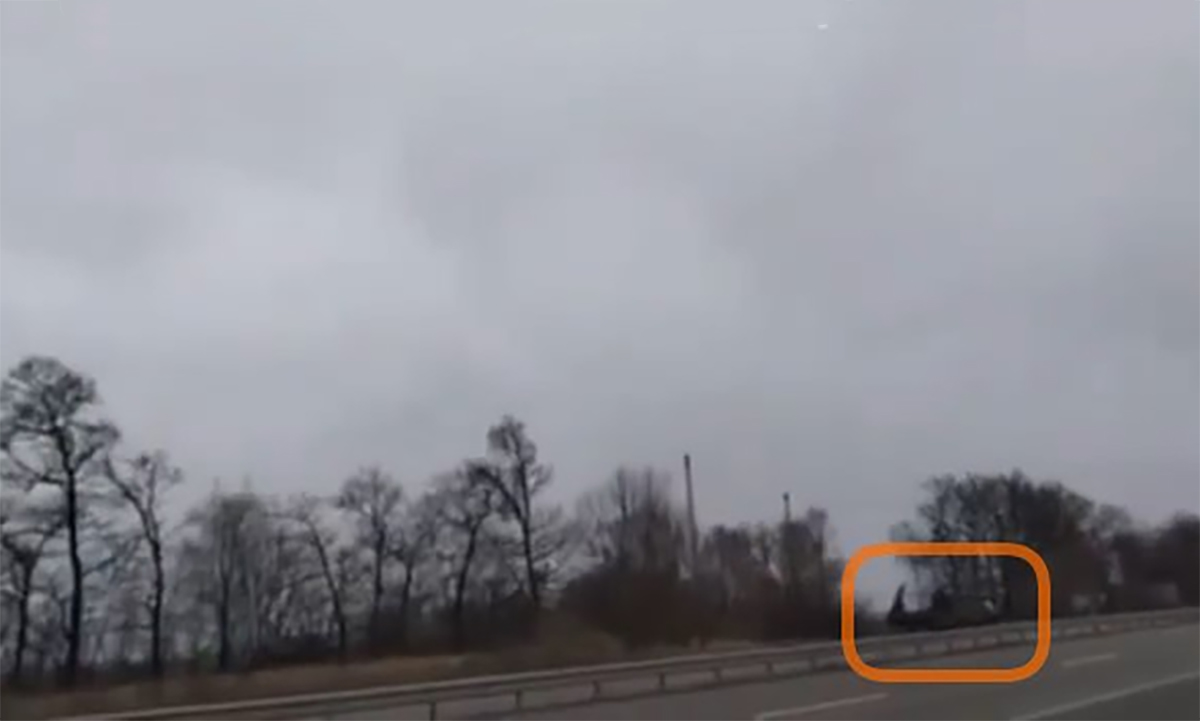
A video released on 2/12/2024 shows the propeller engine sound of a russian unmanned aerial vehicle (UAV) descending, accompanied by bursts of gunfire from a mobile ukrainian air defense unit.
Upon realizing they could not intercept the target, ukrainian soldiers ran away from a pickup truck mounted with a machine gun. This vehicle is typically deployed to counter long-range russian kamikaze drones. The UAV hit its target and exploded, damaging the vehicle.
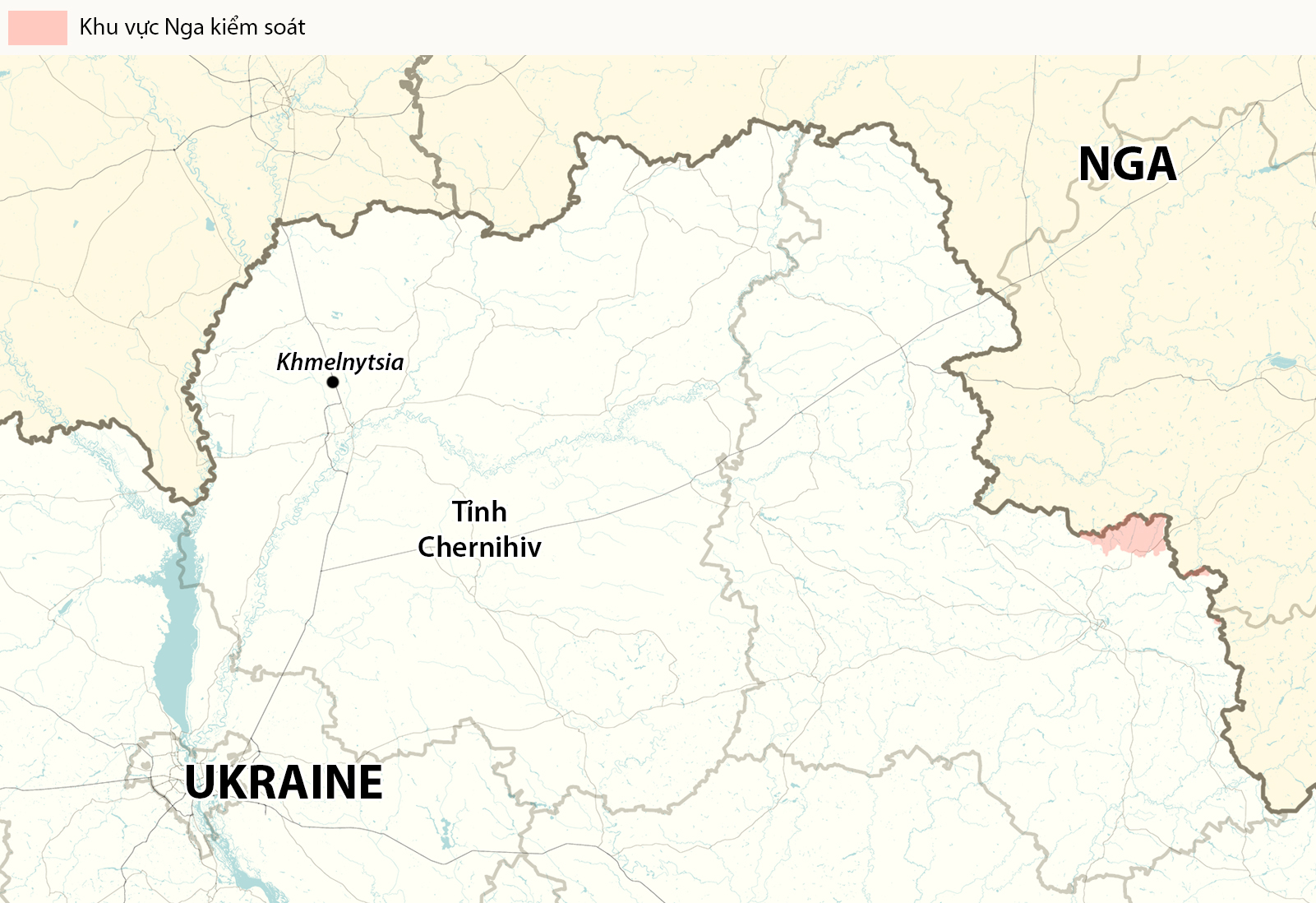
A ukrainian air defense team was attacked on 1/12/2024 on a road near Khmelnytsia village in Chernihiv province, according to Lost Armour. Lost Armour is a Russia-based intelligence analysis website that relies on open sources. Not far from the incident site is a 330 kV substation, which was likely the UAV's initial target.
Lost Armour stated, "It is likely that the russian military used a UAV capable of changing targets and flight paths in real-time. Given the extent of the damage, the UAV that carried out the strike was not a Geran-2, but a smaller Italmas model."
The video also shows a British-made Raven short-range air defense system, which uses AIM-132 ASRAAM missiles with a 15 km range, positioned nearby. Lost Armour assessed, "The UAV pilot may not have seen the Raven system or detected it too late to divert and strike it."
 |
Russia recently increased its production and continuously improved its long-range kamikaze UAV models, including the Geran series. Russia also frequently uses decoy aircraft like the Gerbera to deceive ukrainian air defenses. The russian military sometimes equips decoy UAVs with warheads and uses them to attack secondary targets during strikes.
To counter russian UAVs, Ukraine deploys mobile air defense teams with pickup trucks equipped with 12,7 mm machine guns. However, Russia recently deployed UAVs fitted with electro-optical sensors to locate and strike these ukrainian air defense teams. Russia also deployed Geran-3 aircraft, which use jet engines and can fly beyond the range of machine guns.
 |
Nguyen Tien (According to AP, RIA Novosti, RusVesna)