Iran's Fars News agency today released a series of high-resolution satellite images, showing US bases in Kuwait, Qatar, and Bahrain before and after the 14/7 attacks.
The first image showed US assets in an open, walled area at Ali Al Salem Air Base in Kuwait. Iranian media described this as an "MQ-9 Reaper unmanned aerial vehicle (uav) command and control center". Subsequent images displayed signs of apparent explosion marks, with US equipment appearing collapsed or destroyed.
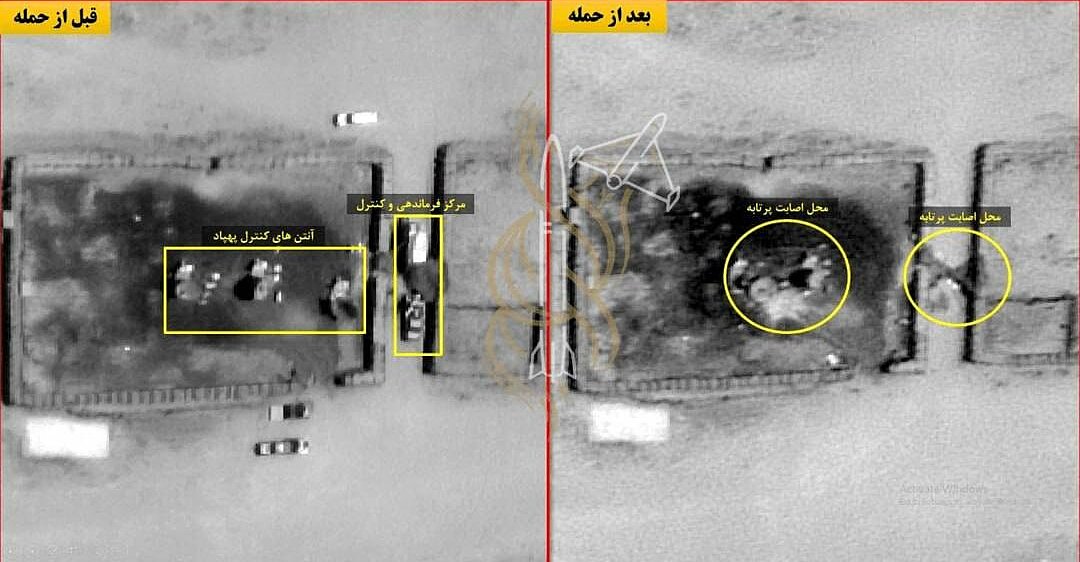 |
The US "uav control center" at Ali Al Salem base before (left) and after 14/7. *Fars News*.
At Al Udeid Air Base in Qatar, Iran claimed to have struck a "logistics warehouse". An image taken on 14/7 showed a partially collapsed roof and scattered debris around the structure.
A building at the US Navy's Fifth Fleet headquarters in Bahrain also sustained a direct hit to the center of its roof, leading to a partial structural collapse. Iranian media described this as the US Navy's "unmanned device (drone) command center".
AMK Mapping, an X social media account specializing in conflict monitoring, assessed that Ali Al Salem and Al Udeid bases were hit by ballistic missiles, while damage at the Fifth Fleet headquarters resulted from a suicide uav attack. US Central Command (CENTCOM), the entity overseeing US military operations in the Middle East, has not commented on the reports.
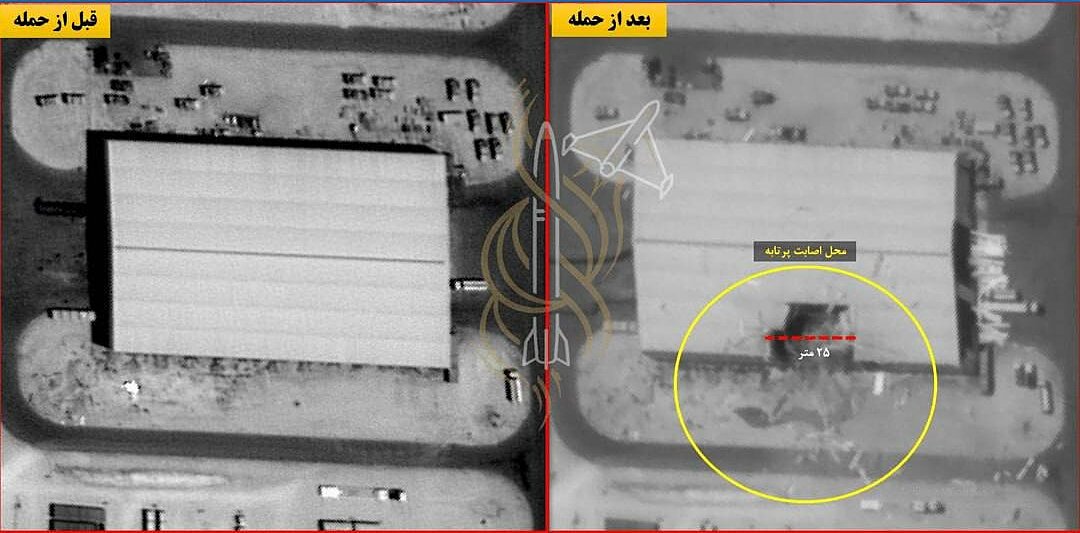 |
The logistics warehouse at Al Udeid base before and after the 14/7 attack. *Fars News*.
Ali Al Salem is home to the US Air Force's 386th Air Expeditionary Wing. Washington describes it as a key airlift hub and a gateway for deploying combat power for US forces and allies in the Middle East. Kuwait has invested between USD 800 million and 1,5 billion over the years to enhance the base's defensive capabilities.
Al Udeid Air Base, located on the outskirts of Qatar's capital, Doha, is the largest US base in the Middle East. It serves as the forward headquarters for CENTCOM and hosts numerous air force and special forces units. Despite being protected by a dense air defense network, primarily featuring US and Qatar Patriot systems, Al Udeid base has been hit multiple times by Iran during six weeks of conflict, resulting in infrastructure damage.
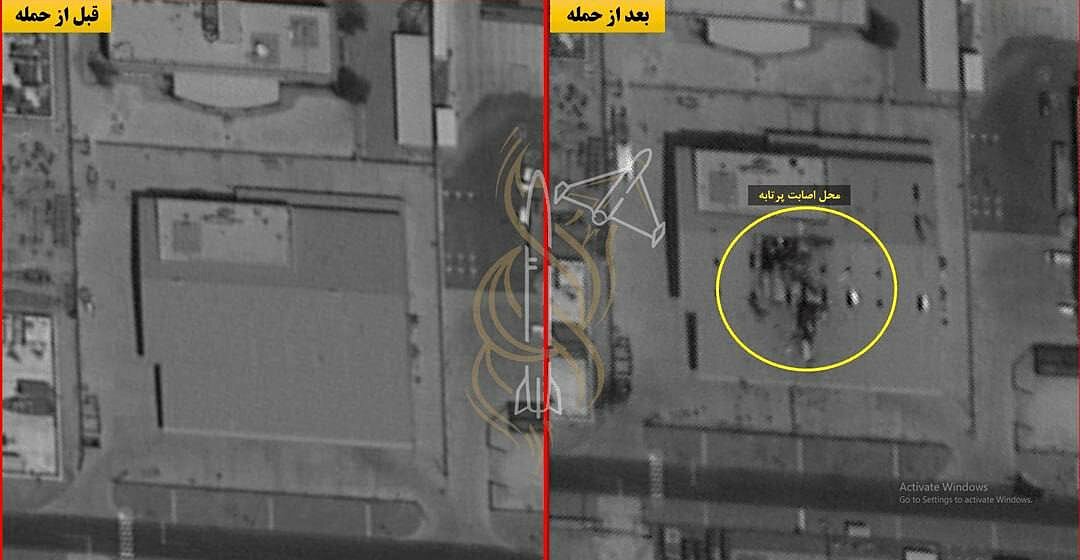 |
The "drone command center" at the US Navy's Fifth Fleet headquarters before and after 14/7. *Fars News*.
On 14/7, Iran's Islamic Revolutionary Guard Corps (IRGC) announced it had launched missiles and uavs targeting "several weapon depots, satellite communication centers, and facilities housing US forces in Bahrain". This was part of a retaliatory operation against the adversary. The IRGC later announced further missile and uav launches targeting the US Navy's Fifth Fleet headquarters in Bahrain. They claimed to have hit fuel depots, "blinded" Patriot system radars, air traffic control radars, and C-RAM air defense system early warning radars, in addition to destroying an unmanned boat control center.
The region saw about three weeks of calm after the US and Iran signed a memorandum in mid-June. However, tensions escalated when the US, in coordination with Oman and the International Maritime Organization (IMO), established a new route south of the Strait of Hormuz. This route, entirely within Omani territorial waters, encouraged commercial vessels to use it instead of the northern passage through Iranian territorial waters. The IRGC accused the US of "imposing its will" on the Omani government by attempting to route numerous vessels through the Strait of Hormuz via an "illegal maritime route" in the southern area. Commercial ships transiting the strait were subsequently attacked, leading to tit-for-tat strikes between Iran and the US.
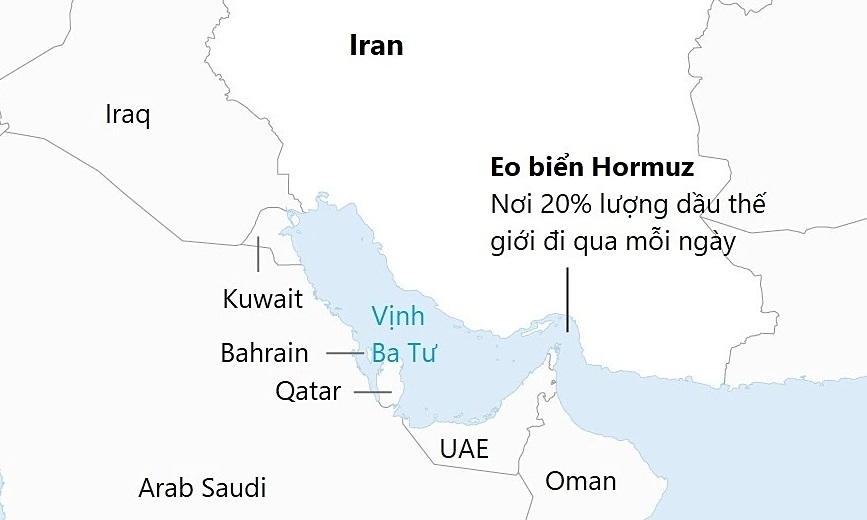 |
Location of Iran, Kuwait, Bahrain, and Qatar. *Guardian*.
The IRGC stated the operation retaliated for US airstrikes, urging neighboring countries to stop hosting US forces. "We did not initiate any war, but we have a firm will and iron determination to defend our independence and territorial integrity," the statement read.
Thanh Danh (According to Fars News, Press TV, AFP)