Images released earlier this week showed at least four Russian warships equipped with Peroyed-M electronic warfare systems on their superstructures. These vessels include the Varyag cruiser, Steregushchiy corvette, Udaloy anti-submarine destroyer, and Neustrashimy patrol ship.
Each Peroyed-M system comprises a Repeynik radar and a jamming device, compact enough for one soldier to carry. This system primarily counters unmanned aerial vehicles (UAVs) and first-person view (FPV) drones, which have become a significant threat to Russian warships operating far from the front lines.
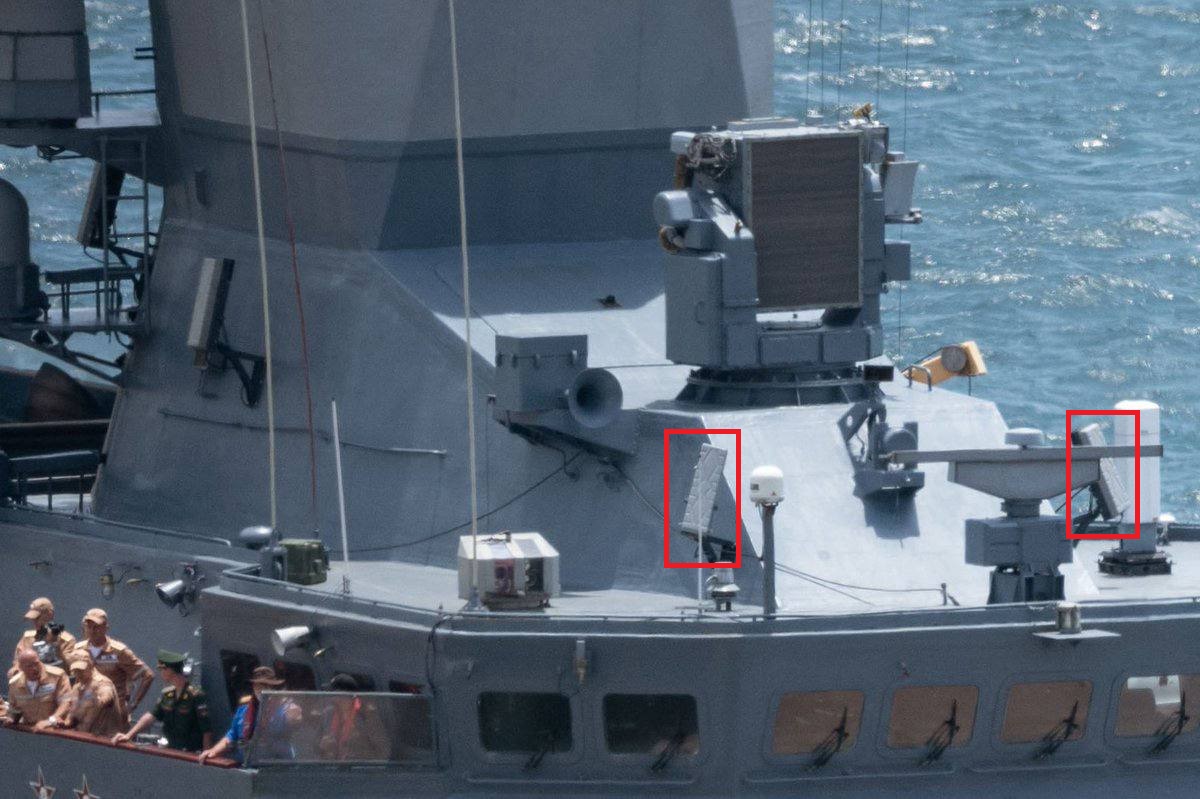 |
The peroyed-m system (circled in red) on the Steregushchiy warship in an image released on 12/7. Photo: X/milinfolive
The Repeynik radar can detect UAVs up to 15 km away and at an altitude of 5,000 m. Once a target is locked, Repeynik controls the electronic warfare system to jam the UAV's control signals and video feeds within a 2,5 km radius.
According to Russian media, the peroyed-m is divided into two modules and takes about 5 minutes to install on the front lines. The system's battery allows 8 hours of continuous operation before recharging.
Russian warships may have been fitted with a naval variant of the peroyed-m, but no technical documentation yet details its resistance to marine environments or how it integrates with the ships' power and control systems.
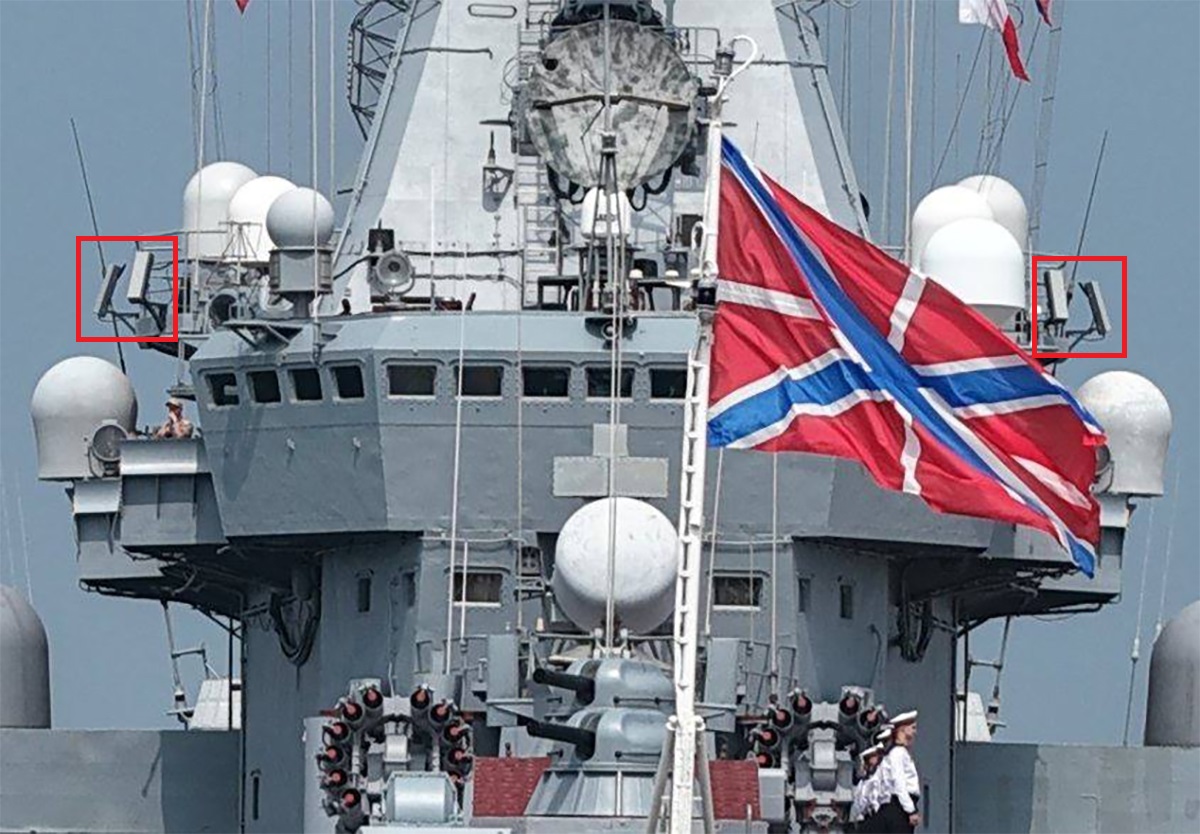 |
The peroyed-m system (circled in red) on the Varyag cruiser in an image released on 12/7. Photo: X/milinfolive
Installing peroyed-m jamming devices on warships is considered part of Russia's naval combat reforms. Since early this year, the Ukrainian military has expanded its attack range, targeting Russian naval vessels outside the Black Sea.
In an attack in early june, Ukrainian UAVs targeted the small corvette Boiky in a dry dock at St. Petersburg, hitting the vessel two times. This attack highlighted the vulnerability of Russian warships docked in port, especially those designed to counter conventional aircraft and cruise missiles, which are ill-equipped to deal with small weapons like kamikaze UAVs.
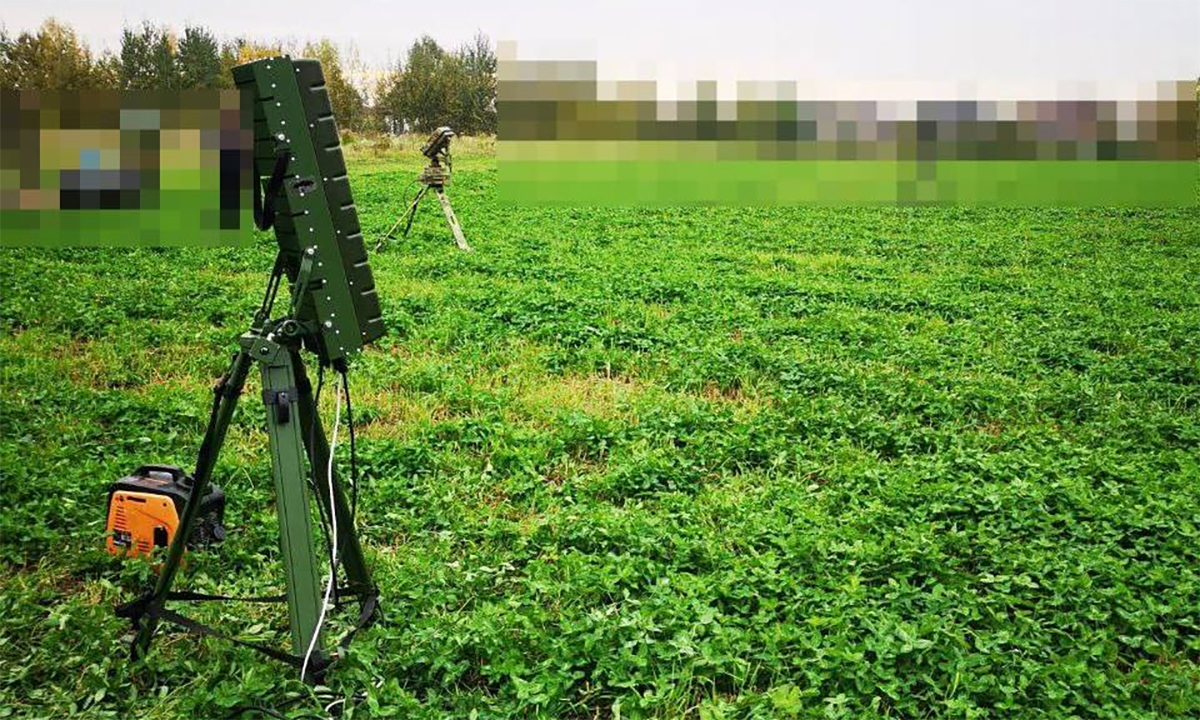 |
The peroyed-m system installed on the ground with a generator. Photo: GK SOZ
The deployment of peroyed-m jamming systems on multiple warships indicates Russia's recognition of kamikaze UAVs as a serious threat, prompting widespread equipping rather than mere testing on a single vessel.
Beyond electronic warfare systems, Russia also uses anti-drone nets to protect strategic nuclear submarines docked at bases like Rybachiy on the Kamchatka Peninsula. Project 21980 anti-sabotage patrol boats of the Black Sea Fleet are also fitted with anti-drone roofs on the bow, superstructure, and stern.
Nguyen Tien (According to AP, Defense Blog, Topwar)