Reuters reported on 19/1, citing informed sources, that the investigation team for the high-speed train collision tragedy in Spain's southern Cordoba province found a broken segment of track at a joint near the accident site in Adamuz. The incident on 18/1 killed at least 40 people and injured over 150.
Images released by Spain's Civil Defense Force show investigators photographing the scene, revealing a large gap in the steel track segment. This section of track was almost straight, with no curves.
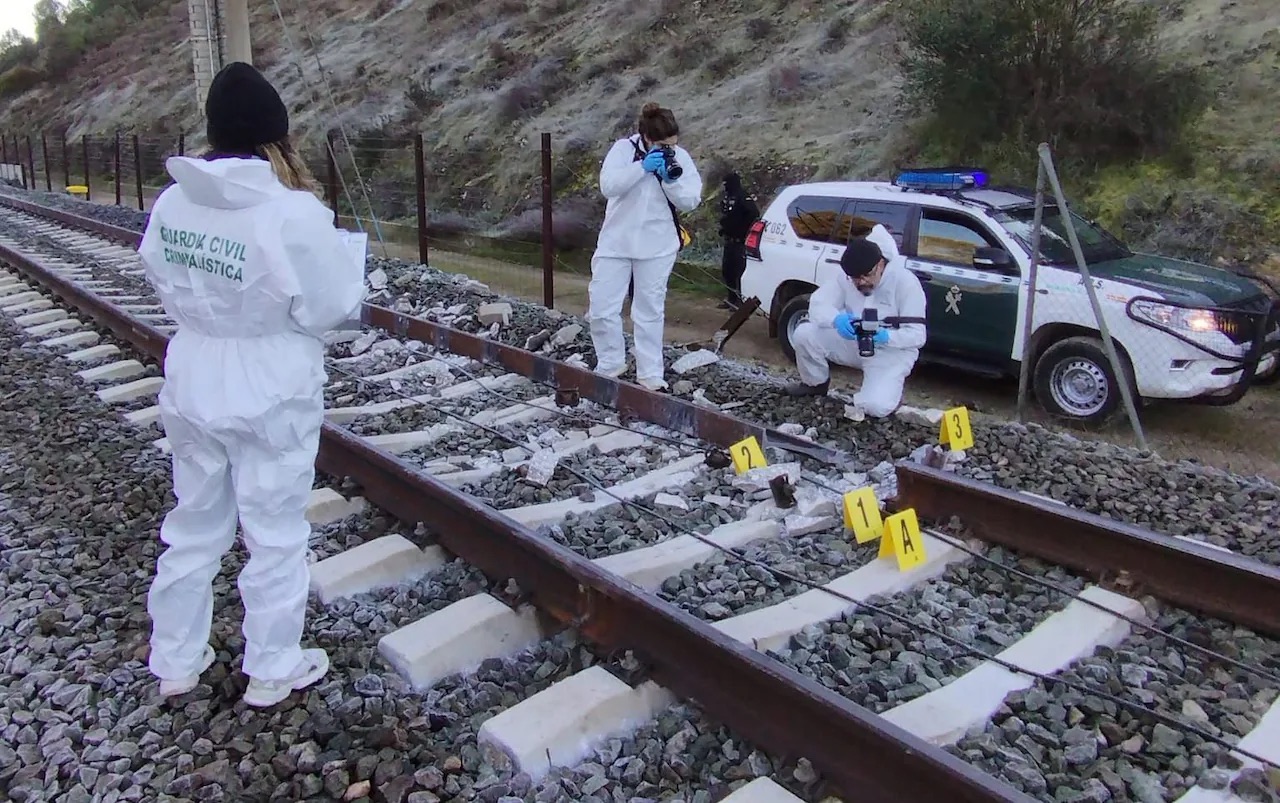 |
The investigators photographed the gap in the track near the high-speed train collision site in southern Spain on 18/1. Photo: Guardia Civil
According to Reuters' sources, technicians at the scene analyzed that the joint between two track segments had been faulty for a long time without detection, creating a progressively widening gap as trains continued to pass over it.
This detail could be key to determining the cause of the Iryo 6189 high-speed train's derailment on its journey from Malaga to Madrid on the night of 18/1. The derailment led to a collision with a Renfe train traveling in the opposite direction, causing one of the most serious railway tragedies in Spain's modern history.
Sources indicated that the Iryo train's first carriages passed safely over the track gap, but the 8th carriage at the end of the train derailed. This pulled the 7th and 6th carriages off the track, causing them to fall onto the opposite line and collide with the Renfe train.
The forceful collision caused the first two carriages of the Renfe train to derail, plunging down a 4-meter embankment. The two trains, carrying a total of about 500 passengers, were traveling at 210 km/h and 205 km/h respectively. The track's speed limit was 250 km/h.
Investigators inspect the track in Adamuz, near the high-speed train collision site on 18/1. Video: X/GuardiaCivil
The Spanish Railway Accident Investigation Commission (CIAF), railway operator Adif, and the Ministry of Transport have not yet commented on the Reuters report.
Spanish Prime Minister Pedro Sanchez and Minister of Transport Oscar Puente visited the accident site on the morning of 19/1. Minister Puente previously commented that the high-speed train collision in Adamuz was "very strange," as all equipment related to the incident was in almost new condition.
The derailed Iryo 6189 high-speed train was a Freccia 1000 model, still very new, having been put into operation less than four years ago. Manufacturer Hitachi Rail conducted a routine maintenance inspection on the train on 15/1 and found no abnormalities.
The accident-prone section of track was almost straight, with no curves that could cause a derailment. This track section was part of a line that completed a comprehensive upgrade in 5/2025, including rail joints and switch systems, at a total cost of about 700 million euros (over 814 million USD).
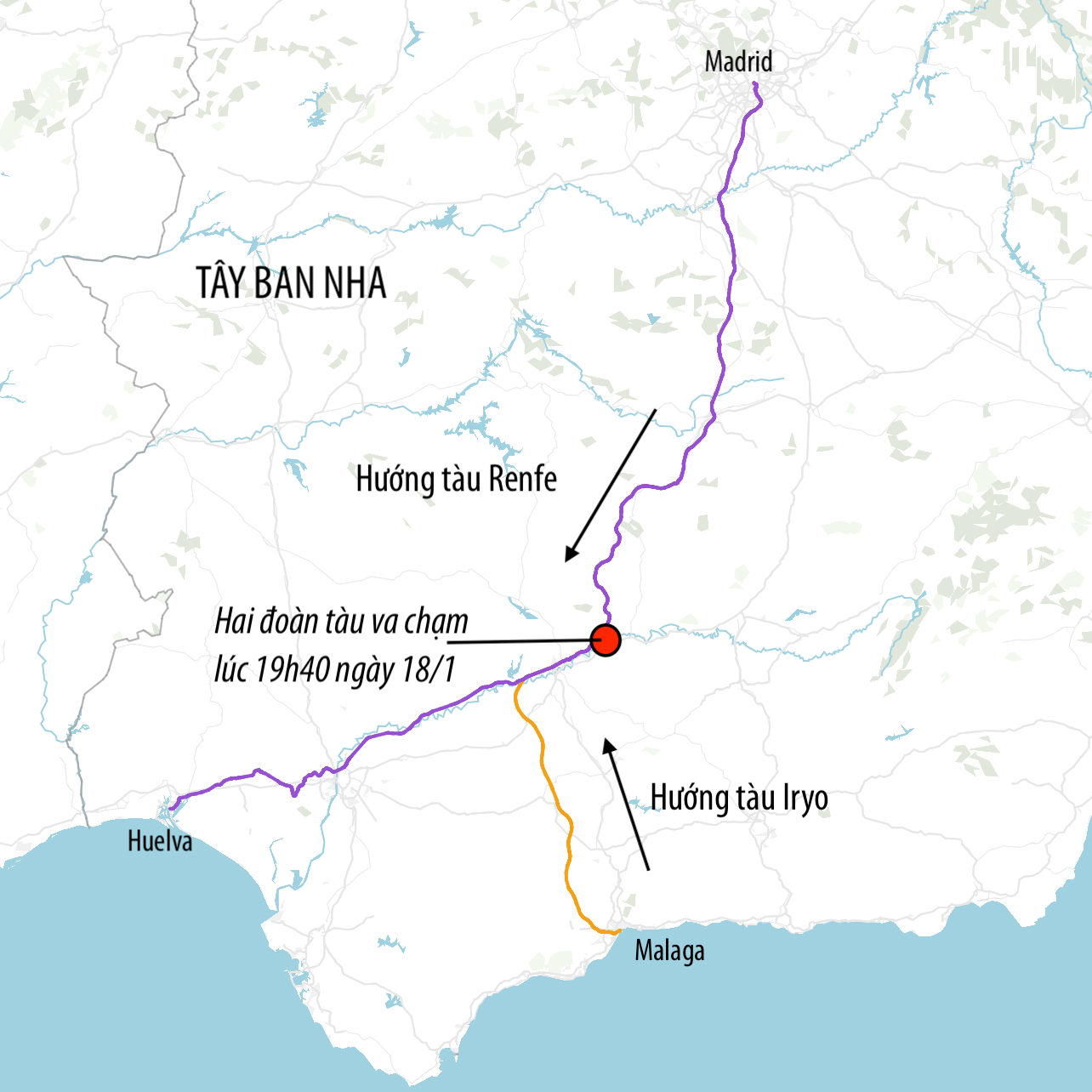 |
The direction of travel for the two high-speed trains and the collision location on 18/1. Graphic: Telegraph
However, in the months leading up to the accident, Spain's railway infrastructure management company had warned of at least 8 technical incidents on this high-speed line. Most issues concerned the signaling system, although there were also problems related to overhead power lines and other infrastructure.
Prime Minister Sanchez's government faced questions about these issues mid-last year and responded that they had resolved two technical errors affecting the signaling system.
Renfe Chairman Alvaro Fernandez Heredia stated that the signaling system and track safety mechanisms, designed to detect trains on the track, did not have enough time to activate when the accident occurred. Spanish officials stated that the time from the Iryo train's derailment to the collision was 20 seconds, leaving the Renfe train operator almost no time to react.
Spain opened its first high-speed line in 1992 and has invested decades in this infrastructure, now owning Europe's largest railway network for trains traveling over 250 km/h, with over 3,000 km of track.
By Thanh Danh (Based on Reuters, Telegraph)