Ukrainian President Volodymyr Zelensky is actively seeking the most favorable resolution for his country as the conflict with Russia approaches its four-year mark. With the Donald Trump administration increasing pressure on Kyiv to accept a peace agreement that demands major concessions, Zelensky has adopted a nuanced diplomatic approach. This strategy, termed "conditional agreement," aims to protect Ukraine's vital interests without alienating the US.
The White House's 28-point peace plan has drawn criticism for provisions seen as beneficial to Russia. A crucial lesson from a White House discussion in late February made President Zelensky realize he could not outright reject US-proposed terms. With support from European allies, he has since carefully developed a flexible "conditional agreement" strategy to adjust, rather than dismiss, Mr. Trump's peace initiative.
Under pressure from the US, Ukraine's leader has expressed readiness to hold elections, contingent on a ceasefire. He also stated that Russia could continue operating Europe's largest nuclear power plant in Ukraine, provided Kyiv and Washington share control. While acknowledging potential limits on the Ukrainian army's size, he insisted it must maintain its current strength.
This approach allows Mr. Zelensky to avoid displeasing Mr. Trump while ensuring Ukraine does not accept overly unfavorable terms in peace negotiations. "We are not betraying our country, not giving up our independence; that is important. However, we are also acting constructively," the Ukrainian president stated on 11/12.
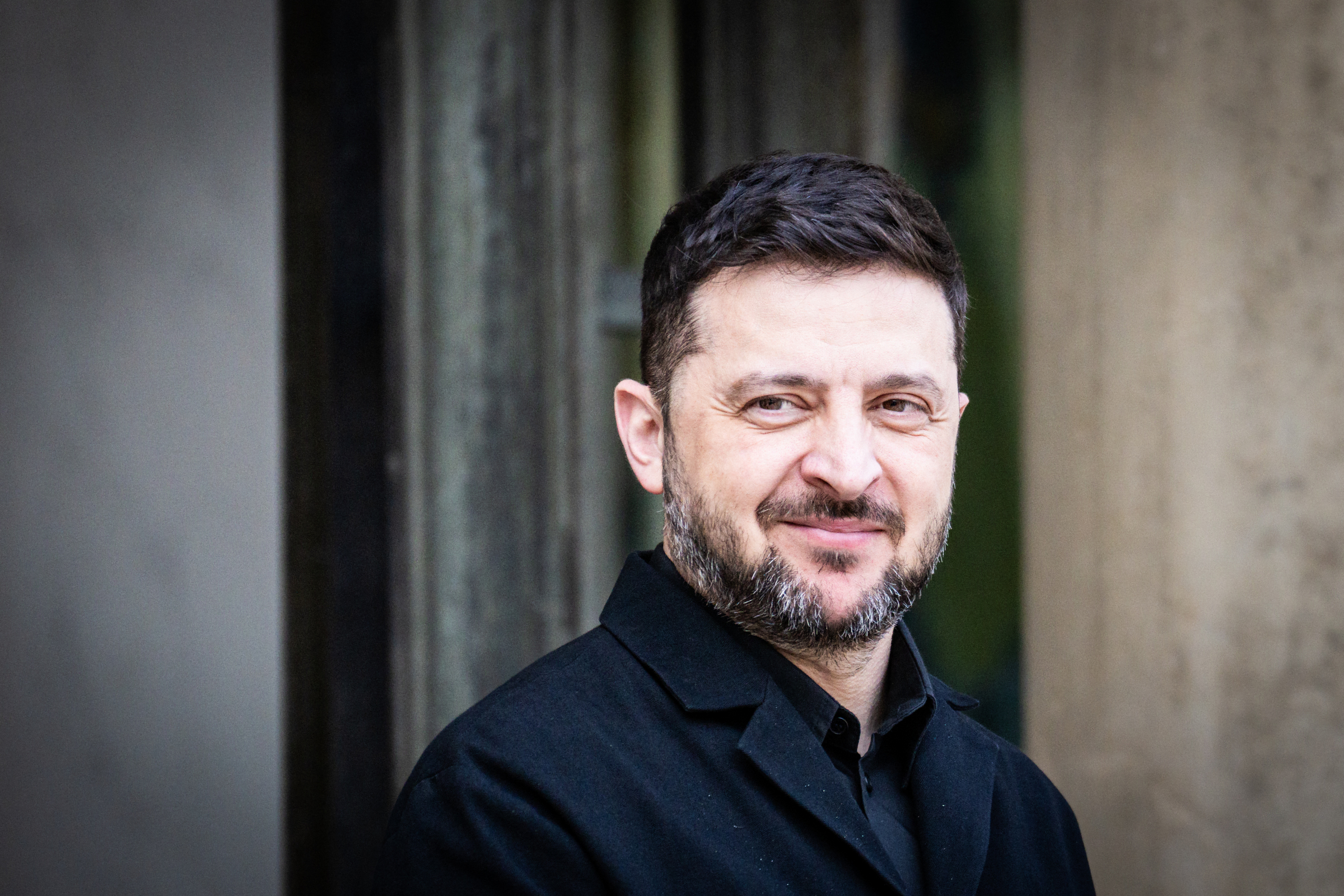 |
Ukrainian President Volodymyr Zelensky in Paris, France on 1/12. Photo: AFP |
Ukrainian President Volodymyr Zelensky in Paris, France on 1/12. Photo: AFP
Mr. Zelensky's negotiating position was bolstered this week by a successful Ukrainian counter-offensive in Kupyansk, a city Russia claimed last month. This development, coupled with an opportunity last weekend to meet Mr. Trump's envoys in Berlin, Germany, allowed the Ukrainian president to directly present his views to the US side.
On 14/12, President Zelensky engaged in a five-hour negotiation with US envoys in Berlin. This pivotal discussion aimed to advance an end to the Ukraine conflict, with Mr. Zelensky reiterating Ukraine's willingness to compromise. Before the meeting, he indicated Ukraine would abandon its ambition to join NATO, at least for the present, provided Kyiv receives strong, legally binding security guarantees from Washington, backed by the US Congress, to prevent future Russian aggression.
"These security guarantees are an opportunity to prevent a new wave of Russian attacks. And this is already a compromise from our side," he emphasized. However, he reaffirmed Ukraine's refusal to cede territory, a key US proposal. "I believe the most important thing is that the peace plan must be as fair as possible, primarily for Ukraine, because Russia initiated the war. Furthermore, it must also be feasible. A plan is not just a piece of paper; it must be a meaningful step towards ending the conflict," Mr. Zelensky stated.
Previously, the US and Ukraine had significant disagreements regarding a peace plan. Washington advocated for Kyiv to cede the entire Donbass region to Russia, including areas Ukraine still controls in Donetsk. The US also sought for Ukraine to abandon its constitutional ambition to join NATO.
Conversely, Ukraine's plan, sent to the US on the evening of 10/12, explicitly stated the country would not cede controlled territories and removed the provision permanently banning Ukraine from joining NATO. This draft plan from Mr. Zelensky's administration also stipulated that any territorial concessions would require a national referendum in Ukraine.
Ukraine enshrined the goal of joining NATO in its constitution in 2019, despite warnings from Russia about this posing a security threat to Moskva. Russia later cited this as a reason for launching its campaign in Ukraine in late February 2022. More than half a year after the conflict began, Ukraine formally applied to join NATO. While NATO countries at the summit in Washington at the end of 2024 affirmed Ukraine's future membership as "irreversible," Mr. Zelensky acknowledged that joining NATO is unlikely without the consent of Mr. Trump, who has repeatedly opposed the idea.
Mr. Zelensky's readiness to abandon NATO ambitions is seen as a necessary step to resolve a major obstacle. He also hinted at Ukraine's willingness to agree to a ceasefire along the current front lines, stating, "A fair and feasible option is that we stay where we are." Regarding the US proposal for a "free economic zone" in Ukraine, intended as a security buffer between Kyiv-controlled territory and areas held by Moskva, Mr. Zelensky did not outright reject it. Instead, he raised questions about its specifics, particularly how it would prevent Russia from advancing and controlling the area if Ukrainian troops withdrew.
Mr. Zelensky has employed a similar strategy in the past. When the Trump administration pressured Kyiv to sign an agreement granting US companies access to Ukraine's mineral resources, Ukraine did not immediately comply. Instead, it sought to delay, gaining time to adjust the terms more favorably. "'We respect you very much, but we cannot sign it because we have limitations' has become a familiar phrase for Ukrainian negotiators," noted Ukrainian political analyst Volodymyr Fesenko.
Fesenko explained that President Zelensky's method is to encourage partners to discuss specific issues, including addressing bottlenecks between the two sides. This enables constructive dialogue without conceding key issues. "We just need to endure the psychological pressure, pause for a moment, and say we are ready to discuss. Then, let's sit down and discuss each specific point," Fesenko advised.
 |
US special envoy Steve Witkoff (left) and Ukrainian President Volodymyr Zelensky (right) shake hands in Berlin, Germany, on 14/12. Photo: AFP |
US special envoy Steve Witkoff (left) and Ukrainian President Volodymyr Zelensky (right) shake hands in Berlin, Germany, on 14/12. Photo: AFP
Following the conclusion of the 14/12 talks, US special envoy Steve Witkoff posted on social media platform X that both sides had a deep discussion about the peace plan. "Much progress was made, and they will meet again tomorrow morning," he wrote. However, a source familiar with the matter indicated the negotiations were difficult, with the US appearing unwilling to compromise on its draft peace proposal.
Russian officials have described the US peace plan as a "good basis for discussion," but have not confirmed its acceptance. President Vladimir Putin has asserted Russia is gaining ground on the battlefield. Even amidst peace talks, Russia continues to strike Ukraine's power grid and advance along the country's eastern front lines. Despite the fragile prospects for peace, Mr. Zelensky continues to seek support from President Trump. The Ukrainian leader expressed on 14/12 his belief that the US can compel Mr. Putin to accept a deal. "If the US truly wants to end the war as they are showing, I believe the Russians will have to compromise," he concluded.
Thanh Tam (Based on WSJ, Reuters, Kyiv Independent, LA Times)