The Turkish Ministry of Interior announced on 19/12 the discovery of an unarmed unmanned aerial vehicle (UAV), believed to be a Russian Orlan-10 reconnaissance aircraft, which crashed in a forest near the Cubuklubala residential area in Kocaeli province.
The origin of the aircraft and the reason for its straying into Turkey remain unclear. Images from the scene show the Orlan-10 relatively intact, with one wing broken upon impact. The aircraft's tail featured a red star and the identification number 16333.
Russian officials have not yet commented on the information.
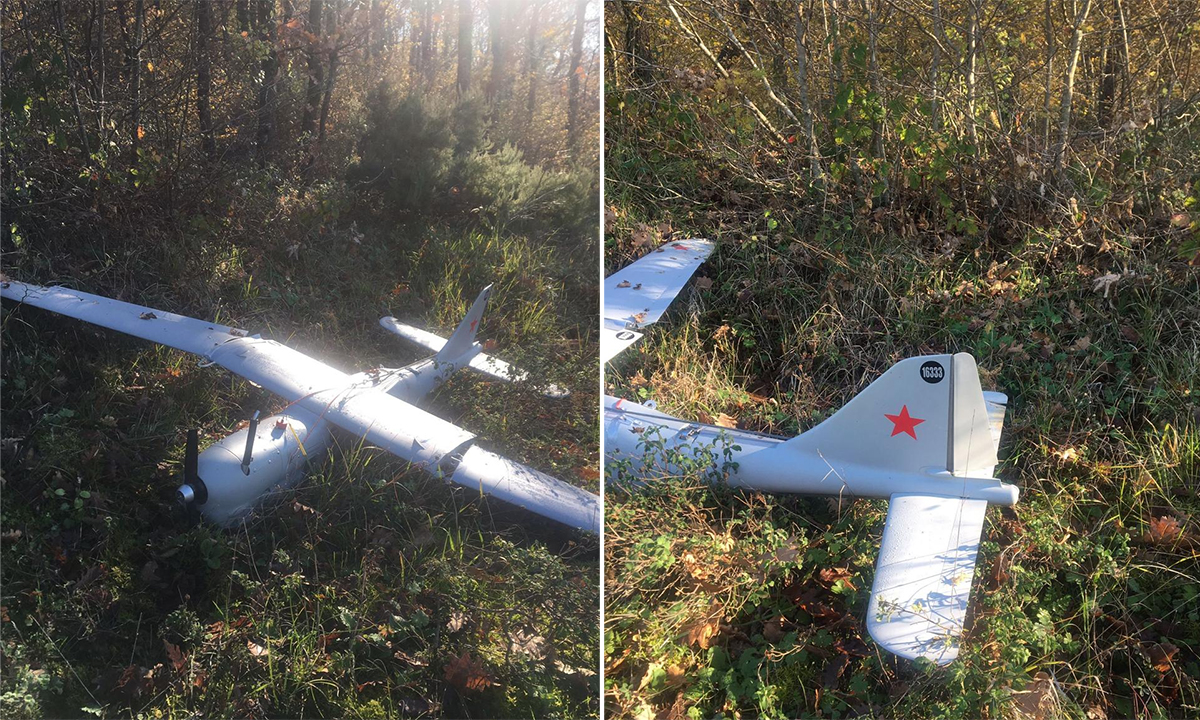 |
Wreckage of a Russian Orlan-10 UAV near the Cubuklubala residential area, Kocaeli province, Turkey on 19/12. Photo: X/Clash Report |
Wreckage of a Russian Orlan-10 UAV near the Cubuklubala residential area, Kocaeli province, Turkey on 19/12. Photo: X/Clash Report
Ismail Bayhan, one of two individuals who discovered the UAV, stated he saw the aircraft in the sky on 17/12 while working in his field. The UAV subsequently struck a line of trees and fell to the ground. Bayhan recounted the incident to village head Muharrem Khaliz, and together they located the aircraft in the forest.
The Orlan-10, designed by the Special Technology Center (STC) in Saint Petersburg, is used for missions such as reconnaissance, search and rescue, combat training, jamming, and radio signal detection. This UAV model is known for its relatively simple design, low cost, and ease of operation.
The aircraft has a maximum takeoff weight of 15 kg and can carry up to 6 kg of equipment. It is equipped with a parachute for recovery after completing missions. The Orlan-10 can reach a maximum speed of 150 km/h, has a range of 600 km, a combat radius of 110 km, a service ceiling of 5,000 m, and an endurance of up to 16 hours. Its airframe is constructed from composite materials, which helps reduce its empty weight and radar cross-section.
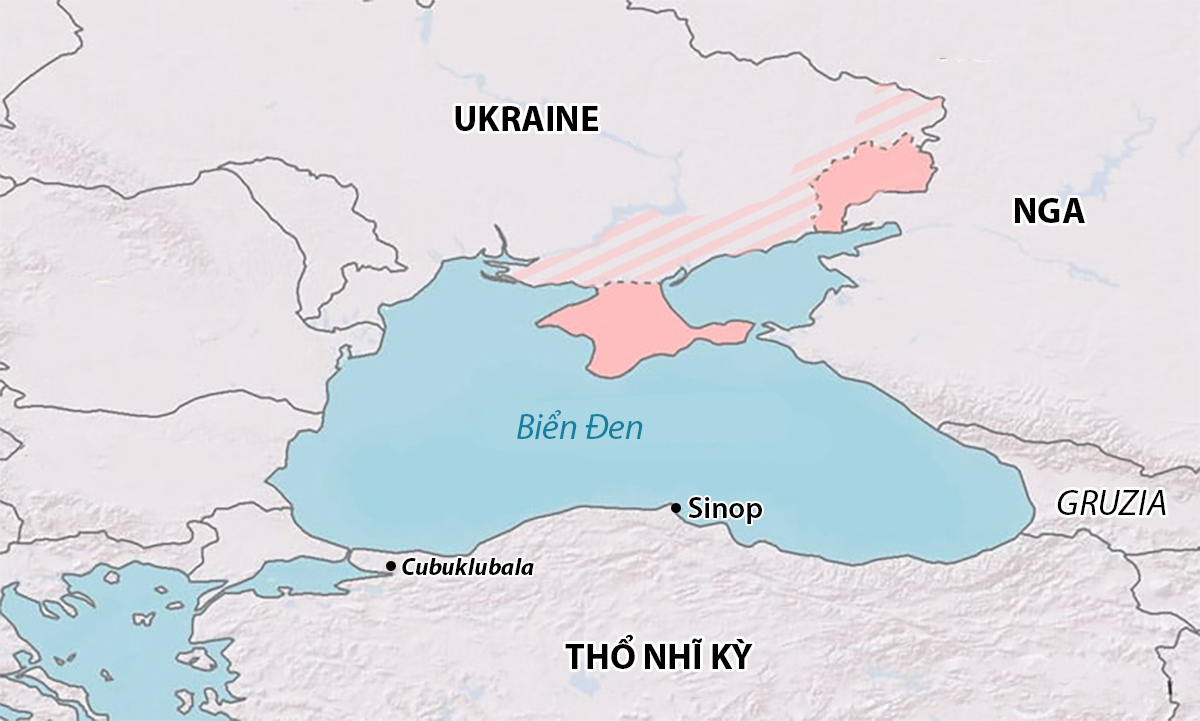 |
Location of the Cubuklubala residential area, Turkey. Graphic: Geopolitical Monitor |
Location of the Cubuklubala residential area, Turkey. Graphic: Geopolitical Monitor
Orlan-10 UAVs are often deployed in groups of two or three. In such formations, one UAV conducts reconnaissance at an altitude of 1,000-1,500 m, a second carries electronic warfare equipment for jamming, and the third relays data back to the control station. Its ability to fly beyond the range of machine gun anti-aircraft batteries, combined with the cost-ineffectiveness of using missile systems against it, makes it a valuable asset.
Nguyen Tien (According to Reuters, Anadolu)