The US launched large-scale retaliatory airstrikes against the self-proclaimed Islamic State (IS) in Syria on 19/12, following an ambush on 12/12 that killed two US military personnel and one civilian interpreter. Defense Secretary Pete Hegseth announced the operation, stating, "This is not the start of a war. This is a statement of retaliation. The US, under the leadership of President Donald Trump, will never hesitate and will never stop defending its people."
President Trump affirmed the US military had conducted "very severe retaliation" against IS. He wrote on social media, "We are striking IS bases very hard in Syria, a bloody land with many problems, but it will have a bright future if IS is completely destroyed."
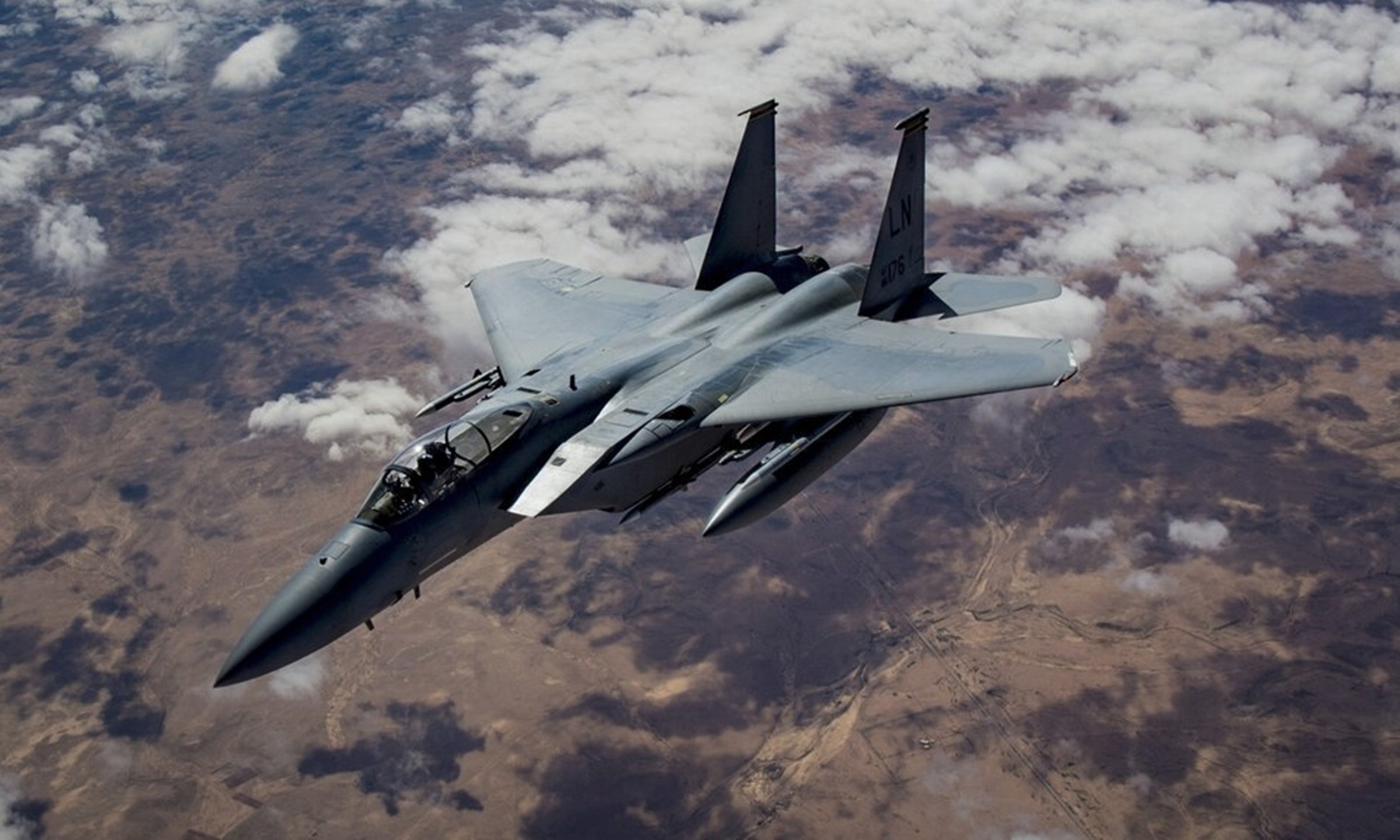 |
US F-15 fighter jets flying over Syria in 2019. *Photo: US Air Force*.
US officials described the strikes as large-scale airstrikes targeting multiple locations across central Syria, including IS infrastructure and weapon depots. Another official stated that Washington might conduct more airstrikes. The attack involved F-15 fighter jets, A-10 attack aircraft, and Apache attack helicopters. Jordanian F-16 fighter jets and HIMARS rocket artillery also participated.
Syrian state television reported that the airstrikes hit rural areas in Deir ez-Zor province, Raqqa, and the Jabal al-Amour region near Palmyra. A Syrian government source confirmed the strikes targeted IS weapon caches and headquarters within the area.
The ambush, which occurred in the Syrian desert, involved soldiers among hundreds of US troops deployed in eastern Syria as part of the anti-IS coalition. This incident presented a significant test for the warming relationship between the US and Syria. Trump highlighted Damascus's cooperation with US forces, adding that Syrian President Ahmad al-Sharaa was very angry and concerned about IS's actions. These actions took place as US forces expanded cooperation with Syrian security forces.
By Vu Hoang (According to AFP, AP)