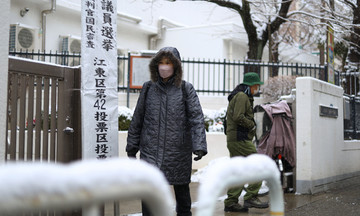
Approximately 53 million Thai citizens are participating in a general election today, casting votes at 100,000 polling stations across the capital Bangkok and 76 provinces. Economic issues and the border conflict with Cambodia are key concerns for voters.
During the general election, citizens will elect 500 members of parliament: 400 seats are directly elected in local constituencies, while the remaining 100 seats are allocated to parties based on their nationwide proportional vote. Each party may nominate up to three prime ministerial candidates.
The new parliament must convene within 15 days of the official results to elect a speaker and vote for a new prime minister.
Voting concluded at 5 p.m., with preliminary results expected late tonight. Sawaeng Boonmee, Secretary General of the Election Commission of Thailand, reported a voter turnout of 80-90%, higher than the 75% recorded in the 2023 election.
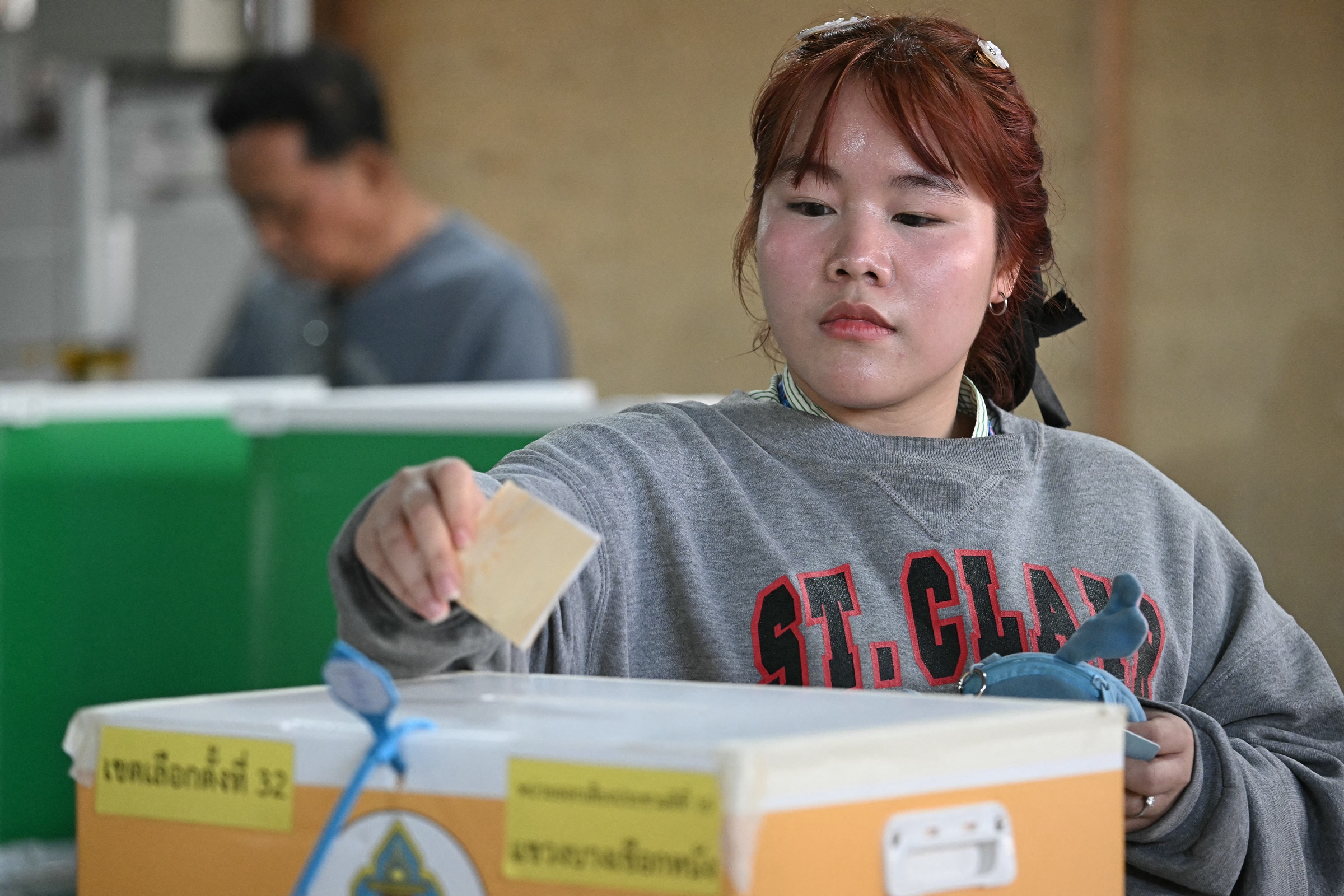 |
Thai citizens cast their ballots in Bangkok on 8/2. Photo: AFP |
The three major parties—Nhan dan, Bhumjaithai, and Pheu Thai—have led in public opinion polls. However, analysts believe no party will secure an absolute majority, making a coalition government highly probable. Observers are closely watching who will lead the new administration and which parties will join the coalition.
Thailand held this early general election after Prime Minister Anutin Charnvirakul announced the dissolution of parliament in December 2025. This decision stemmed from tensions with the opposition Nhan dan Party over constitutional amendments, which prevented the government from continuing to govern.
Anutin, leader of the conservative Bhumjaithai Party, took office in September 2025, following the removal of his predecessor, Paetongtarn Shinawatra of the Pheu Thai Party, for violating public service ethical standards. Anutin is the third individual to hold the position of Prime Minister of Thailand since August 2023.
Among those who voted in Bangkok was Thanraphat Netsumrit, an office worker. "I voted because I want a competent person to take charge of the country, because the country is in chaos right now," she said.
"I hope for a new prime minister who listens to the people's aspirations and has the ability to improve their lives, because living costs are unprecedentedly high," stated Lavitra Jiraongart, a nurse in Bangkok.
Hong Hanh (According to Straits Times)