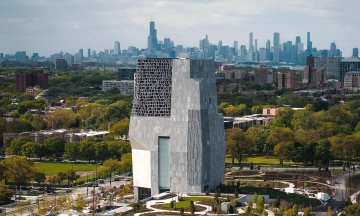
The World Cup kickoff will sound on 11/6 at Estadio Azteca in Mexico City, marking the start of a summer-long sports festival spanning three countries: Mexico, the United States, and Canada.
As billions of global football fans tune in to watch the captivating matches, they will witness the culmination of a mission to grow grass for the 16 stadiums hosting this year's World Cup. It is a journey that scientists, farmers, and turf specialists have undertaken with challenges no less demanding than those faced by the players.
The objective is to create stadium surfaces that can withstand kicks, cleats, and tackles, providing players with the sensation of competing on a single, uniform surface.
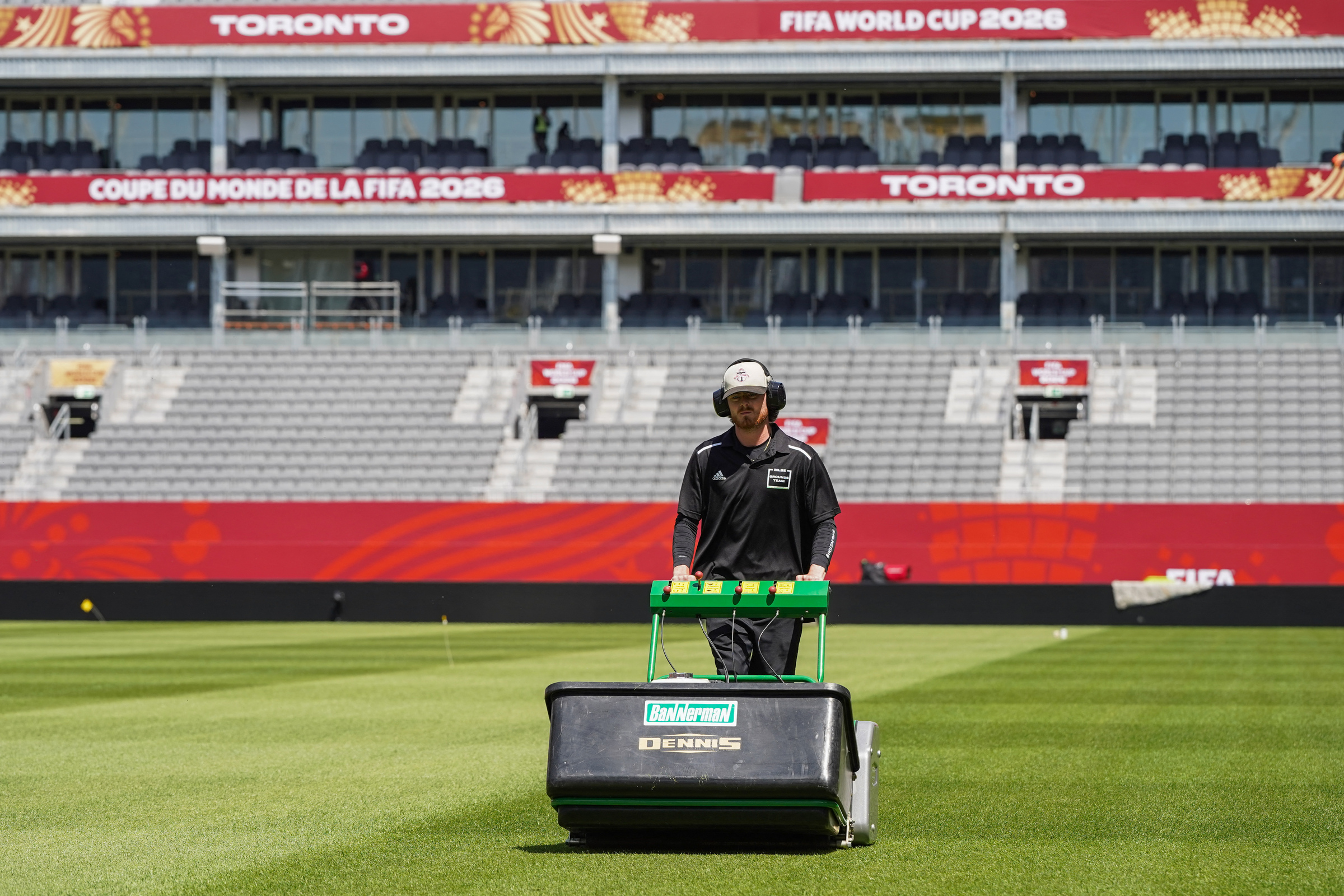 |
A groundskeeper mows the pitch at a stadium in Toronto, Canada on 4/6. Photo: AFP |
A groundskeeper mows the pitch at a stadium in Toronto, Canada on 4/6. Photo: AFP
Pitch preparation began nearly five years ago when FIFA partnered with stadium turf experts at the University of Tennessee and Michigan State University. At that time, the specific tournament venues were unknown.
As the venues were gradually identified, their task became even more challenging. John "Trey" Rogers, a professor and turf specialist at Michigan State University, recalled feeling anxious each time a new venue was announced.
"There were three domed stadiums. No, there were four. No, even more than that," he recounted.
The question was not merely which type of grass would look best on screen for millions of global viewers, but which surface could be sown, transported, installed, and maintained across North America, while also meeting the intensity of the tournament's matches.
"It is hard to imagine the scale of it," shared John Sorochan, a turf scientist at the University of Tennessee.
Rogers previously helped develop the temporary natural grass pitch used inside the Pontiac Silverdome for the 1994 World Cup. Sorochan was his student at the time.
Before that, a World Cup match had never been played on natural grass indoors. Their success helped prove that natural grass could be brought indoors and survive multiple World Cup matches.
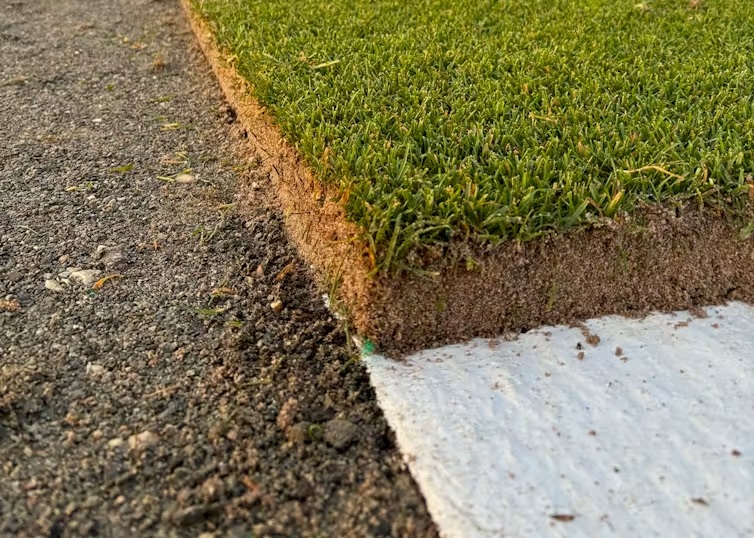 |
Turf grown on plastic membranes. Photo: The Conversation |
Turf grown on plastic membranes. Photo: The Conversation
Science has advanced significantly since then. Covered stadiums are now equipped with grow lights, ventilation systems, and other elements that help maintain natural grass pitches.
For this World Cup, Sorochan stated that researchers individually assessed each stadium, then grouped them by the challenges they presented: domed stadiums, outdoor artificial turf fields being converted, existing natural grass pitches, and Mexico City's high altitude factor.
The grass used for stadium surfaces falls into two main categories: Bermuda grass for warm-climate venues, while some cooler-climate stadiums use a combination of Kentucky bluegrass and perennial ryegrass.
The grass will be grown on plastic membranes, which alters root behavior. When roots grow downwards and encounter the barrier, they spread horizontally, forming a dense mat of roots. This allows the turf to be harvested with its root system largely intact. Once the turf is brought into the stadium and laid on a sand layer, the grass roots will once again begin to penetrate deep.
The stadiums used for this World Cup require hundreds of thousands of square meters of natural turf. These are grown on nine farms: six in the United States, two in Canada, and one in Mexico.
Some types of grass were sown approximately one year before installation. Rogers noted that a Kentucky bluegrass/perennial ryegrass pitch grown on plastic membranes can be ready for delivery in about 9-11 months.
"We can cut it like a pizza and roll it up," Sorochan described.
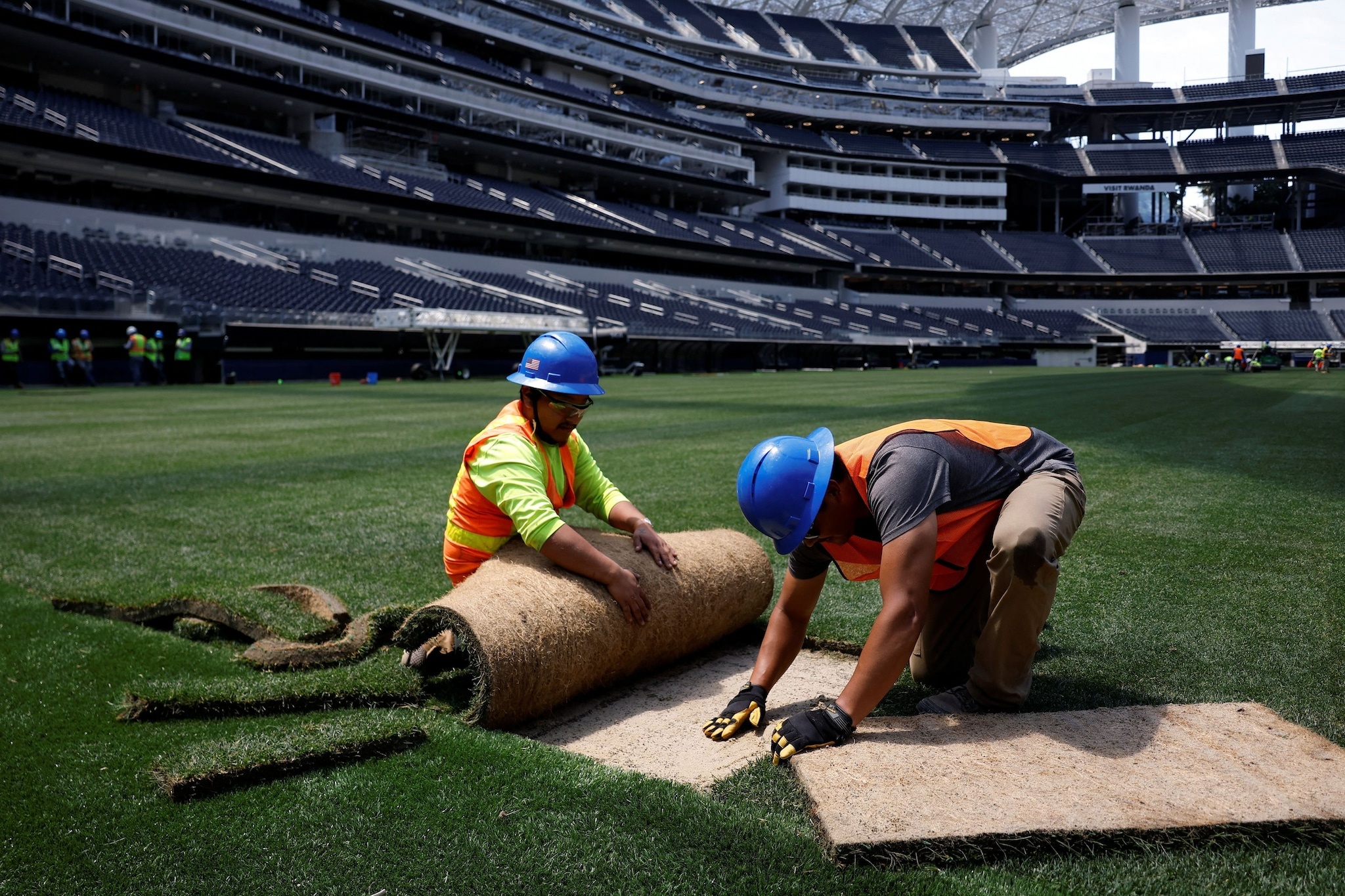 |
Workers install turf at SoFi Stadium in the United States in 5. Photo: Reuters |
Workers install turf at SoFi Stadium in the United States in 5. Photo: Reuters
A standard rolled turf mat is typically one meter wide and 9-14 meters long. These are then loaded onto refrigerated trucks and transported to the stadiums for installation.
"You would be surprised how many National Football League (NFL) games have a field that was just laid on thursday, and the game was played on saturday or sunday," he said.
Beyond the turf layer, stadiums also feature an underlying system. For fields that always use natural grass, the sand layer beneath the turf is about 30 cm thick, followed by a 15 cm gravel drainage layer. For temporary turf fields, the sub-base thickness is thinner, typically consisting of only 15-25 cm of sand.
Some systems also include vacuum and ventilation components to draw out excess moisture and circulate air through the structural layers of the stadium surface.
At domed venues, turf specialists use grow lights to ensure optimal growing conditions for the grass. Some stadiums can illuminate the entire field simultaneously, while others must illuminate areas sequentially. In Dallas, a light system is suspended from the dome and lowered close to the pitch when the grass needs illumination.
These lights are not just for keeping the grass green. They help the grass photosynthesize to create energy, recover after being trampled, and endure weeks of intense World Cup play.
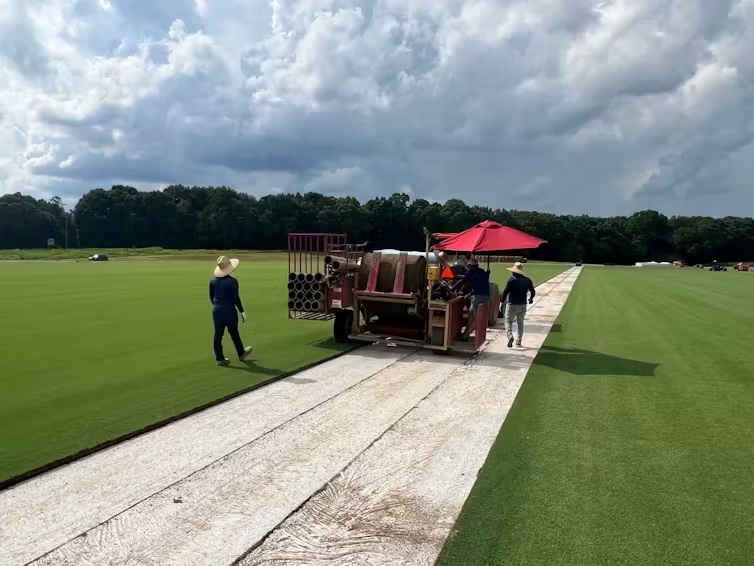 |
Harvesting turf at Carolina Green Turf Farm in the United States in 6/2025. Photo: The Conversation |
Harvesting turf at Carolina Green Turf Farm in the United States in 6/2025. Photo: The Conversation
In Tennessee, Sorochan's team utilized ball-launching machines, high-speed cameras, and video analysis to study how the ball reacts upon impact with the grass surface. In one test, researchers launched balls at the grass at 55 km/h at a 17-degree angle, then measured if the ball's bounce was low enough for player control. Ideally, the ball should not bounce higher than the knee.
Furthermore, a long pass hitting the surface must also bounce predictably for players.
"We do not want the playing surface to affect the quality of the game," Sorochan stated.
When the matches begin, most fans will focus on the players. Rogers, however, will be intently watching the ball roll across the surface. Rogers hopes his pitches will perform so well that no one feels the need to mention them.
"Silence, for me, is golden," Rogers said.
By Thanh Tam (Based on reports from Washington Post, Reuters)