Russian President Vladimir Putin disclosed a "state and military secret" on 4/6, stating that the oreshnik hypersonic ballistic missile has only been used in experimental trials, not combat. He clarified that recent strikes on Ukraine were for assessment. "We tested oreshnik and similar systems at proving grounds. The strikes targeting Ukrainian territory were not combat actions in the literal sense," Putin said. He confirmed Russia launched oreshnik missiles at the Bila Tserkva airbase near Kyiv and a "fortified defense area" in Donetsk province on 24/5. "The Russian military simply targeted convenient locations to assess the results," he added.
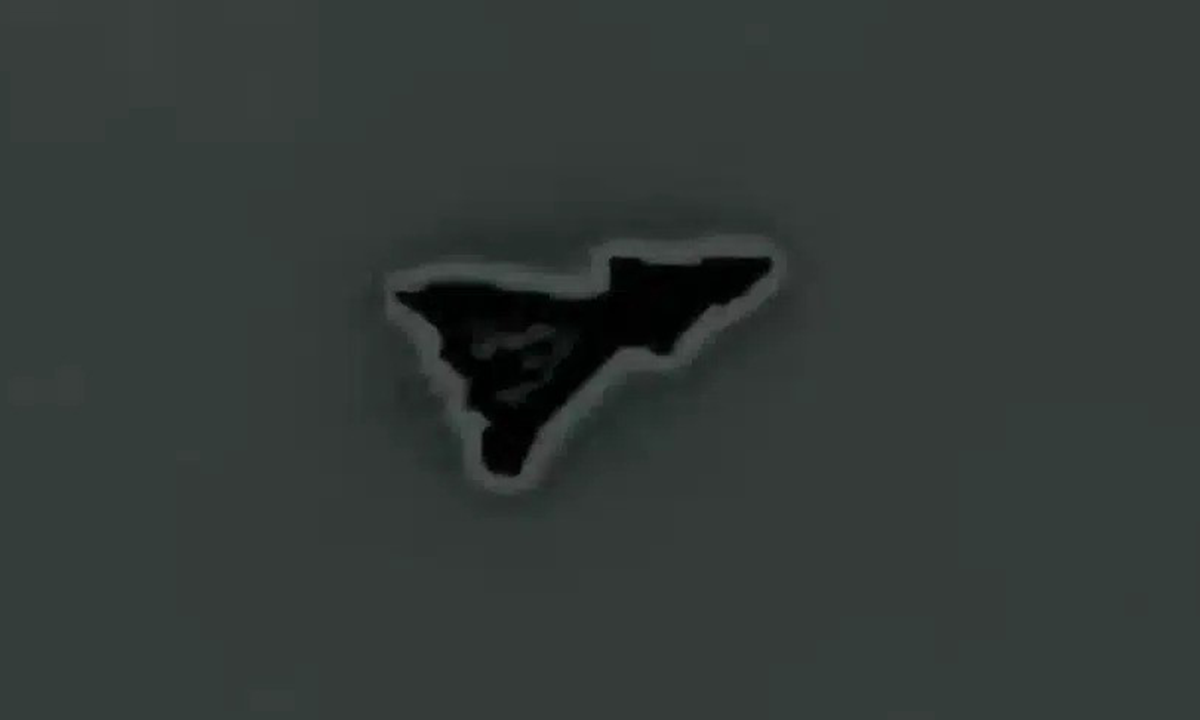
The streak of light as an oreshnik missile warhead hit a target in Ukraine on 24/5. Video: X/AMK Mapping
Putin elaborated that unmanned aerial vehicles (UAVs) were deployed to the Bila Tserkva strike zone to evaluate the outcomes. "The warheads hit targets with millimeter precision. The data collected will inform future decisions on large-scale deployment of oreshnik, including targeting urban areas," he stated.
On 24/5, the Ukrainian Air Command reported a large-scale Russian attack involving one oreshnik medium-range ballistic missile with a hypersonic warhead. The strike also included 5 kinzhal and zircon hypersonic missiles, 30 iskander-M ballistic missiles, S-400 air defense munitions converted for ground attack, 54 iskander-K, kh-101, and kalibr cruise missiles, and 600 suicide and decoy unmanned aerial vehicles (UAVs). The oreshnik missile likely targeted the Bila Tserkva military airfield, approximately 80 km from Kyiv. The Russian Ministry of Defense later confirmed that the oreshnik missile had struck "enemy command and control facilities, and airbases."
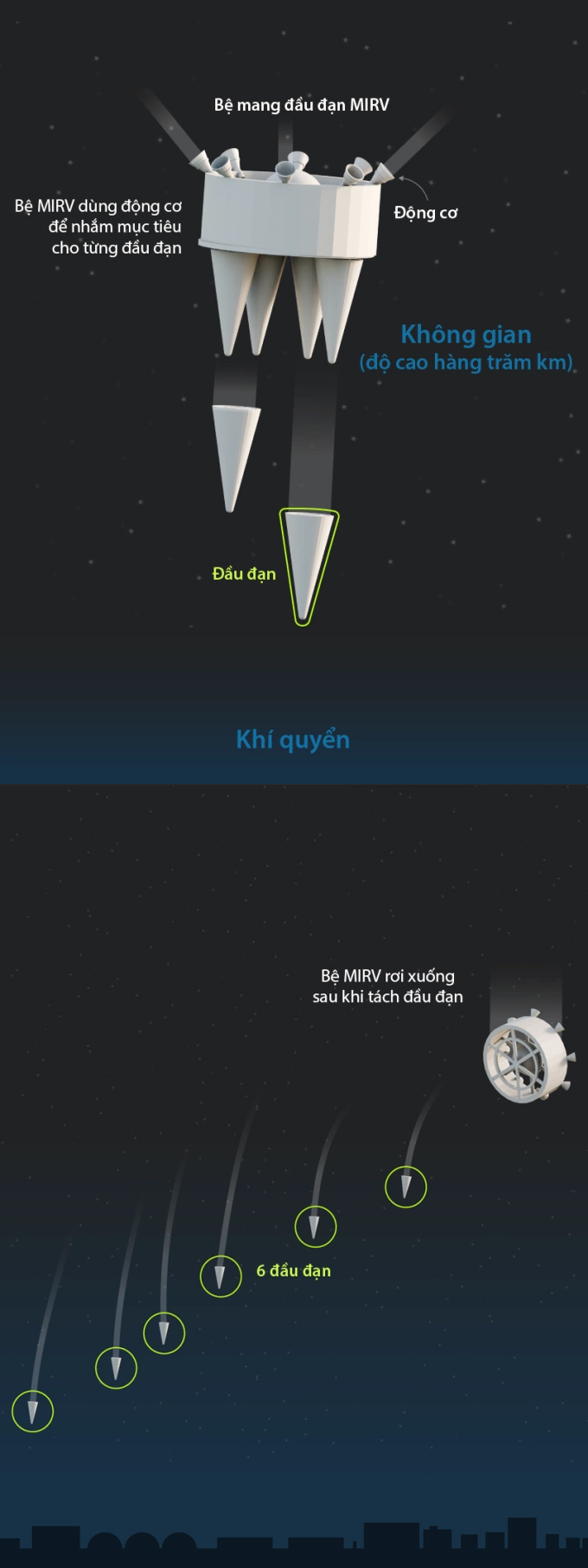 |
Terminal phase operation of the MIRV platform on an oreshnik missile. Graphic: Reuters
Open-source intelligence (OSINT) accounts also tracked the oreshnik launches. AMK Mapping, an X account specializing in conflict data, suggested Russia launched two oreshnik munitions at Bila Tserkva and Donetsk province. Surveillance video showed streaks of light consistent with oreshnik warheads descending north of Donetsk city. Rybar, a social media account linked to the Russian military, also reported two oreshnik missiles used in the 24/5 attack. According to Rybar, "The first missile hit an area near the 'fortress belt' of Sloviansk - Kramatorsk controlled by Ukraine in Donetsk province, specifically infrastructure and fortified structures that the Ukrainian military frequently uses for supply depots and command posts." Kim Hovik of the Faytuks News OSINT network speculated that Ukraine might have reported only one oreshnik missile because it "could not detect the target or could not access the impact site."
 |
Russian President Vladimir Putin during a press conference on 4/6. Photo: The Kremlin
The 24/5 strike marked the third use of the oreshnik missile against Ukraine. Its first deployment was in November 2024, targeting the Pivdenmash Machine-Building Plant. This facility produces launch vehicles, ballistic missiles, and liquid rocket fuel. That strike was a response to Ukraine's use of Western-supplied storm shadow and atacms missiles against Russian territory. The second oreshnik strike occurred in January, aimed at Lviv in western Ukraine. Russia claimed this was retaliation for Ukraine "launching UAVs at President Vladimir Putin's residence."
Nguyen Tien (According to TASS, RIA Novosti, AFP, AP)