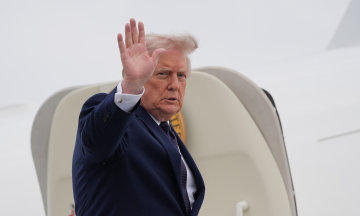
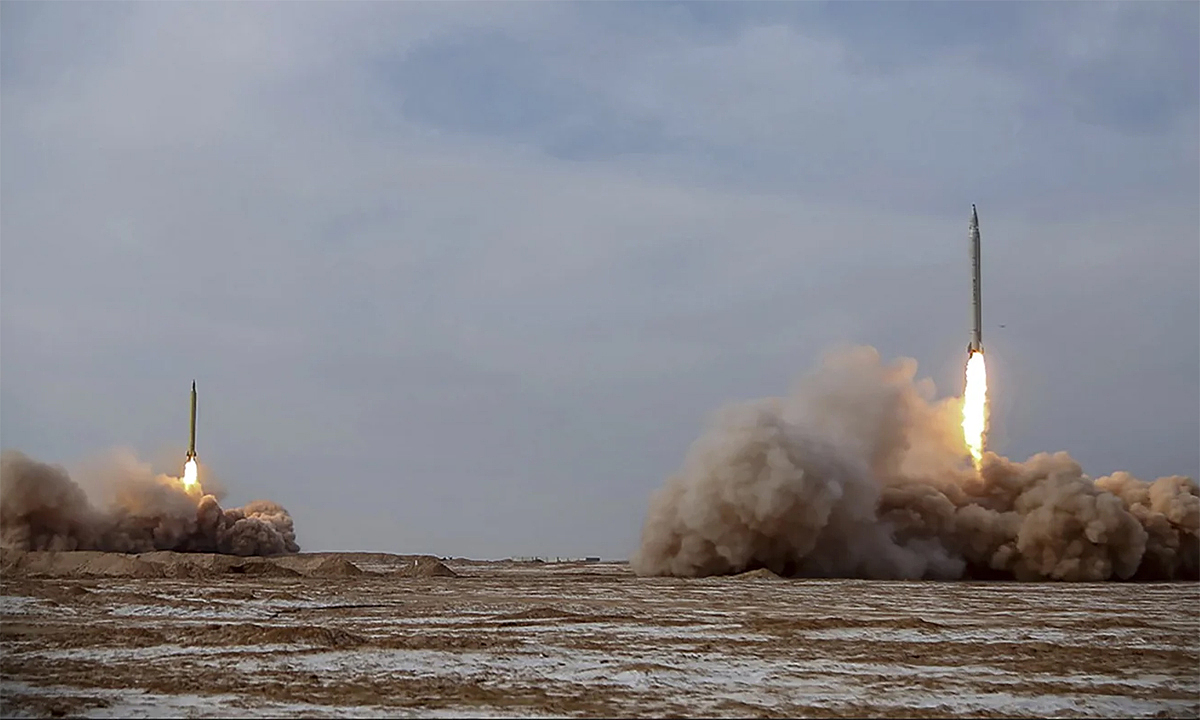
United States President Donald Trump revealed new details about an AH-64 Apache helicopter crash near the Omani coast to Fox News on 10/6. He stated that an Iranian suicide unmanned aerial vehicle (UAV) "hit the cockpit and got stuck between the two pilots" while the helicopter was flying low over enemy territory.
Trump added that the UAV caught fire but did not detonate. "The two pilots tried to land without detonating the UAV, and it was very hot in the cockpit at the time. They eventually landed on the sea," a Fox News reporter recounted Trump's statement, adding that the United States President described the safe rescue of the two pilots as a "miracle."
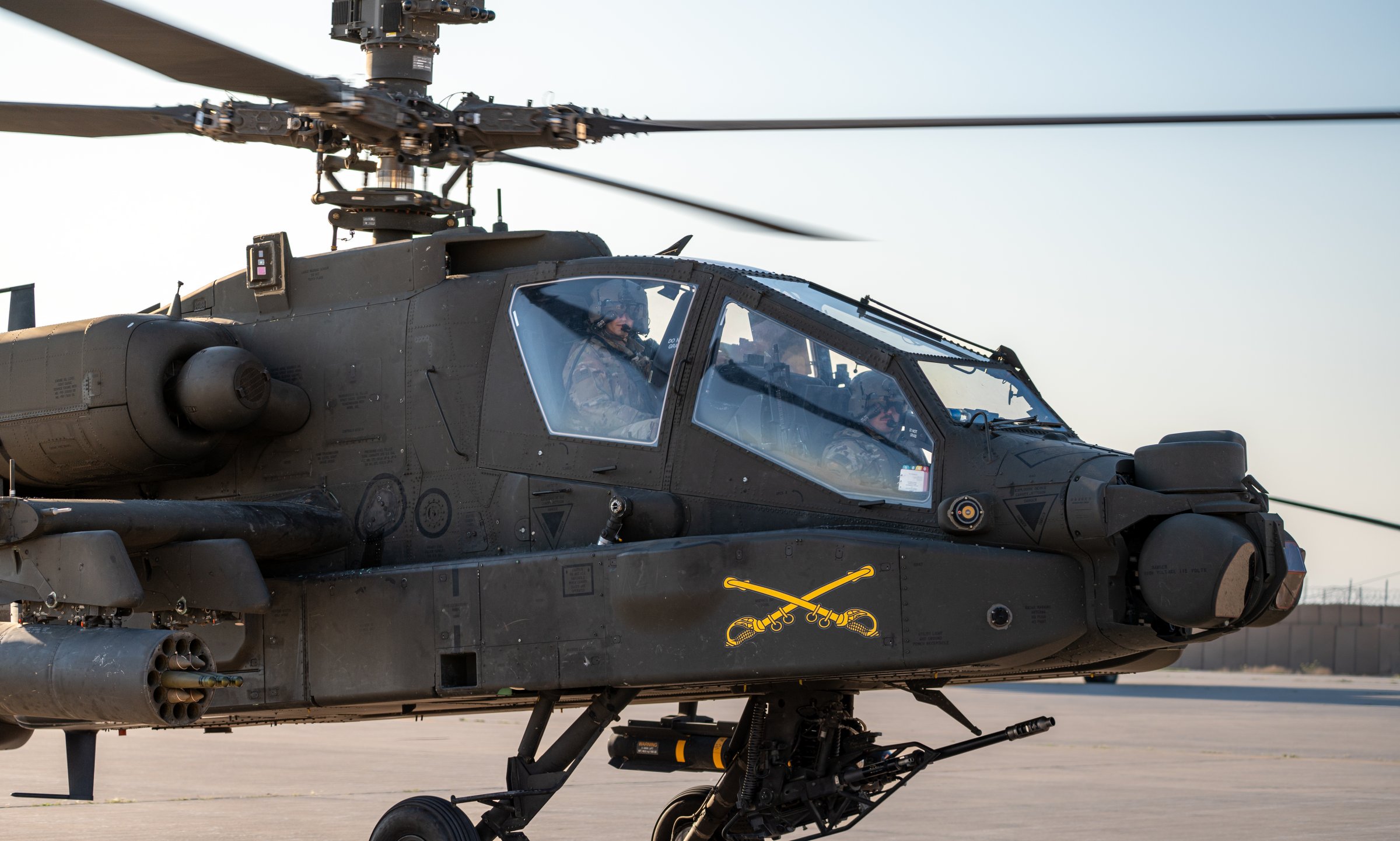 |
Truc thang AH-64E My tai can cu o Iraq hoi thang 3/2025. Anh: US Army
Speaking later at the White House, President Trump reaffirmed that the Iranian UAV was lodged and burning in the Apache helicopter's cockpit but did not explode. The United States leader also praised the two pilots' flying skills but noted they were "very lucky" in the incident. "You won't believe how incredible that rescue was," he said.
President Trump did not specify the type of UAV, but a source familiar with the matter told CNN that it was a Shahed-type suicide UAV, with a maximum speed of about 185 km/h.
United States Central Command (CENTCOM), the agency responsible for United States military operations in the Middle East, stated it is investigating and has not yet reached a final conclusion. Sources familiar with the matter told CNN that United States officials cannot yet determine whether the Iranian UAV deliberately targeted the United States helicopter or if it was an unintentional incident.
The Apache helicopter's cockpit features boron carbide composite armor panels, designed to break up or deflect warheads, along with multiple layers of Kevlar lining to contain fragments that penetrate the outer armor. This design allows the Apache cockpit to withstand a direct 12,7 mm bullet or a 23 mm high-explosive fragmentation shell.
An approximately 25 mm thick acrylic and polycarbonate panel separates the two pilots' seats. This design prevents a single round from penetrating the cockpit and incapacitating both crew members. Meanwhile, the cockpit glass appears to withstand only small-caliber infantry rounds.
Truc thang Apache huan luyen cat ha canh tren can cu vien chinh di dong cua My o bien Arab hoi nam 2020. Video: USMC
Iran has not claimed responsibility for the United States Apache helicopter crash and appears to imply it was an accident. Iranian Foreign Minister Abbas Araghchi stated, "Foreign forces operating too close to our territory will face constant risks of human error caused by themselves, as well as pure accidents or stray fire."
Experts previously expressed skepticism about claims that an Iranian UAV shot down the United States helicopter.
Cameron Chell, chief executive officer of United States-based defense technology company Draganfly, noted that Apache fleets often intercept UAVs. Therefore, it is possible the AH-64 hit the target in poor visibility or flew into debris from a shot-down aircraft. "It's also possible the helicopter experienced a technical malfunction and crashed while pursuing the UAV," he said.
Pham Giang (According to Fox News, New York Post, Telegraph)