Ukraine may have deployed the US-made AIM-120C-8, the most modern export variant of the AMRAAM missile, to counter Russian forces. Military news site War Zone on 27/4 published images of a fragment from this medium-range air-to-air missile, found after a Russian airstrike targeting the central Ukrainian city of Dnipro. While the intercepted target and incident timing remain unclear, this marks the first confirmed instance of Ukraine possessing the AIM-120C-8, according to War Zone commentator Thomas Newdick. He noted that previous images from last year showed Ukrainian F-16 fighter jets carrying AIM-120C missiles, but their specific version was then unidentifiable. The Ukrainian military has not commented on this information.
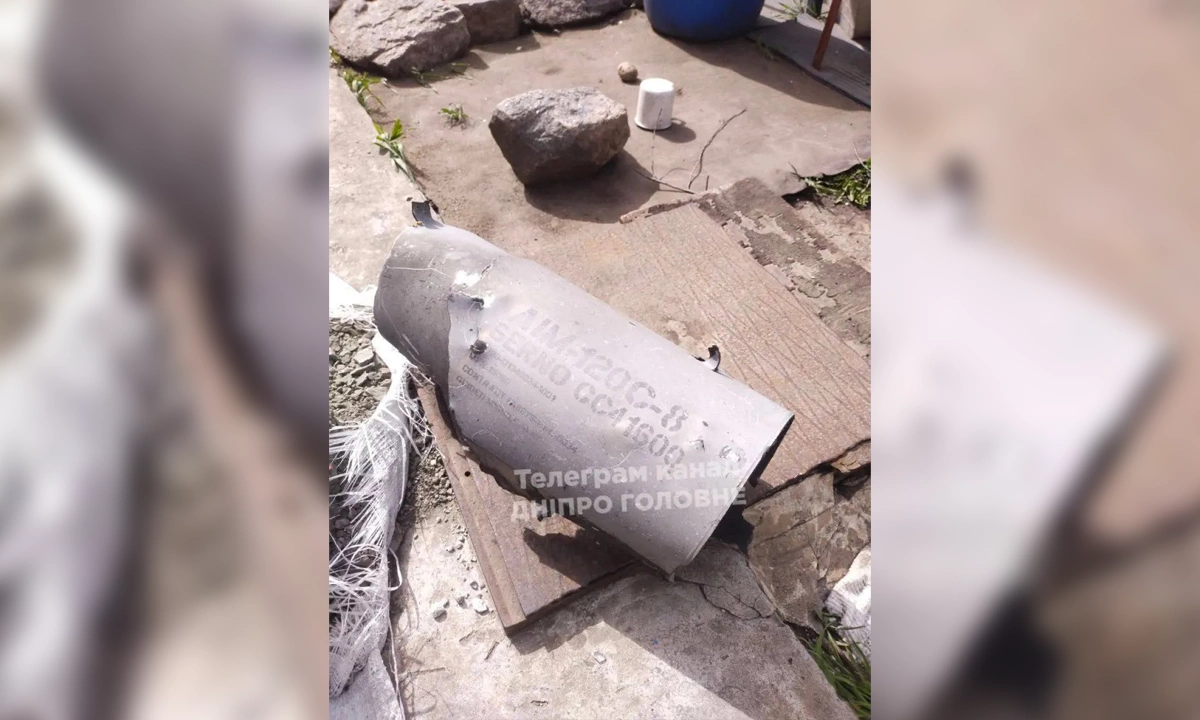 |
A fragment of an AIM-120C-8 missile in an image published on 27/4. _Photo: War Zone_ |
The AIM-120C-8 is the AMRAAM missile series' most advanced export variant, with an estimated cost of USD 2-2,4 million per missile. The US military has not disclosed its technical specifications, but this version is believed to achieve a maximum range of 120-160 km, depending on the launch platform. AMRAAM variants can be equipped on F-16 fighter jets or the NASAMS air defense system within the Ukrainian military's arsenal. It is currently unclear whether the fragment found originated from a missile launched from an F-16 or a NASAMS.
The AMRAAM's significance for F-16 fighter jets is crucial. Newdick highlighted it as the first active radar seeker air-to-air missile series Ukraine has put into service, a weapon they had long sought to acquire. Before receiving F-16 fighter jets and AMRAAMs, Ukrainian pilots consistently cited the lack of active radar seeker missiles as the biggest challenge for their air force in the conflict with Russia.
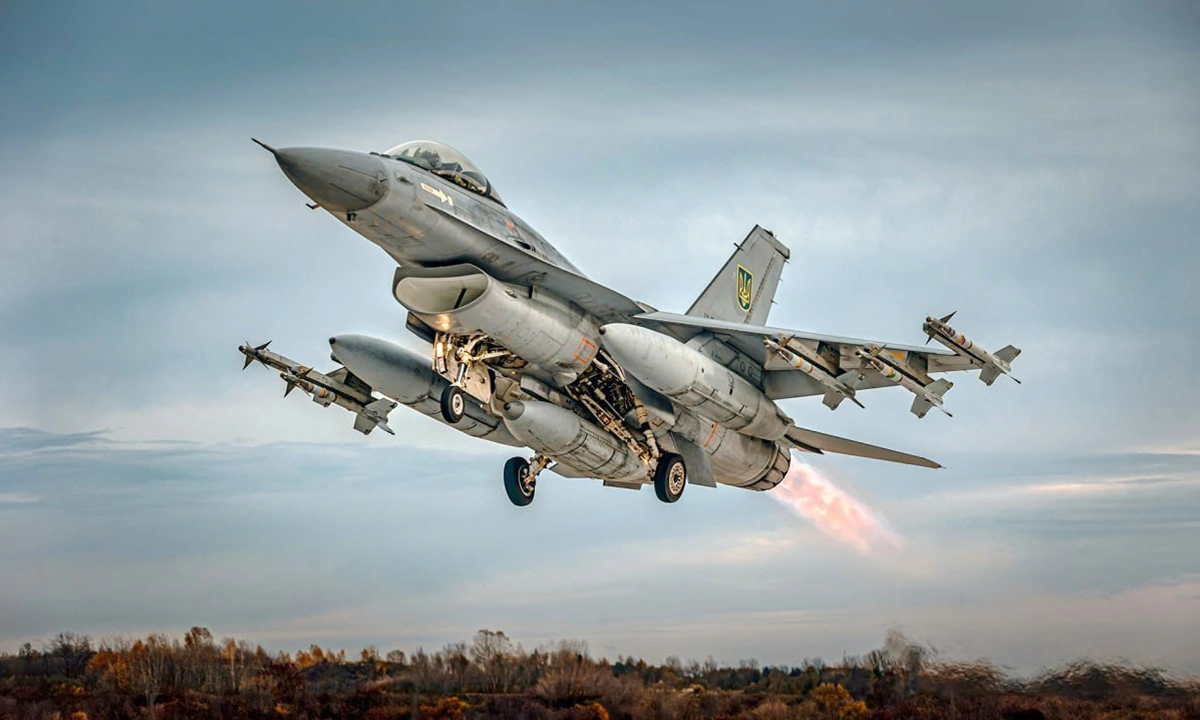 |
A Ukrainian F-16 fighter jet in an image published in 11/2025. _Photo: Ukrainian Air Force_ |
This potential deployment comes after Ukraine's F-16 fleet faced severe air-to-air missile shortages. Reuters news agency reported in March, citing three anonymous sources, that the F-16 fleet experienced these shortages during 11-12/2025, as Russia prepared a large-scale winter offensive.
Images released by the Ukrainian Air Force in late 2025 showed F-16 fighter jets equipped only with older, short-range AIM-9L/M air-to-air missiles, manufactured in the 1970s-1980s. They no longer carried the more modern US-supplied AIM-120B/C medium-range missiles or AIM-9X from the initial conflict stages. This shortage forced Ukrainian F-16 pilots to use 20 mm rotary cannons to shoot down Russian unmanned aerial vehicles (UAVs) and shift to daytime missions. Operating at night for these tasks is dangerous, despite Russia's frequent attacks during the night and early morning. Pilots also resorted to reusing "dud" missiles, which had failed in prior interceptions, hoping for successful launches after maintenance.
Pham Giang (Source: War Zone)