Ukrainian President Volodymyr Zelensky announced on 1/7 that the country's forces had for the second time in one week struck the Ufa oil refinery, one of Russia's largest lubricant production facilities, located over 1,300 km from the front line.
The Ukrainian military also claimed to have attacked a defense facility specializing in developing and producing missile components in Russia's Penza province, situated about 600 km from the front line.
"Every day, our long-range deterrence plan against Russia is being implemented. This is a completely legitimate response to everything Russia has done to us," Zelensky stated.
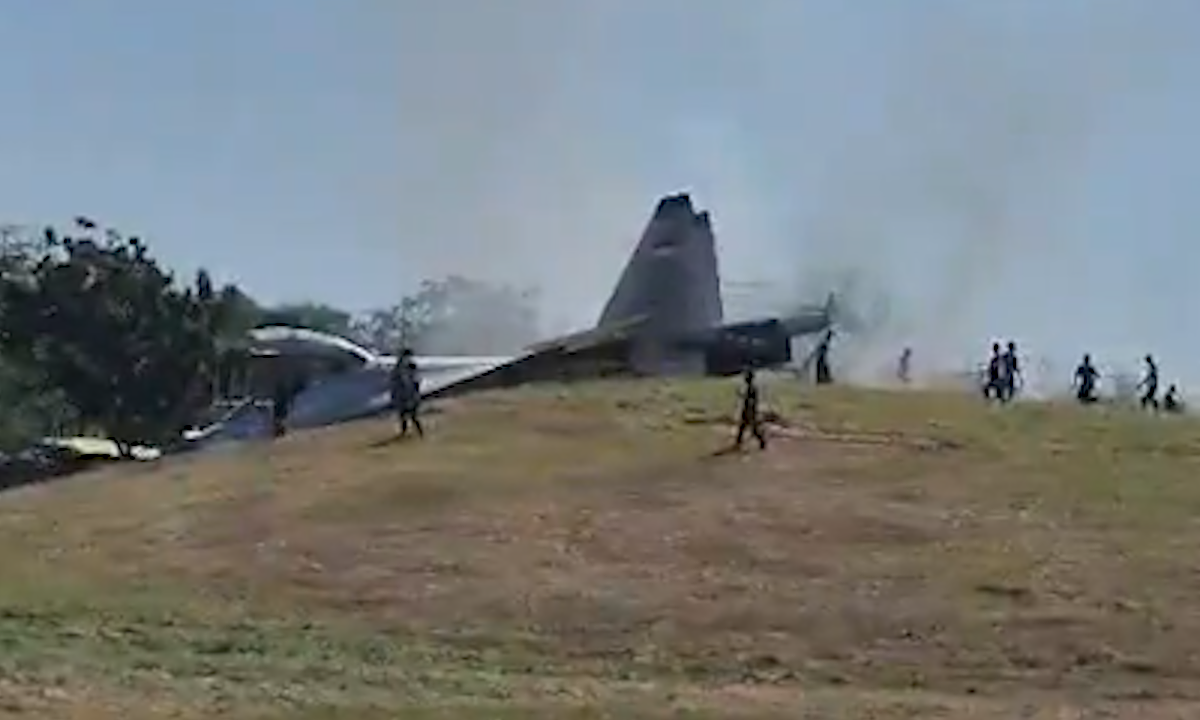
Smoke rises at a location believed to be in Russia in a video posted on 1/7. Video: X/ZelenskyyUa
These are two of a series of long-range unmanned aerial vehicle (UAV) strikes Ukraine has conducted against military targets and oil refineries in Russia or Moscow-controlled areas recently, primarily carried out by Ukraine's Unmanned Systems Forces (USF).
Denys (name changed), who previously served in the Ukrainian marines before joining Center 1, a secret unit within the USF, has been conducting such strikes since 2025. His friends and even his parents are unaware of his involvement due to the unit's extremely strict regulations.
"Don't show off or draw attention to yourself. You are not allowed to talk about what you have done, even after the conflict ends," Denys told AFP in an interview.
His top-secret unit has carried out numerous UAV attacks deep into Russian territory, including a strike in June on an oil refinery in Moscow that blanketed the city's sky with black smoke. The force later conducted an attack on Saint Petersburg.
"We are a priority target and highly valuable to the enemy," Denys said.
The identities of the unit's members remain confidential; taking photos or videos of them without covering their faces is prohibited. AFP reporters followed strict security protocols to gain rare access to the unit's long-range UAV launch site.
"We understand the high price we and our loved ones would pay, so we intentionally decided to live in the shadows as much as possible," said a soldier with the call sign "Voron" from Center 1.
 |
Ukrainian soldiers operate a Beaver UAV at an undisclosed location on 16/5. Photo: AFP
He believes the Russian military will do "everything possible" to hunt down Ukraine's long-range strike units. Voron himself previously belonged to a Ukrainian unit with a similar mission: locating and targeting Russian long-range UAV operators.
Before the conflict began in early 2022, Voron worked as an artist and martial arts instructor. He is married and has one child. Voron mentioned that his wife has questions about his work, but she "doesn't ask anything."
Voron is not allowed to reveal even the slightest hint of his involvement with his current unit. On social media, he continues to post on his old unit's page and shares photos with its insignia, creating the impression that he is still a member there.
"All my relatives and friends think I'm still serving in the special forces," Voron explained.
According to officer "Wolf" from Ukraine's Defense Intelligence Directorate (GUR), people do not recognize them in everyday life because they strive to act like ordinary individuals.
"People often imagine us as commando-type soldiers in camouflage, but in reality, we just wear jeans and shirts," Voron said.
In public, they are forbidden from discussing their missions. Even words like "takeoff" or "wing," which could be associated with UAVs, are prohibited.
They purchase everything with cash and avoid using a fixed ATM for withdrawals to prevent tracking. These soldiers are even barred from participating in loyalty programs at gas stations.
 |
Ukrainian soldiers operate a medium-range unmanned vehicle in an underground control room on 16/5. Photo: AFP
Whether on duty or not, their phones must always be in airplane mode and connected only to a personal mobile router. For military communications, soldiers use specially encrypted phones. All devices with GPS functionality are forbidden.
Lie detectors are used when there are suspicions of information leaks or to vet new recruits.
As Ukraine intensifies its long-range strike campaign, Denys noted that his unit faces a significant limitation. This is not a lack of UAVs but a shortage of time, as the number of targets continues to grow.
Denys likens Ukraine's long-range strikes to an "iceberg cracking beneath the enemy's feet," and his unit is trying to widen that crack. Russian President Vladimir Putin acknowledged on 28/6 that Ukraine's long-range strike campaign had caused "certain fuel shortages" in the short term in many Russian regions, adding that the government is addressing the issue.
Pham Giang (According to AFP, Eurasian Times, Ukrainska Pravda)