The current winter in Ukraine is exceptionally harsh, with a recent cold snap dropping temperatures to around -20°C on some nights in Kharkov province. This extreme cold poses a significant threat to soldiers on the front lines, who must find effective ways to stay warm and avoid frostbite, according to Nefor, a senior sergeant in an infantry company of the 3rd Ukrainian Corps.
Nefor, who coordinates troop rotations at the front line, highlighted heat packs as essential for soldiers in trenches. "Applying heat packs to the body helps warm up the circulating blood," he explained. With frostbite a risk within 30 minutes at these temperatures, soldiers need at least three heat packs daily, as each provides warmth for 6-8 hours.
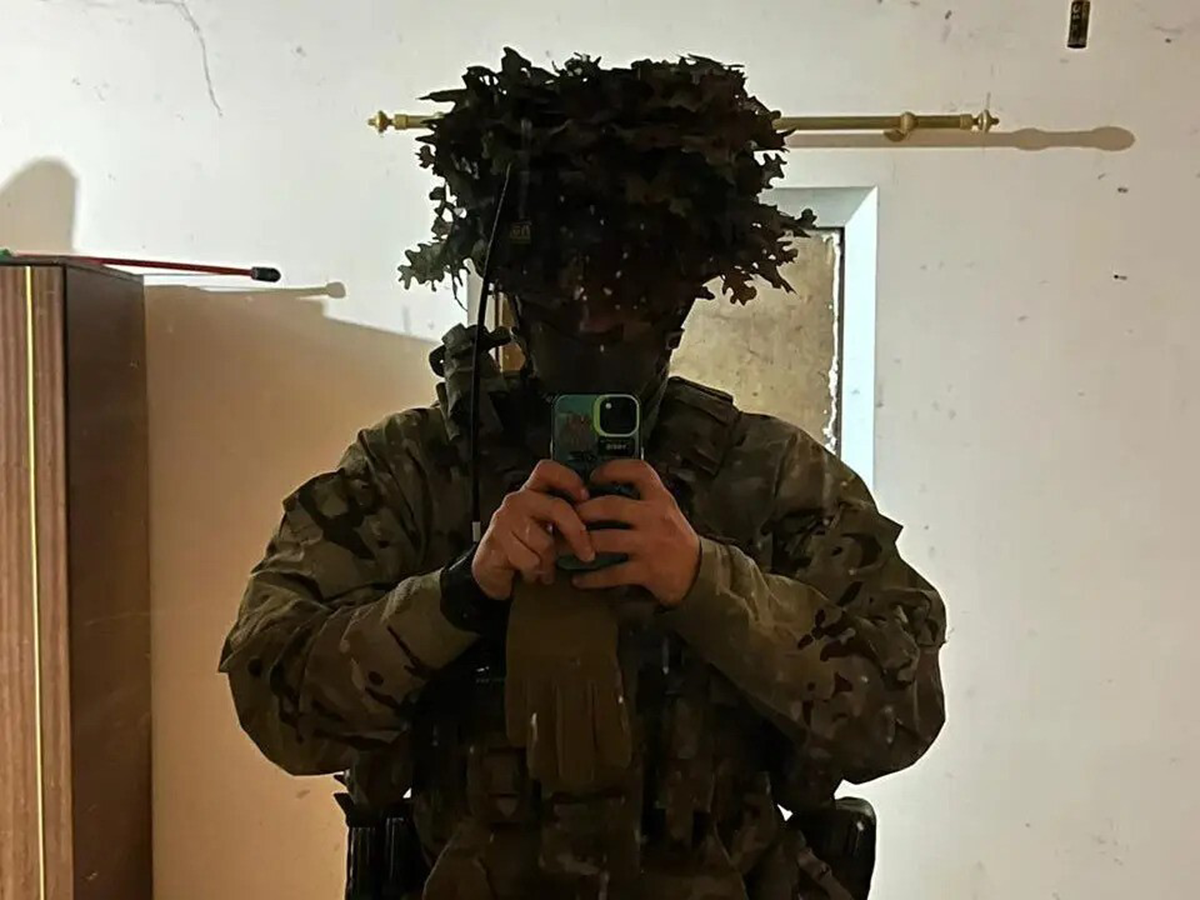 |
Nefor in a photo dated 11/2. Photo: 3rd Ukrainian Corps |
Earlier, Nefor's company experimented with electric heating devices. However, these proved problematic due to their large heat signature, making soldiers easily detectable by enemy thermal imaging sights, especially in cold environments. Heat packs, conversely, emit a minimal thermal signal, undetectable by light drones, Nefor noted.
Winter conditions also present unique challenges for drone operators. Serhii Andrieiev, deputy commander of a drone company under the 3rd Ukrainian Corps, explained his unit focuses on camouflaging positions, as bare trees offer less natural cover. Drone engines also emit more detectable heat in the cold. Most pilots lack indoor shelter, often hiding in foxholes or destroyed building basements.
The use of electric heaters is further hampered by significant energy consumption and the need for a stable power source in trenches. Nefor's company has about 20 EcoFlow portable charging stations, but these are insufficient for all front-line positions. These stations also power control screens and radios, limiting their availability for heaters. Soldiers typically carry power banks for personal electronics, often commercially available Type-C or USB models.
Fluctuating temperatures around freezing create another danger: melted water soaking into clothes and refreezing, greatly increasing the risk of hypothermia, especially in damp areas. "If you don't stay dry, you'll die. We often tell each other that," Nefor shared. Wet clothing in winter cannot dry, requiring soldiers to request new sets from commanders.
Unmanned ground vehicles (UGVs) have become a vital asset for Nefor's company, delivering weeks' worth of essential supplies like clothes, ammunition, food, water, and heat packs directly to the trenches. This logistical support is crucial for maintaining operational readiness.
Weapons and ammunition are also susceptible to freezing. To ensure rifles remain functional, Nefor and his comrades apply a lubricating mixture, primarily engine oil and sometimes antifreeze. They first fire one or two shots to warm the weapon before applying the mixture.
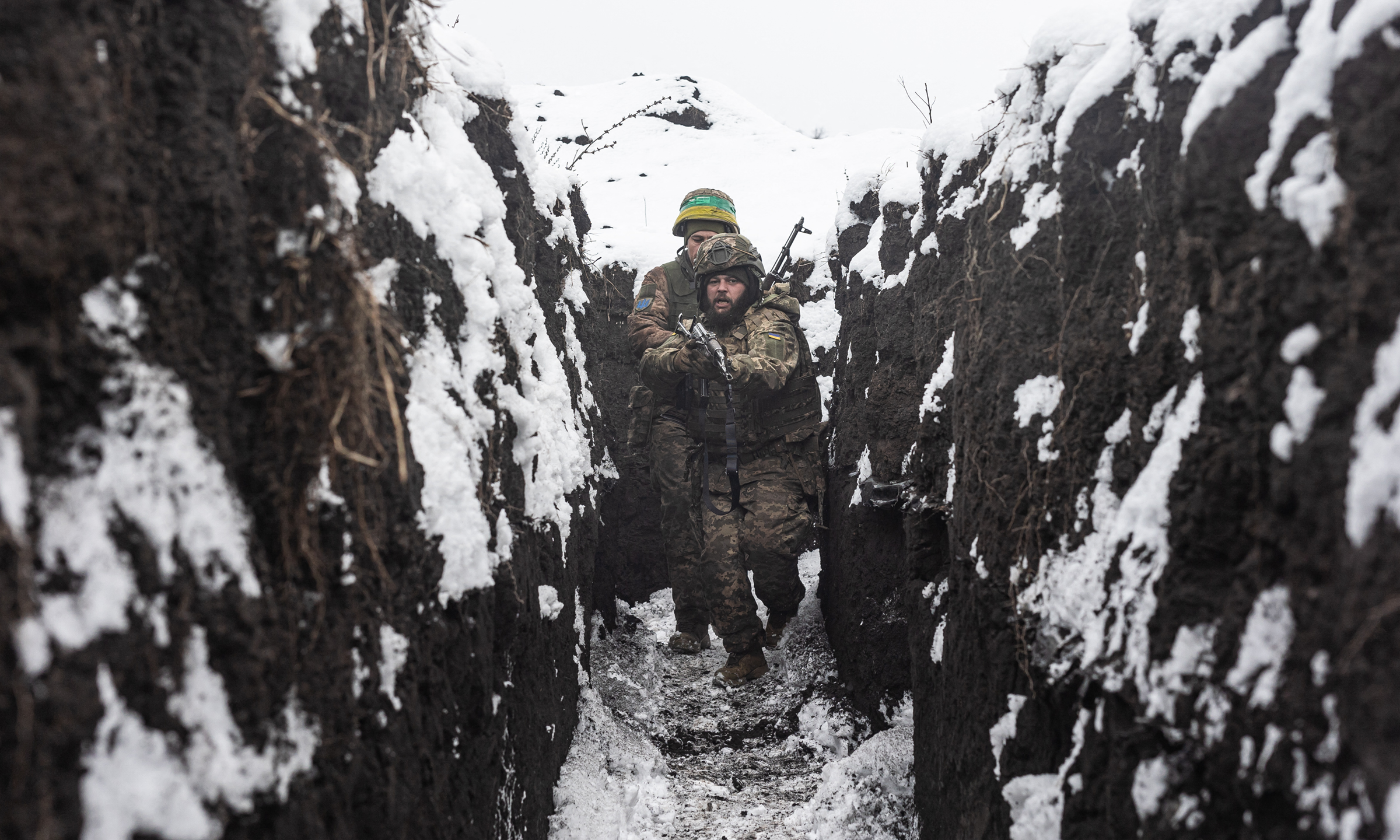 |
Ukrainian servicemen training at a snow-covered firing range in Kharkov province in late December 2025. Photo: AFP |
The harsh winter exacerbates the mental burden on Ukrainian soldiers, who already face pressure from a lack of reinforcements and prolonged conflict, according to Nefor and Andrieiev. Nefor's company moves in small groups of two to three people, up to four, to avoid Russian reconnaissance drones. Soldiers rotate guard duty in trenches for several hours, allowing comrades to retreat to warmer resting positions.
Andrieiev stated that with more drone pilots, he could rotate front-line forces every four to five days, rather than deploying them in the forest for two to three consecutive weeks. "Staying so long in freezing temperatures is very exhausting, even with heating equipment," he remarked. He emphasized the need for more fuel and clothing. Even simple tasks like using the latrine in trenches become stressful due to the constant threat from Russian drones and the difficulty of reacting quickly while encumbered by layers of clothing, armor, and combat gear.
Despite the severe cold, Russian attacks continue with undiminished frequency and intensity. "No matter the weather, they still cross the frozen fields to attack us," Andrieiev concluded.
Pham Giang (According to Business Insider)