Photographer Eric Kilpatrick released images on 12/12, showing a B-52H bomber, tail number 60-011, flying with its drogue chute deployed and trailing behind the aircraft.
According to Kilpatrick, the incident lasted about three minutes. The B-52H flew low near the runway, and the pilot contacted air traffic control to inquire if the drogue chute was still attached. Upon confirmation, the pilot released the chute and returned the B-52H to Barksdale Air Force Base without declaring an emergency.
Images of the B-52H flying with a deployed drogue chute are considered extremely rare. An unintended mid-air drogue chute deployment is also a highly unusual event for a B-52 bomber.
Drogue chutes are typically deployed after an aircraft lands to shorten the rollout distance and reduce brake wear, especially on wet or icy runways. If this component deploys during flight, it creates additional drag, affecting the aircraft's control, speed, and fuel consumption. Consequently, pilots receive training to manage such situations.
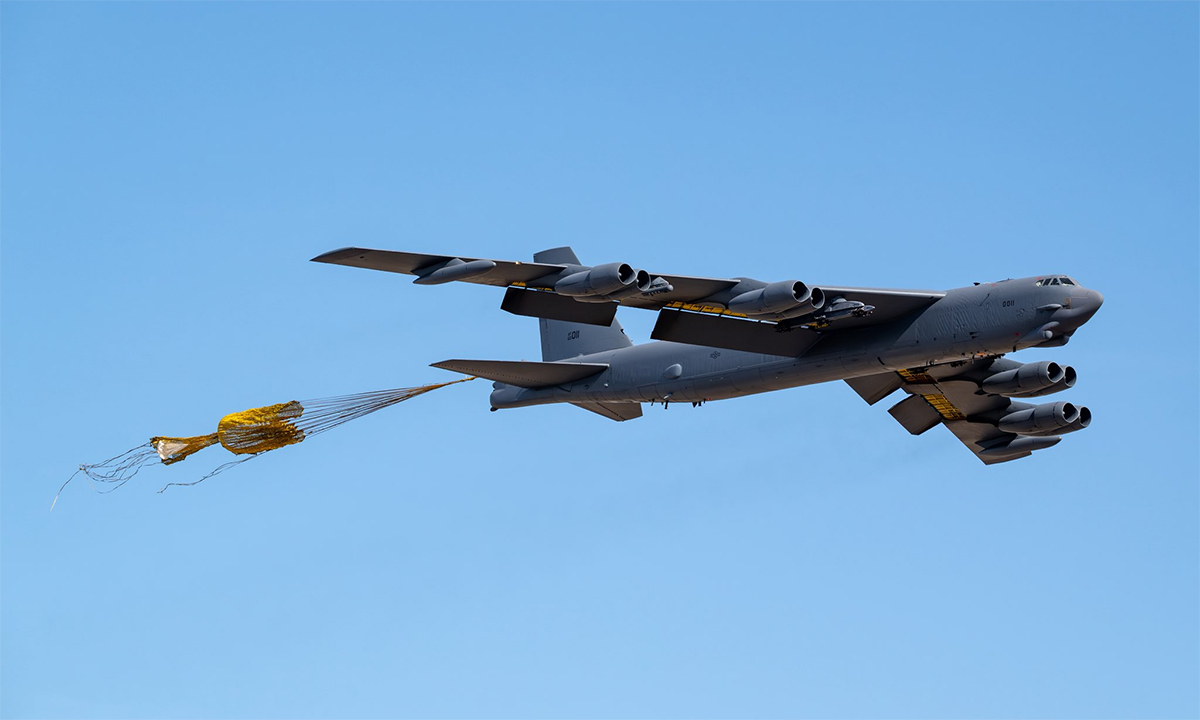 |
A B-52H bomber trails a drogue chute over Fort Worth Air Force Base, US on 11/12. Photo: X/Eric Kilpatrick |
The B-52 bomber, developed by the US in the 1940s, first took flight in April 1952 and entered service with the US Air Force in February 1955. A total of 744 B-52 aircraft were produced. The US Air Force currently maintains a fleet of 72 to 76 aircraft in service.
Nguyen Tien (According to Aviationist, AP)