US Secretary of State Marco Rubio stated to reporters in Athens, Greece, on 7/10, "The Strait of Hormuz remains open, with oil traffic currently nearly equivalent to pre-conflict levels. Therefore, Iran has completely lost its ability to fully control this strait."
Rubio believes US sanctions are crippling Iran's economy, sending it into a freefall, heading towards a situation few nations have ever experienced.
 |
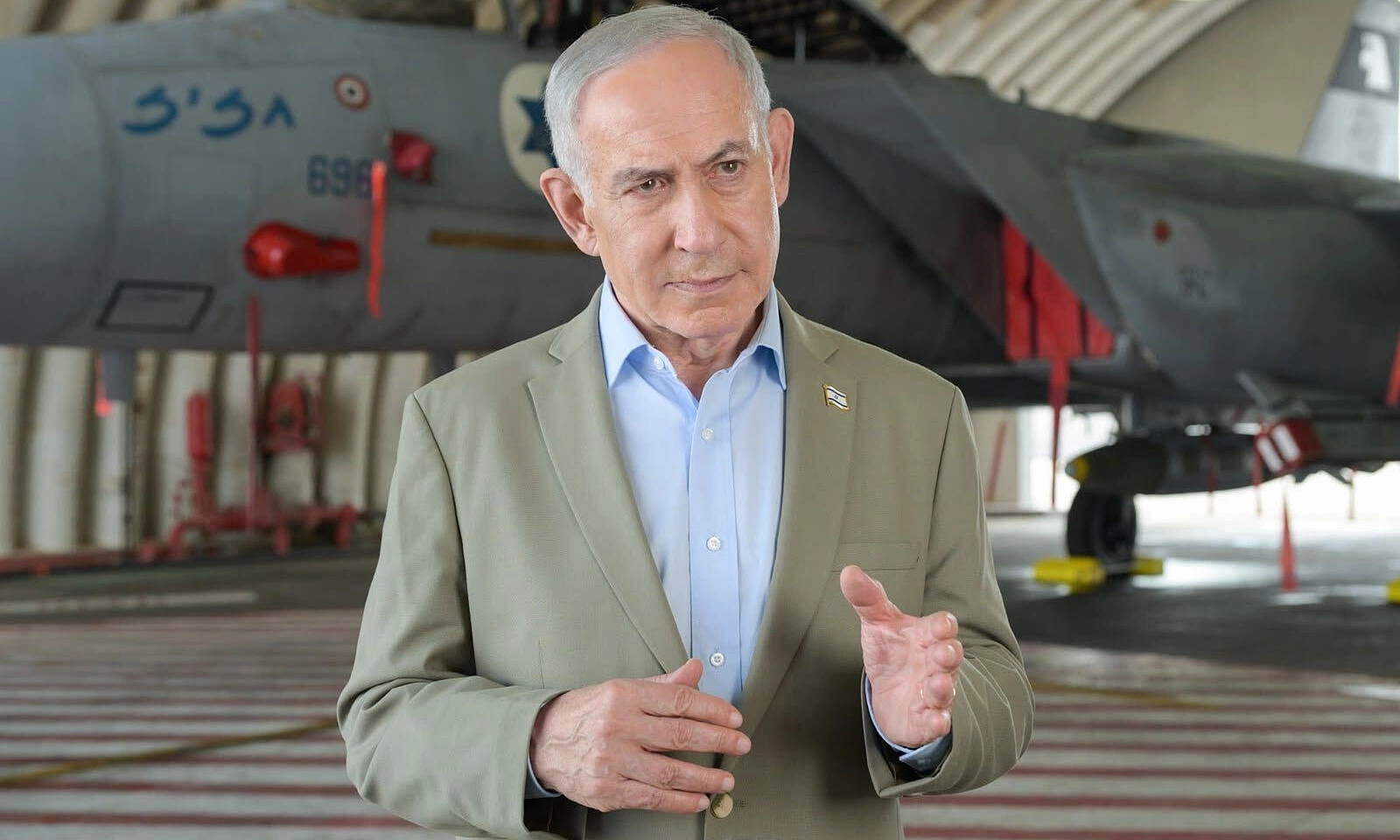
US Secretary of State Marco Rubio at a press conference in Athens, Greece, on 7/10. Photo: AP |
"Iran must not possess nuclear weapons, it's that simple, full stop. Any agreement acceptable to the US must ensure Iran never acquires nuclear weapons," Rubio said.
Abdolnaser Hemmati, Governor of the Central Bank of Iran (CBI), acknowledged in a televised statement on 6/10 that inflation is a challenge, but Iran's economy has not collapsed as US officials predicted.
"They intended to collapse the economy within two weeks through a pincer movement campaign, but 10 days have passed, and we remain on the front lines of the economic war," Hemmati said. "The outcome they desire will be their own undoing."
Arne Lohmann Rasmussen, an expert at Global Risk Management consulting firm, noted that "oil exports from the Gulf, excluding Iran, averaged 19,2 million barrels per day in September, equivalent to 81% of pre-conflict levels," despite Iran's continued restrictions on oil tankers passing through the Strait of Hormuz.
"Crude oil exports have recovered to 91% of previous levels, but refined oil products only reached about 60%. This supply drop has caused fuel prices to surge," Rasmussen stated.
 |
Location of Iran and the Strait of Hormuz. Graphic: Guardian |
The Financial Times reported on 7/10 that only a limited number of cargo ships were willing to travel through Hormuz. Some ships transport crude oil to waters off Fujairah in the Gulf of Oman, where the cargo is then transferred to smaller vessels for delivery.
Oil tanker captains are being offered salaries of up to 100,000 USD per month, along with a 50,000 USD bonus for each trip through the Strait of Hormuz. Previously, captains' monthly salaries were around 15,000 USD, while crew members typically received about 1,500 USD.
Shipowners must pay significantly higher war risk insurance premiums, at 6-10% of the vessel's value. For a supertanker, this amount can reach 20 million USD for a single voyage into the Gulf.
 |
Cargo ship anchored off Bandar Abbas, Iran, on 11/6. Photo: AP |
According to the Financial Times, the security situation in Hormuz is becoming an increasingly critical factor for the global oil market. If attacks escalate or fewer crews are willing to undertake voyages through it, oil transportation costs from the Gulf will rise, despite no corresponding decrease in extraction output.
The International Maritime Organization (IMO) of the United Nations recorded at least 93 vessels attacked and 24 sailors killed in the region since 28/2, when the US-Israel launched an offensive against Iran. According to maritime security firm Vanguard, at least 14 cargo ship attacks occurred in the Strait of Hormuz since 20/9.
Nguyen Tien (According to AFP, Reuters, FT)