The Traffic Police Department advises drivers to determine and maintain an appropriate distance from the vehicle ahead, based on speed, road conditions, and traffic flow, rather than relying solely on road signs or a fixed number. Below are signs that indicate a driver is not maintaining a safe distance, without the need for road signs, roadside markers, or counting seconds.
Having to brake suddenly when the vehicle ahead brakes
If the vehicle ahead only slows down or brakes lightly, but the driver behind immediately has to brake hard, the space between the two vehicles may be insufficient for the current speed.
When the vehicle ahead slows, following vehicles need sufficient time to perceive the change, release the accelerator, apply the brakes, and adjust their speed. If the distance is too short, even a minor change by the vehicle in front can force the driver to react abruptly.
A multi-vehicle accident on the Hanoi - Bac Giang expressway on 16/10 occurred because vehicles failed to maintain a safe distance. Video: Tien Cong
This situation becomes more dangerous if the vehicle ahead brakes suddenly due to an obstacle, a vehicle changing lanes, or unexpected traffic congestion. In such cases, a driver following too closely has almost no room to react.
Conversely, by maintaining a sufficient distance, drivers can proactively reduce speed in response to the vehicle ahead without sudden braking, or simply by releasing the accelerator. Therefore, if the vehicle ahead slows and you find yourself braking hard, you should actively increase your following distance.
Unable to see the road ahead
When following a large vehicle, especially a truck or bus, the road ahead is easily obscured. Drivers can only see the rear of the vehicle in front, making it difficult to observe what is happening further down the road.
This makes it difficult for drivers to detect stopped vehicles, slowing traffic, road obstacles, or unusual situations in the lanes ahead. By the time the large vehicle in front brakes or changes lanes, and the driver finally sees the danger, the reaction time has been significantly shortened.
 |
If your view of the road ahead is obscured by the vehicle in front, drivers should increase their following distance. Photo: Ho Tan
A simple way to check is to observe whether you can see the road ahead of the vehicle you are following. If your entire field of vision is blocked by the rear of the vehicle ahead, you should proactively reduce speed and create more distance.
Constantly adjusting speed to the vehicle ahead
If the vehicle ahead changes speed, and the driver behind constantly has to release the accelerator, tap the brakes, and then accelerate to match, this may indicate that the two vehicles are maintaining too short a distance. This often occurs in heavy traffic or when following closely on a highway.
With a sufficient distance, drivers can observe traffic developments ahead and adjust speed proactively, rather than constantly manipulating the accelerator to match the vehicle directly in front. The vehicle also operates more smoothly, especially when moving in congested traffic.
Therefore, if a driver constantly feels like they are "chasing" the speed of the vehicle ahead, they should proactively reduce speed and create a larger buffer. This distance needs to be increased further at high speeds, in rainy conditions, or when visibility is limited.
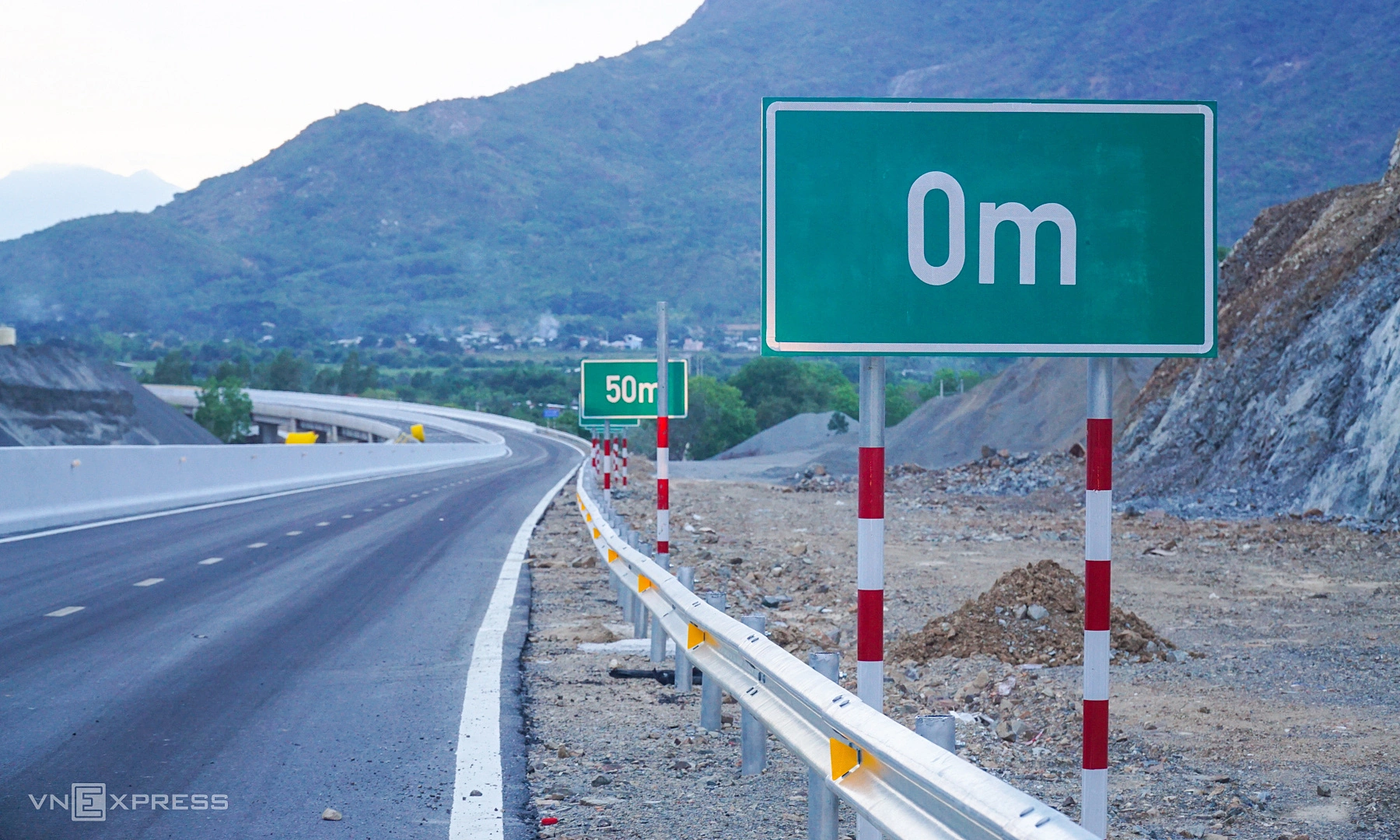
The signs above are only estimates, designed to help drivers develop observational skills and adjust their following distance. More specific methods for determining safe distance include applying the three-second rule or using distance guide markers and roadside reference points.
 |
Ho Tan