On 21/8, a video circulated on social media showing a red oto in Hanoi with license plate 89A-655.xx on the front and 35A-118.xx on the rear. On 24/8, traffic police used the AI camera system to track the vehicle's route and identify the driver, a resident of Hung Yen.
At the police station, the driver admitted to deliberately using license plates from another vehicle to avoid detection and subsequent fines from AI cameras. The driver was fined 23 million VND and had 10 points deducted from their driver's license for operating a vehicle with a license plate inconsistent with its registration certificate.
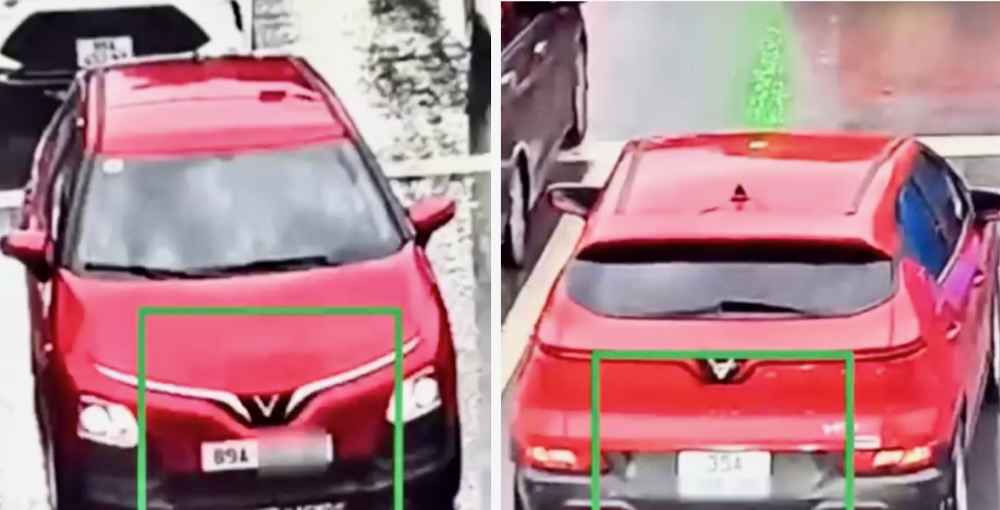 |
Photo of the vehicle violating regulations by using two different license plates. *Photo: Hanoi City Police*
AI cameras are expanding in many urban areas, helping detect more violations. In Hanoi, 1,837 AI cameras at 195 intersections detected over 33,100 violations during the first six months of 2026. The city is also expanding its network to over 2,400 cameras, with more than 1,100 capable of detecting traffic order and safety violations.
The monitoring system does not just record license plates at a single moment; it can also track vehicle journeys. Images from cameras and other sources, including videos provided by citizens or posted on social media, can also be accepted for processing when sufficient evidence is available.
Beyond using different license plates, methods of tampering to make license plates difficult for cameras to identify are also subject to penalties. Effective 15/8, Decree 238/2026 adds to the penalties for license plates, specifically targeting "interference that makes license plates difficult or impossible for cameras to identify." Thus, even if a license plate is visible to the naked eye, if the vehicle owner makes it difficult for a camera to identify—for example, by applying reflective film, coatings, or glare-inducing devices—they can still be fined.
Pham Hai