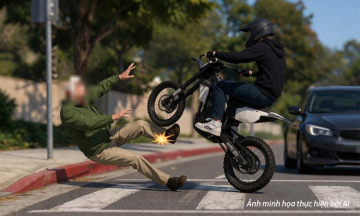
The accident on 4/5 at midnight in Hai Phong, where a car turning a corner ran over a man lying in the middle of the road, sparked a debate. The discussion centered on whether the incident was due to the driver's skill or the vehicle's large blind spot. One side argued the road was clear and the driver was not observant, while the other claimed the car's large A-pillar obstructed the driver's view of a person lying on the ground.
Analyzing the incident, the panel of experts from Car Awards believes the primary issue leading to the situation was the driver's skill. Blind spots played a minor role and could have been mitigated with proper driving techniques from the outset. Specific problems identified include:
Incorrect lane change
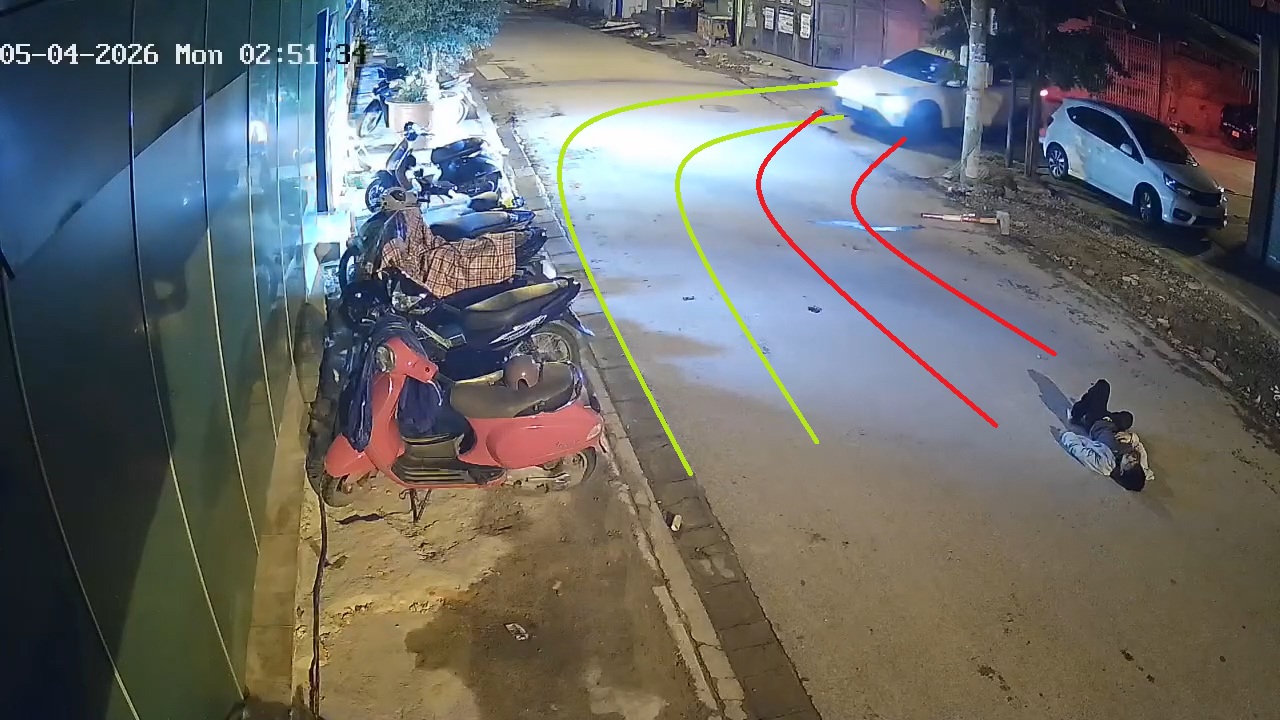 |
Car making an incorrect turn. Screenshot |
The image above shows the moment the car was preparing to turn left from an alley onto the main road. The principle for merging is that the driver must steer along the center line of the road and move into the correct lane of travel. Under Vietnamese law, vehicles drive on the right side of the road, meaning the driver should have steered the car along the blue line in the image. However, the car followed the red line, driving directly into the oncoming lane, thus causing the accident.
If the turn had been made correctly along the blue line, the driver would have had a much better view of oncoming traffic. This would also have helped the driver avoid the blind spots created by the pillars and the car parked on the sidewalk.
Failure to utilize good observation areas
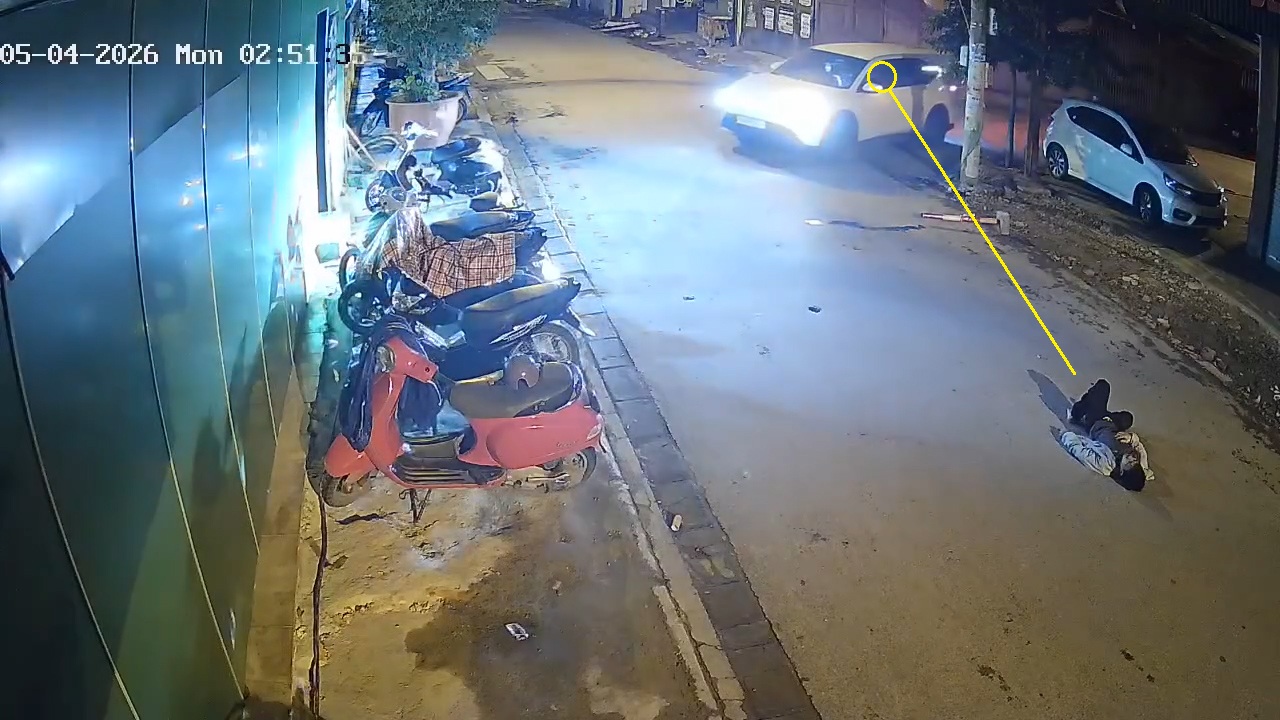 |
Observation through the window could have revealed the person lying down. Screenshot |
Once half the vehicle had entered the main road, the driver had an opportunity to clearly see the person lying on the road by looking over their shoulder through the driver's side window. According to the yellow connecting line in the image, the space from the driver's eyes to the person lying down was clear, unobstructed from above or below. Experts believe that with active observation, the driver could have easily detected the person.
A-pillar blind spot obstructs driver's view
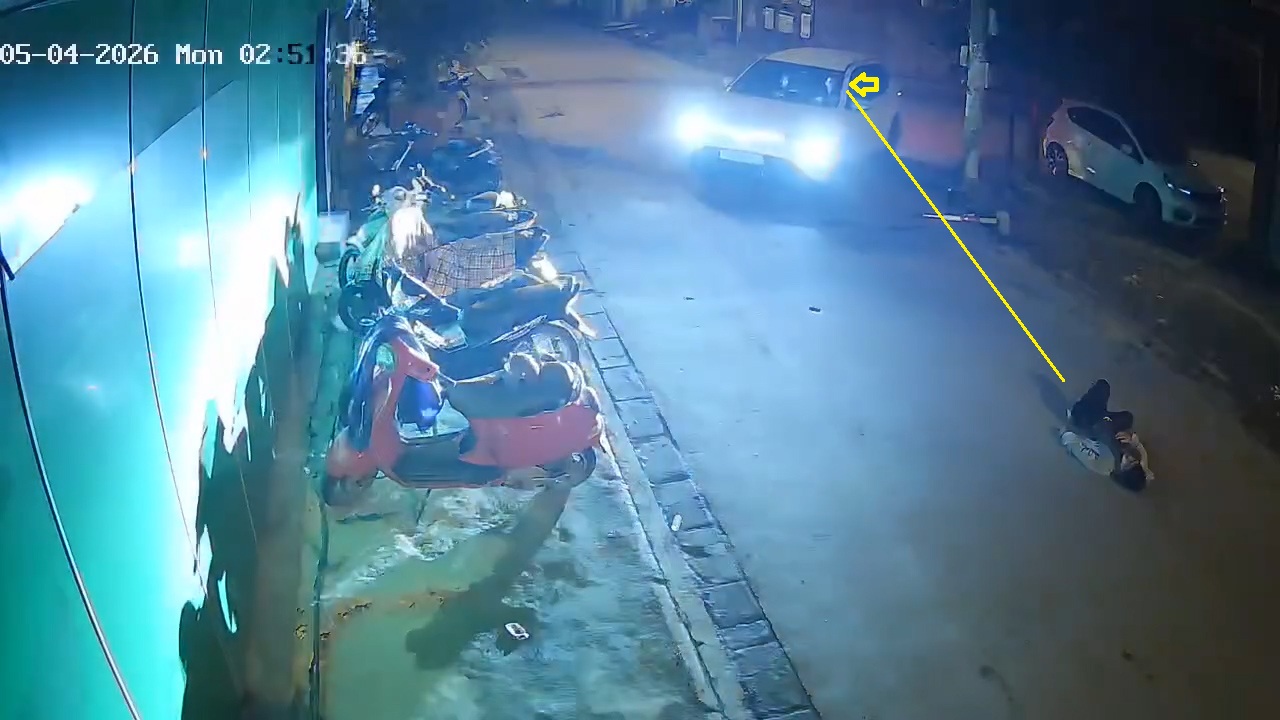 |
A-pillar makes it difficult for the driver to see the person lying down. Screenshot |
At the moment the driver turned to look in the direction of the person lying down, the A-pillar obscured their view. The blind spot was significant at this point, especially in the dark with the person wearing dark clothing. Experts note that A-pillar sizes vary by vehicle model, leading to larger or smaller blind spots. However, with an object directly in line as shown in the image, it is difficult to observe, regardless of A-pillar thickness.
Driver distraction
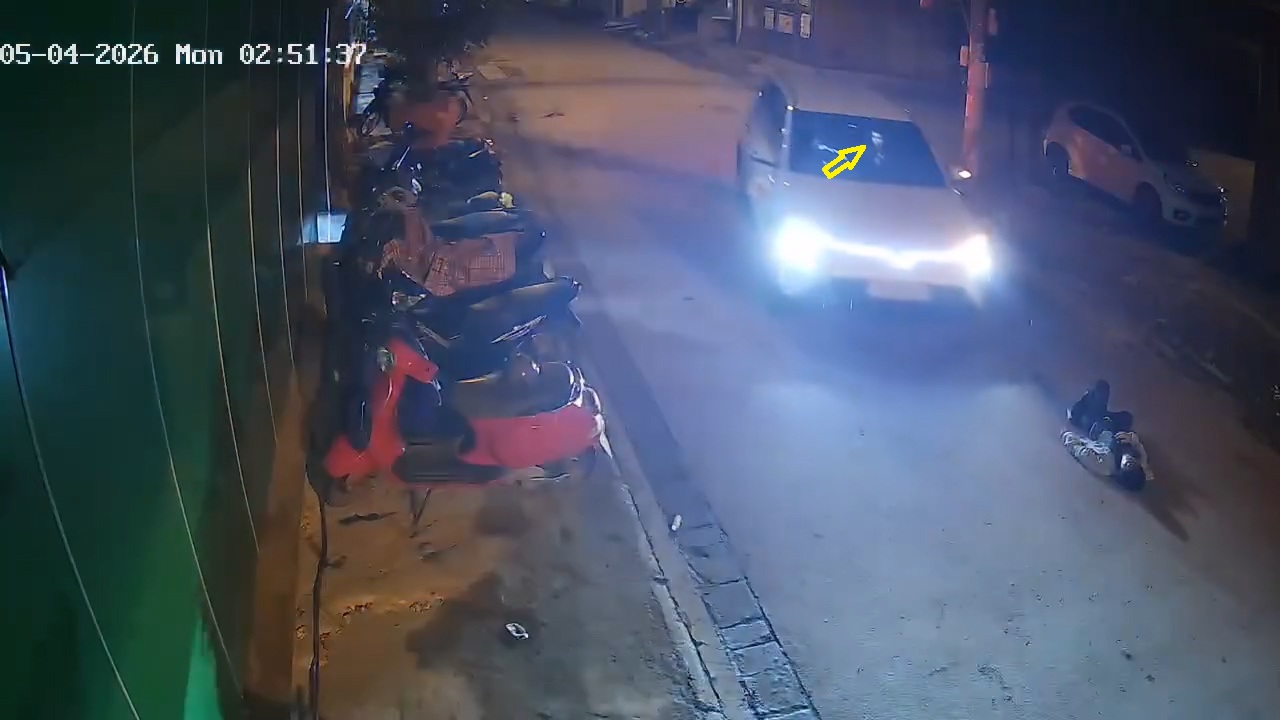 |
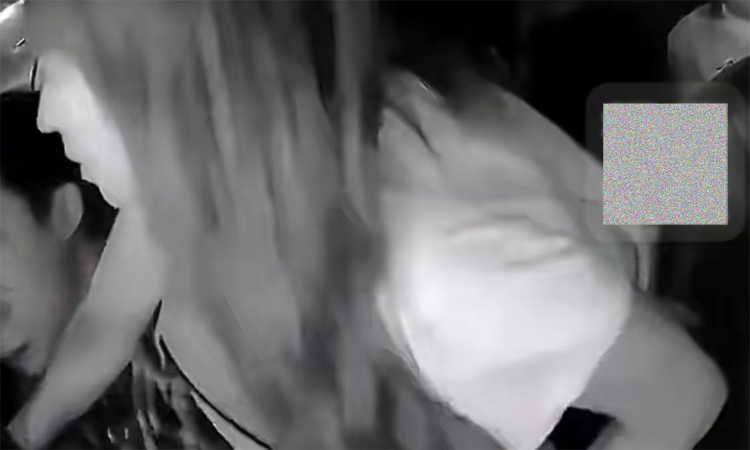
Finally, in a brief moment before running over the victim, the driver looked down at something inside the car, instead of focusing on the road. When driving, even a split second of distraction can lead to an accident because situations unfold rapidly.
In 2021, Lexus conducted an experiment with several drivers where the windshield was unexpectedly obscured for a few seconds – simulating driver distraction – which led to accidents.
Car Awards experts advise that when changing direction, drivers must concentrate, stay in the correct lane, and expand their field of vision by performing shoulder checks to both the left and right when turning, ensuring the path ahead is clear. Ultimately, maintaining focus is a non-negotiable principle when driving, even for a second.
Nguyen Vu