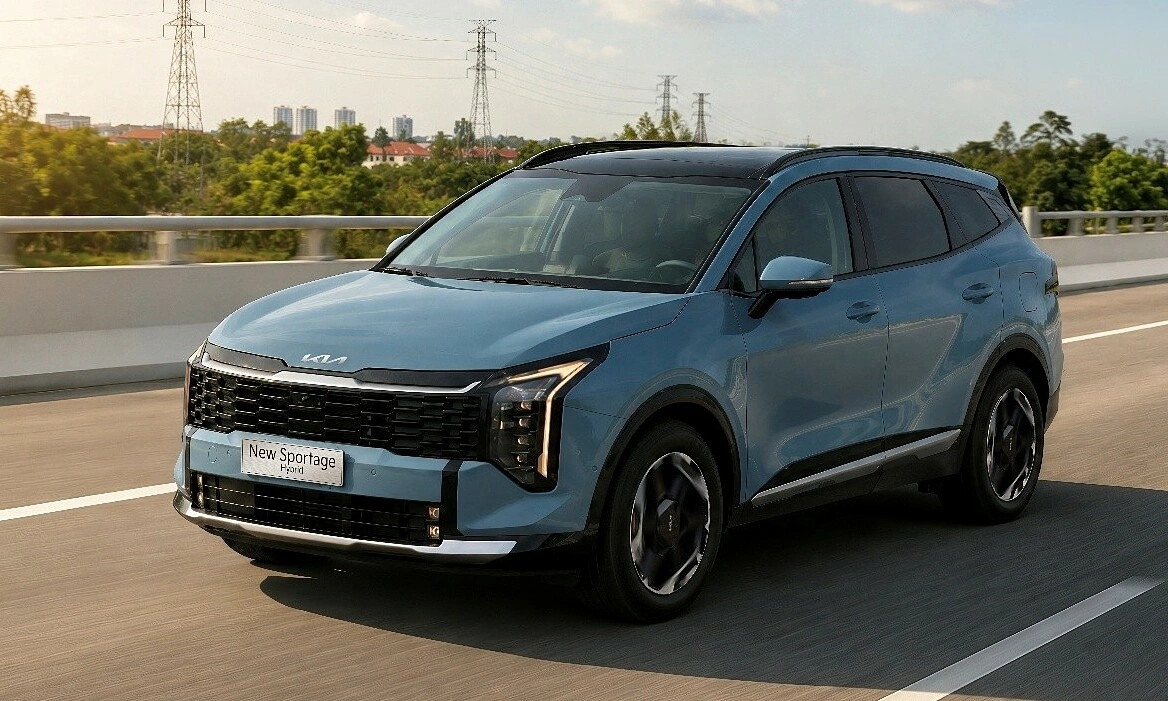
The Highway Traffic Police Team No. 1, under the Traffic Police Department, announced on 23/8 that during a patrol, control, and violation enforcement operation on the Noi Bai - Lao Cai highway, specifically the section passing through Au Lau ward, they detected a car driving dangerously close behind a container truck. The driver failed to comply with safe distance regulations for vehicles ahead. Video evidence showed the car was only about half a car length from the container's rear.
Video: Traffic Police Department
Authorities determined the car driver failed to maintain a safe distance while driving on the highway. Consequently, the driver received a 5 million dong fine and had two points deducted from their driving license.
Maintaining a safe distance from the vehicle ahead is a fundamental principle for preventing collisions on highways. A sufficient gap allows the following driver more time to react, brake, or steer away if the leading vehicle suddenly slows down or brakes, thereby avoiding collisions and chain-reaction accidents.
The risks are even more pronounced when a car drives too close behind a container truck. The large body of the truck can obstruct the driver's view, making it difficult to observe traffic conditions ahead. If the container truck suddenly slows or encounters an obstacle, an insufficient distance can prevent the following vehicle from reacting in time.
In practice, many drivers 'draft' behind large vehicles to reduce wind resistance, thereby saving energy, whether fuel or electricity. Some drivers also employ this tactic to avoid surveillance cameras or law enforcement when engaging in prohibited behaviors, such as using a phone or evading toll booths.
According to traffic law, safe distances between vehicles are determined by speed. Drivers must maintain a minimum distance of 35 m when traveling at 60 km/h. This increases to 55 m for speeds between 60-80 km/h, 70 m for 80-100 km/h, and 100 m for 100-120 km/h.
Practically, drivers can gauge distance using the three-second rule: select a fixed object, such as a sign or lamppost, as a marker; begin counting when the vehicle ahead passes it, and ensure your vehicle reaches that point after at least three seconds. On highways, roadside markers at 0 m, 50 m, and 100 m can also help estimate distance. In adverse weather conditions, drivers must maintain a greater distance than usual.
Pham Hai