Founded in 2015, AirX Carbon aims to replace virgin plastic in industry with sustainable materials developed from agricultural by-products, particularly coffee grounds. The company currently operates factories in Tay Ninh and Binh Duong with a total capacity of approximately 3,000 to 4,000 tons of material annually. It also collaborates with many cafes, restaurants, and F&B chains to collect coffee grounds, adhering to a circular economy model.
 |
Plastic cup made from coffee grounds developed by AirX Carbon. Photo: AirX Carbon
Vietnam ranks among the top three largest coffee exporting nations globally. Consequently, the volume of coffee grounds generated during processing and consumption is rapidly increasing, putting pressure on urban organic waste management systems. To address this, AirX Carbon developed a closed-loop process to convert coffee grounds into recyclable biomaterials. All stages, from collection and drying to biological treatment and bioplastic pellet production, are carried out domestically.
AirX Carbon's bioplastic pellets find application across various industries, including packaging, drinking cups, household items, tableware, automobiles, personal care products, stationery, gardening tools, and furniture.
In addition to coffee, carbon-negative bioplastics are also developed from other eco-friendly agricultural by-products such as bamboo, sugarcane, rice, and rice husks. These materials represent a key strength for AirX in its partnerships with many foreign companies.
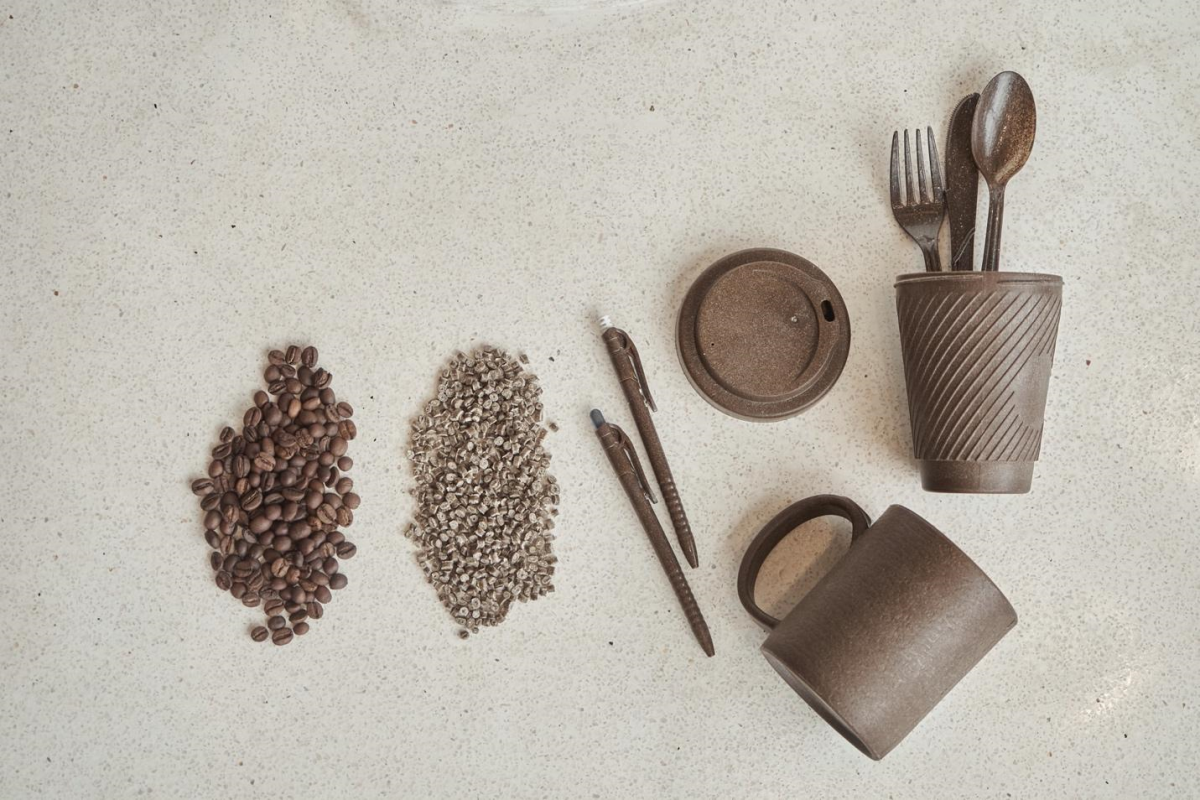 |
Bioproducts from AirX Carbon. Photo: AirX Carbon
According to the "Circular Economy in Vietnam" report by the Institute of Strategy and Policy on Natural Resources and Environment, utilizing agricultural by-products for biomaterial production can help reduce annual organic waste in major cities by up to 30%.
An AirX Carbon representative stated that the company will expand its collection network to Binh Duong and Dong Nai during phase 2026-2027, increasing its processing capacity to hundreds of tons of coffee grounds each year. This initiative is part of the company's strategy to develop domestic recycled materials and contributes to Vietnam's net-zero emissions target by 2050.
Thai Anh