The Ministry of Finance is currently seeking public feedback on a draft decree. This decree outlines tax declaration, calculation, deduction, and the use of electronic invoices for business households and individuals. This marks the first time a separate draft has been developed for tax management specifically for business households, distinguishing it from the current Tax Administration Law.
Currently, regulators impose a revenue threshold for value-added tax and personal income tax on business households and individuals. The existing threshold is 100 million VND, with a government proposal to raise it to 500 million VND. Under the draft, business households and individuals will determine their tax liability based on actual annual revenue starting from 1/1/2026.
For those using electronic invoices with tax authority codes, the information system will assist in determining payable amounts for value-added tax, personal income tax, special consumption tax, natural resource tax, and environmental protection tax (if applicable). This data will be updated for taxpayers. Business households and individuals not using electronic invoices must self-determine their payable tax amounts.
In principle, business households and individuals must accurately, truthfully, and fully declare all information in their tax returns and revenue items for each tax type. They are responsible for calculating their own tax amounts and other payable collections, except when tax authorities handle these collections. If taxes have already been declared and paid on their behalf, taxpayers are not required to pay those amounts again.
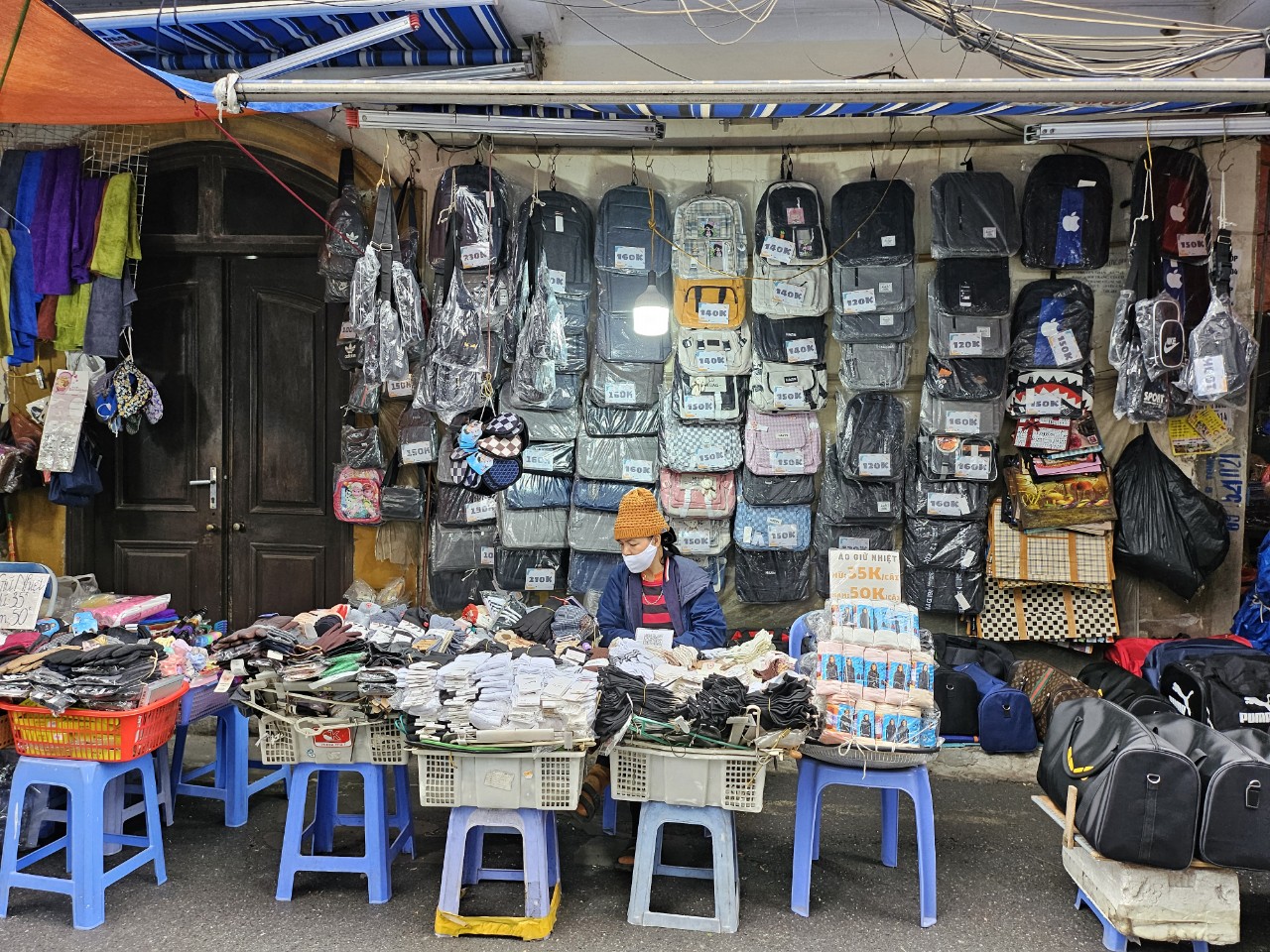 |
Traders selling goods at a market in Hanoi. Photo: Phuong Dung |
Traders selling goods at a market in Hanoi. Photo: Phuong Dung
Regarding electronic invoice usage, this regulation remains consistent with Decree 70, effective from mid-2025. Specifically, business households and individuals with annual revenue of 1 billion VND or more must use electronic invoices with a tax authority code or electronic invoices generated from cash registers connected to tax authorities.
Business households with annual revenue under 1 billion VND are not required to use these invoices but are encouraged to do so if they meet information technology infrastructure requirements and have a need.
Concerning implementation timelines, value-added tax subjects will declare and pay monthly or quarterly. Personal income tax based on revenue will be declared quarterly, while tax calculated on profit will be declared annually.
If electronic invoices or invoices generated from cash registers connected to tax authority data are used, the information technology system will automatically create suggested tax declarations to assist business households and individuals. If they self-determine they are not subject to tax, business households and individuals must declare their revenue by 31/1 of the following year at the latest.
The deadline for tax payment for business households and individuals is the last day of the tax declaration submission period. For supplementary declarations, the tax payment deadline is the submission deadline for the tax period containing errors.
The decree is expected to take effect from 1/1/2026, marking the official transition for business households from lump-sum tax payments to declarations based on actual revenue. The Ministry of Finance believes this declaration mechanism will enable tax authorities to accurately control actual revenue, reducing budget losses. It also encourages business households to be more transparent and professional in their operations, helping them gradually improve accounting systems and financial transparency.
This change promotes equality among business entities, preventing situations where large-scale households receive more favorable treatment than small enterprises. Concurrently, business households are encouraged to transition into formal enterprises to leverage the accounting, credit, and legal benefits available to companies.
Phuong Dung