


On the morning of 28/1, the Dollar Index, which measures the US dollar's strength against a basket of six major currencies, fell to 95.56 points. This marks its lowest level since 2/2022.
This weakness pushed the euro to 1.2 EUR per USD, its first time reaching this level since 2021. The Australian dollar also surged to a three-year high against the USD. The yen, a renowned safe-haven currency, rebounded after several sessions of declines, trading stably in Asian sessions at 162.7 JPY per USD.
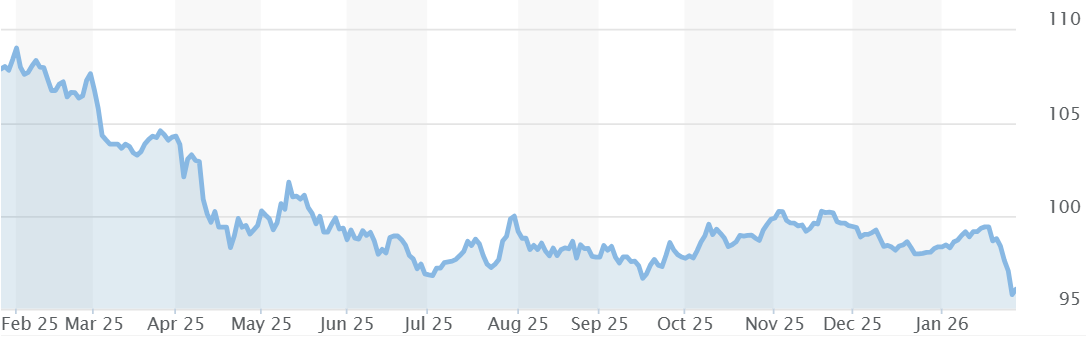 |
Dollar Index movements over the past year. Chart: Market Watch |
Analysts suggest the USD's decline accelerated following comments from US President Donald Trump. On 27/1, when asked by reporters whether the USD was falling too much recently, Mr. Trump stated, "No, I think the dollar is doing very well".
Previously, the USD recorded its sharpest three-day decline since last April, when Mr. Trump announced reciprocal tariffs on all trade partners. Markets have recently been concerned about his diplomatic strategy regarding Greenland and signals that the US is prepared to help Japan support the yen.
"Officials typically seek to curb sudden currency fluctuations. However, when the President expresses indifference or even support for the current trend, those selling USD gain further momentum", commented Steve Englander, head of G10 currency research at Standard Chartered.
Last year, the USD depreciated by over 9%, its lowest level since 2017. Analysts attribute this to Mr. Trump's foreign policy and spending, along with efforts to undermine the Federal Reserve's (Fed) independence.
A weaker dollar has partially fueled the acceleration of global gold prices, which currently stand at a record 5,239 USD per ounce. US crude oil also surpassed its 200-day moving average for the first time in six months, reaching 62.5 USD per barrel.
In the domestic market, the USD exchange rate at Vietcombank this morning was around 25,890 - 26,280 dong. This represents a 50 dong decrease in both buying and selling rates compared to 27/1.
By Ha Thu (Reuters)


