On 13/3, Reuters, citing data from ship tracking firms Lloyd’s List Intelligence and MarineTraffic, reported that at least 10 Greek-operated and two Chinese-operated ships have transited the Strait of Hormuz since the Middle East conflict began on 28/2. These vessels transported both oil and general cargo.
Reuters sources identified the companies involved as Dynacom, owned by Greek shipping magnate George Prokopiou, and Aeolos Management, belonging to the Embiricos family, also from Greece.
 |
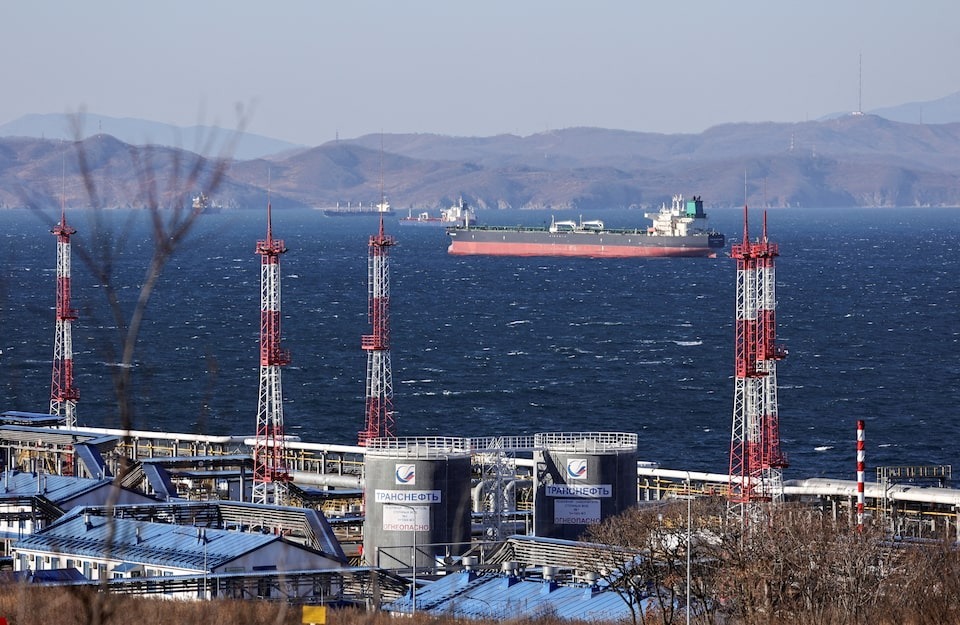
Oil tankers in waters near the Strait of Hormuz on 11/3. Photo: Reuters |
These vessels brave the risk of destruction by mines, missiles, and drones for the chance to earn millions of US dollars in rapid profits. The Iranian military has attacked multiple ships transiting Hormuz, declared the strait closed, and warned that oil prices could surge to 200 US dollars per barrel. At least 16 ships have been attacked, including some operated by Greek companies.
“The risks are significant, but shipping has always been a perilous business,” a Greek shipowner involved in these voyages told Reuters.
Despite the dangers, the potential profits are substantial. Oil tanker owners can earn up to 500,000 US dollars per day for a charter contract, a six-year high, according to data from shipping brokers. Industry sources told Reuters that even after factoring in very high war insurance premiums and increased wages for crew members, companies can still secure millions of US dollars for each multi-day journey.
The Wall Street Journal (WSJ) revealed that Dynacom’s ships are equipped with armed guards patrolling the decks. However, these guards are nearly powerless against attacks involving missiles, drones, or mines.
This development reflects the financial allure stemming from soaring oil prices and escalating freight rates since the conflict began. Brent crude has now reached 103 US dollars per barrel, and West Texas Intermediate (WTI) is at 98 US dollars, representing a 50% increase during the conflict. Historically, the Strait of Hormuz has facilitated the transport of approximately 20% of the world’s oil and liquefied natural gas (LNG) supplies.
In a 12/3 interview with Fox News regarding tensions in Hormuz, former US President Donald Trump suggested that merchant ships should “show courage” and navigate this vital maritime route. He stated, “There’s nothing to be afraid of. They don’t have a navy, and we’ve sunk all their boats.”
Earlier, Trump had also declared that the US Navy would escort ships if necessary. However, US Energy Secretary Chris Wright admitted on 12/3 that the navy could not immediately escort oil tankers through the Strait of Hormuz due to a lack of resources. They would only be able to deploy such operations in a few weeks.
US Defense Secretary Pete Hegseth stated on 13/3 that there was no clear evidence Iran had laid mines in Hormuz. Nevertheless, Stephen Cotton, Secretary General of the International Transport Workers’ Federation (ITF), told Reuters that transiting the strait at this time is a terrible idea. He asserted, “Sending seafarers through the Strait of Hormuz right now is akin to pushing them into a war zone.”
Current measures adopted by shipowners include turning off Automatic Identification System (AIS) transponders to avoid detection by the Iranian military and traveling at night. Cotton remarked, “Some companies turning off AIS to secretly move ships through and avoid attack is extremely worrying. It’s gambling with seafarers’ lives.”
These voyages are considered the boldest since the 1980s. During that period, Norwegian billionaire John Fredriksen amassed significant wealth during the “tanker war,” as his ships risked missile strikes to load and transport oil amidst the Iran-Iraq conflict.
Ha Thu (according to Reuters)