


On 8/5, Reuters, citing sources, reported that the White House and US Treasury are considering inviting representatives from over 10 US businesses to join President Donald Trump on his visit to China next week. This number is significantly smaller than the 29 CEOs who accompanied him during his 2017 visit.
Semafor reported that the CEOs of Nvidia, Apple, Qualcomm, Citigroup, and Boeing are among those invited. They are expected to attend a banquet hosted by Chinese President Xi Jinping alongside President Trump.
The late issuance of invitations suggests internal disagreements within the US administration regarding the size and composition of the CEO delegation. It also indicates modest expectations for the upcoming visit.
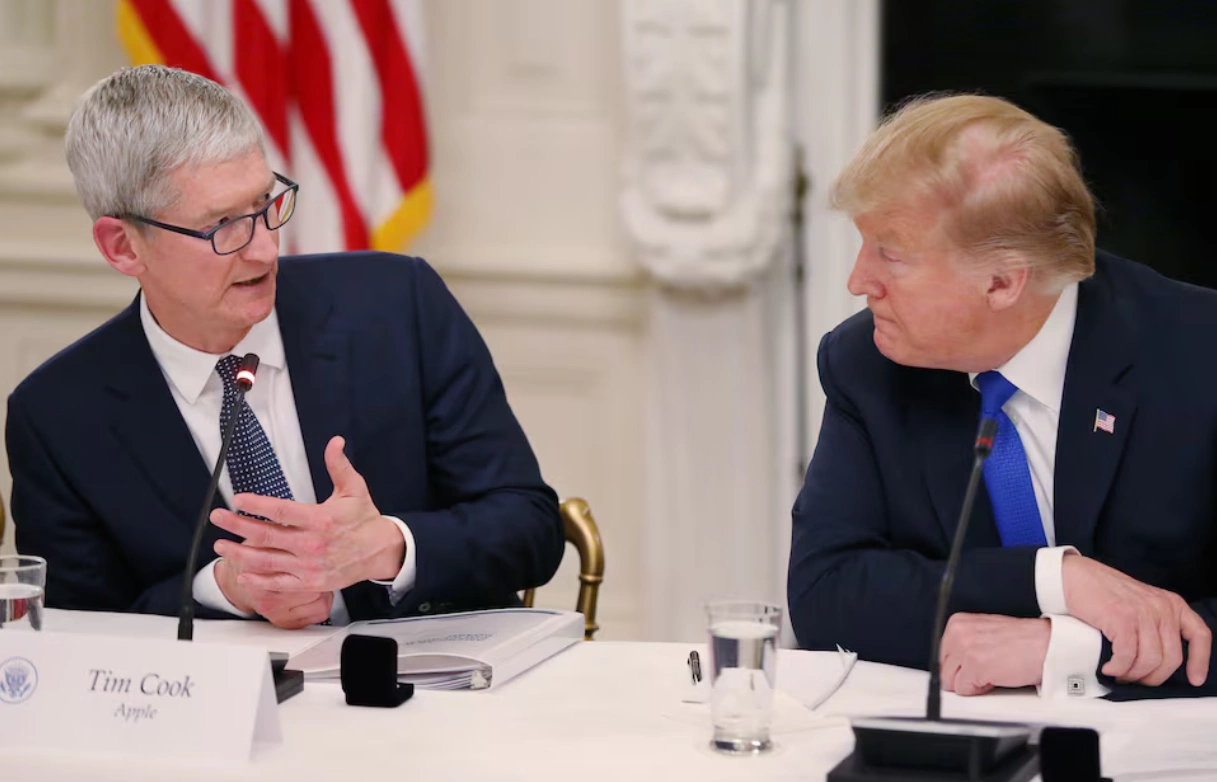 |
Apple CEO Tim Cook and US President Donald Trump at the White House in 2019. Photo: Reuters |
The size of the US business delegation is also notably smaller compared to those accompanying other Western leaders to China recently. In January, British Prime Minister Keir Starmer visited China with 60 business and cultural leaders. In February, German Chancellor Friedrich Merz traveled with 29 industrial giants from his country.
Previously, when the US and China had planned a summit for March, Reuters reported that US Trade Representative Jamieson Greer preferred not to include top CEOs in the Beijing delegation, aiming instead to focus on "controlled trade."
Reva Goujon, a geopolitical strategist at the Rhodium Group consultancy, stated, "A small CEO delegation, aligned with actual concessions and negotiation content, is reasonable. Greer is very cautious about not creating overly high expectations."
Nvidia CEO Jensen Huang told CNBC he would participate in the visit "if invited." Three sources indicated that major US beef and soybean producers are also being considered for the delegation.
Last month, Boeing CEO Kelly Ortberg stated that this year's conference is crucial for securing their first major order with China since 2017. Boeing and China are still negotiating a deal that could include 500 737 MAX aircraft and dozens of wide-body jets.
Another key focus of the summit is the extension of import tariff reduction agreements. Last year, both sides temporarily halted export control measures. Sources suggest Beijing is seeking a one-year extension, while Washington has proposed six months. China also desires a US commitment against future trade retaliation, such as technology export controls, and the removal of existing restrictions on advanced chips and chip manufacturing equipment.
Ha Thu (via Reuters)


