


The University of Michigan's survey, released on 8/5, revealed that the preliminary US consumer confidence index stood at 48,2 points in April. This marks the lowest level since the survey's inception in 1952.
"About one-third of consumers immediately mentioned gasoline prices, and about 30% cited import tariffs," stated Joanne Hsu, who oversees the report. Consumers generally remain under cost pressure due to high gasoline prices.
Hsu added, "Developments in the Middle East are unlikely to significantly improve public sentiment until supply disruptions are fully resolved and energy prices fall."
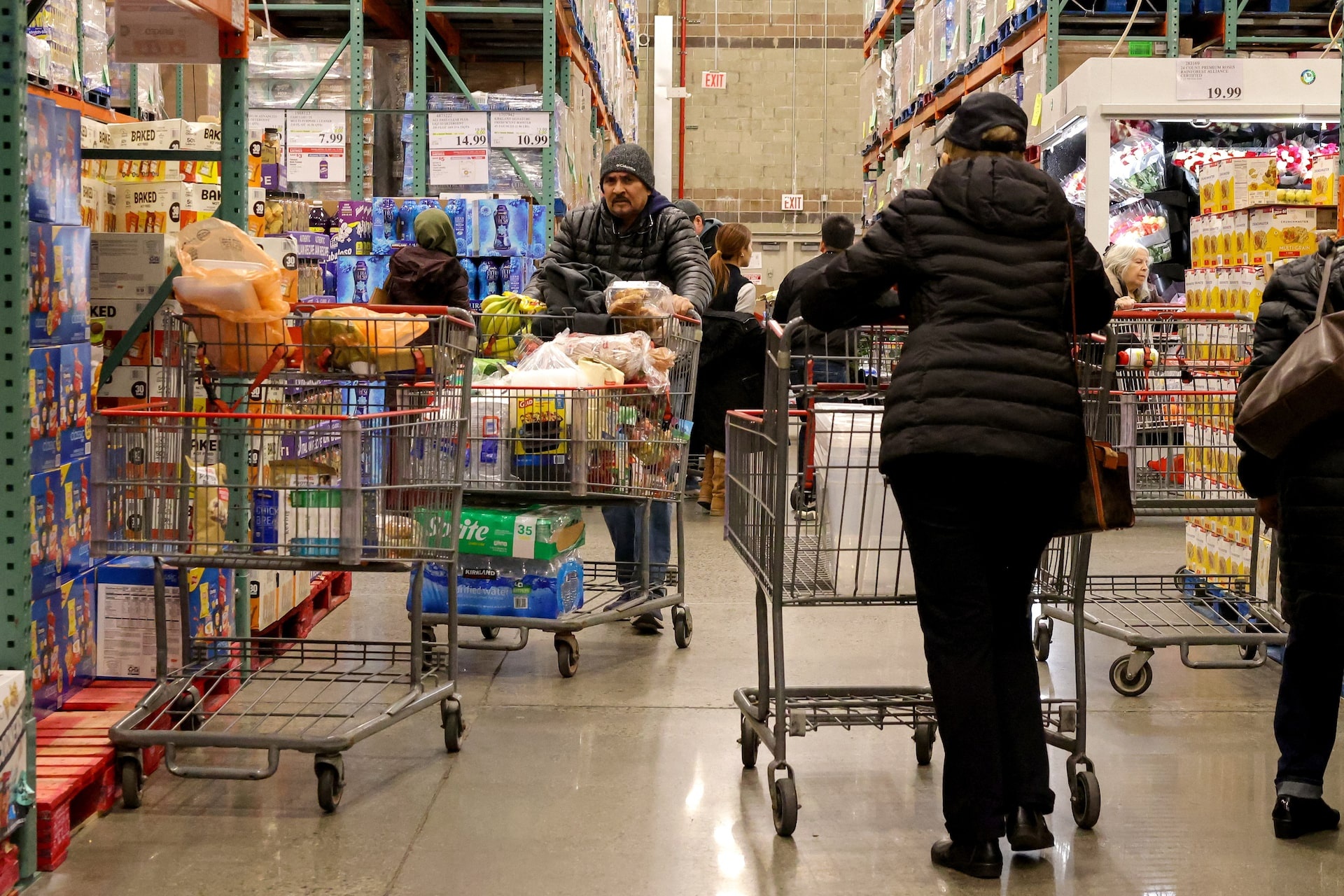 |
Shoppers at a Costco supermarket in New York City in 1/2026. Photo: Reuters |
Gasoline prices significantly influence public perception of the economy. Average gasoline prices in the US have remained above 4 USD per gallon (1,06 USD per liter) for many weeks. This is because global energy prices remain high, as the Strait of Hormuz – a route for about 20% of the world's oil – continues to be blockaded.
Oren Klachkin, a market economist at Nationwide, commented, "Unlike investors, consumers are feeling very pessimistic. Sentiment will be difficult to recover, at least until gasoline prices begin to decline sustainably."
However, record-low consumer confidence does not necessarily mean spending will decrease. Consumption currently contributes nearly two-thirds of US GDP. In recent years, declining consumer confidence has not pulled spending down. For example, in 2022, inflation hit a 40-year peak, and last year, US President Donald Trump announced increased import tariffs.
A key reason Americans have not cut spending, despite feeling pessimistic, is the robust labor market. Although hiring has slowed compared to the post-pandemic period, layoffs have not surged, helping keep the unemployment rate low. A report released on 8/5 showed the unemployment rate remained at 4,3% in April, and businesses added 115.000 jobs – higher than forecasts.
Nevertheless, people will likely adjust their shopping behavior. Gasoline prices are consuming a large portion of income, and import tariffs are also making some products more expensive. The "current economic conditions" index in Michigan's survey this month dropped 9%, to 47,8 points. "People are concerned about personal finances and the ability to purchase large items as prices rise," the statement read.
Ha Thu (according to CNN)


