The Ho Chi Minh City People's Committee (UBND) recently approved a proposal from the Department of Finance and other relevant agencies to assign a consortium – comprising Ho Chi Minh City Technical Infrastructure Investment Joint Stock Company, CII Public-Private Partnership Co., Ltd., and IMIC Infrastructure Construction Joint Stock Company – to research and develop a project proposal for upgrading traffic infrastructure in the Hang Xanh - Binh Trieu area through a public-private partnership (PPP) model.
The city mandates that the investor consortium self-fund all research expenses and complete a pre-feasibility study report within three months. Should this deadline be exceeded, the research approval will lapse, and the companies will be responsible for all associated costs.
This assignment for research does not imply direct appointment of the investor for project execution. Ho Chi Minh City will conduct a competitive selection process for investors once the project's investment policy is approved and publicly announced.
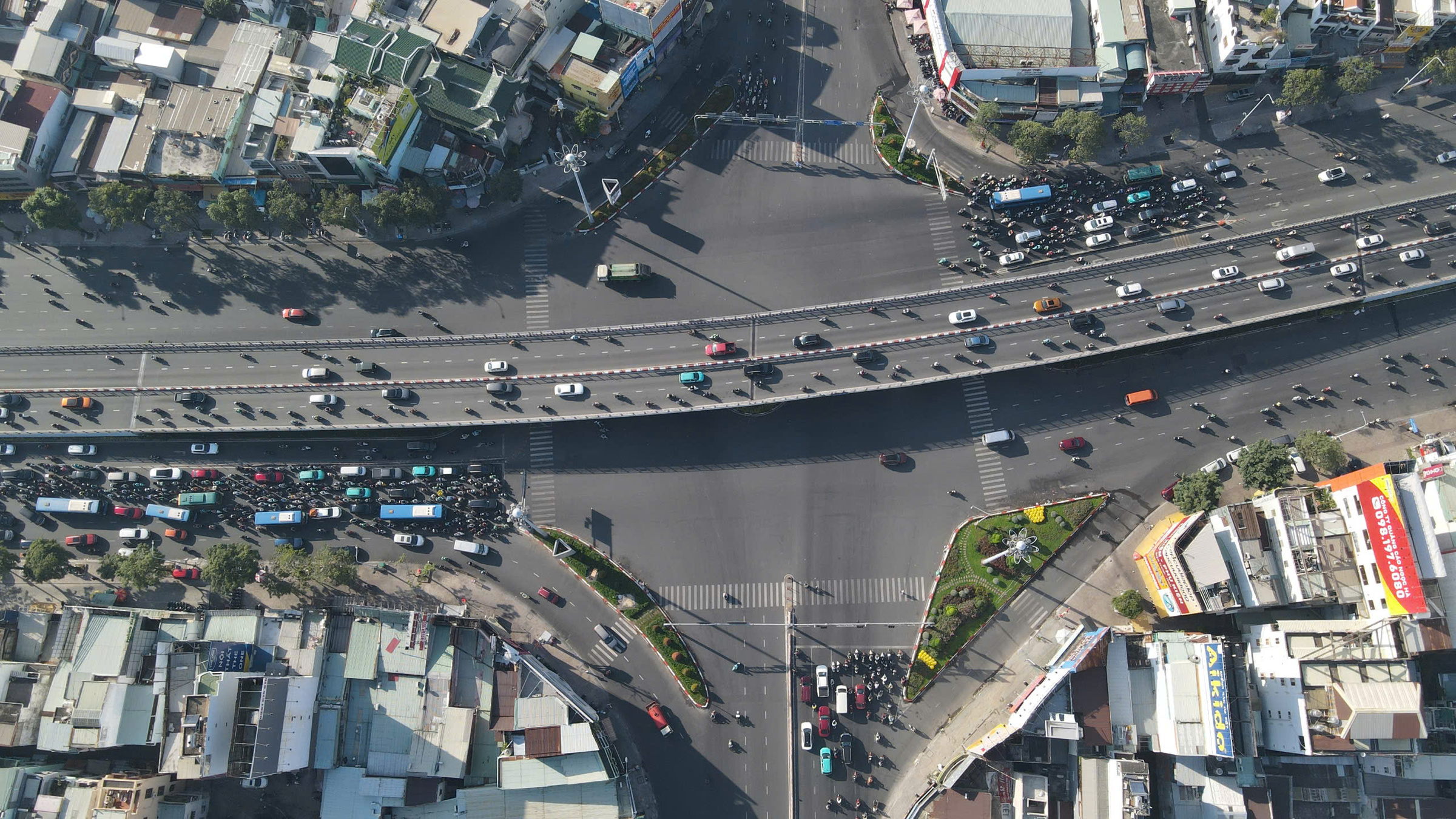 |
Traffic circulates at Hang Xanh intersection (formerly Binh Thanh district). Photo: Dinh Van
According to the research orientation announced by CII, the project to upgrade traffic infrastructure in the Hang Xanh - Binh Trieu area covers nearly 27 hectares. It extends from the Hang Xanh intersection to Binh Trieu bridge, situated in the former Binh Thanh district. The proposed research includes the synchronous renovation of intersections and the traffic infrastructure system, planning for resettlement areas to facilitate site clearance, and studying the land fund for BT contract payment.
The total investment for this infrastructure route is estimated to exceed 10,200 billion VND. The consortium will primarily secure the capital, with the city budget contributing to site clearance expenses. In exchange, the investors have proposed payment through a land fund from the existing Mien Dong Bus Station. A portion of this land will be allocated for resettlement and public facilities, while the remaining area will be developed to recover the investment.
The companies view this not merely as a standalone traffic project but as a crucial connector for strategic infrastructure axes, including the Tan Son Nhat - Thu Thiem and Tan Son Nhat - Long Thanh routes, and the city's northern corridor via National Highway 13.
Earlier, CII also put forward a proposal for the Transit-Oriented Development (TOD) Hang Xanh urban area, spanning 51,4 hectares with an estimated investment of nearly 487,000 billion VND (over 18,5 billion USD). This initiative aims to alleviate congestion and flooding at Ho Chi Minh City's eastern gateway through a multi-tiered public transport model.
The Hang Xanh area is a nexus for several vital traffic arteries, including Dien Bien Phu, Xo Viet Nghe Tinh, National Highway 13, Dinh Bo Linh, and Nguyen Xi. These routes consistently experience high traffic volumes and frequent congestion, attributed to overloaded infrastructure and complex intersections.
CII stands as a prominent infrastructure developer in Ho Chi Minh City, with a portfolio including the phase 2 expansion of Hanoi Highway, infrastructure investment for the northern residential area, and the completion of the North-South axis within the Thu Thiem new urban area. The company is also recognized as an investor in the Ho Chi Minh City - Trung Luong - My Thuan expressway.
Phuong Uyen