


Vietnam is moving away from attracting foreign direct investment (FDI) at all costs, instead prioritizing high-quality projects that foster connections with domestic businesses. Speaking at the Vietnam Development Bridge Forum 2026 on 13/5, Deputy Prime Minister Nguyen Van Thang emphasized that "new generation FDI should not merely come to Vietnam for production or market exploitation. It needs to create new value, capabilities, and a new position within the global value chain."
This strategic shift means Vietnam now seeks foreign projects that prioritize technology, generate added value, invest in human resource training, and integrate local companies into their supply chains. Key sectors targeted for investment include: semiconductors, artificial intelligence (AI), data, biotechnology, pharmaceuticals, clean energy, and modern logistics.
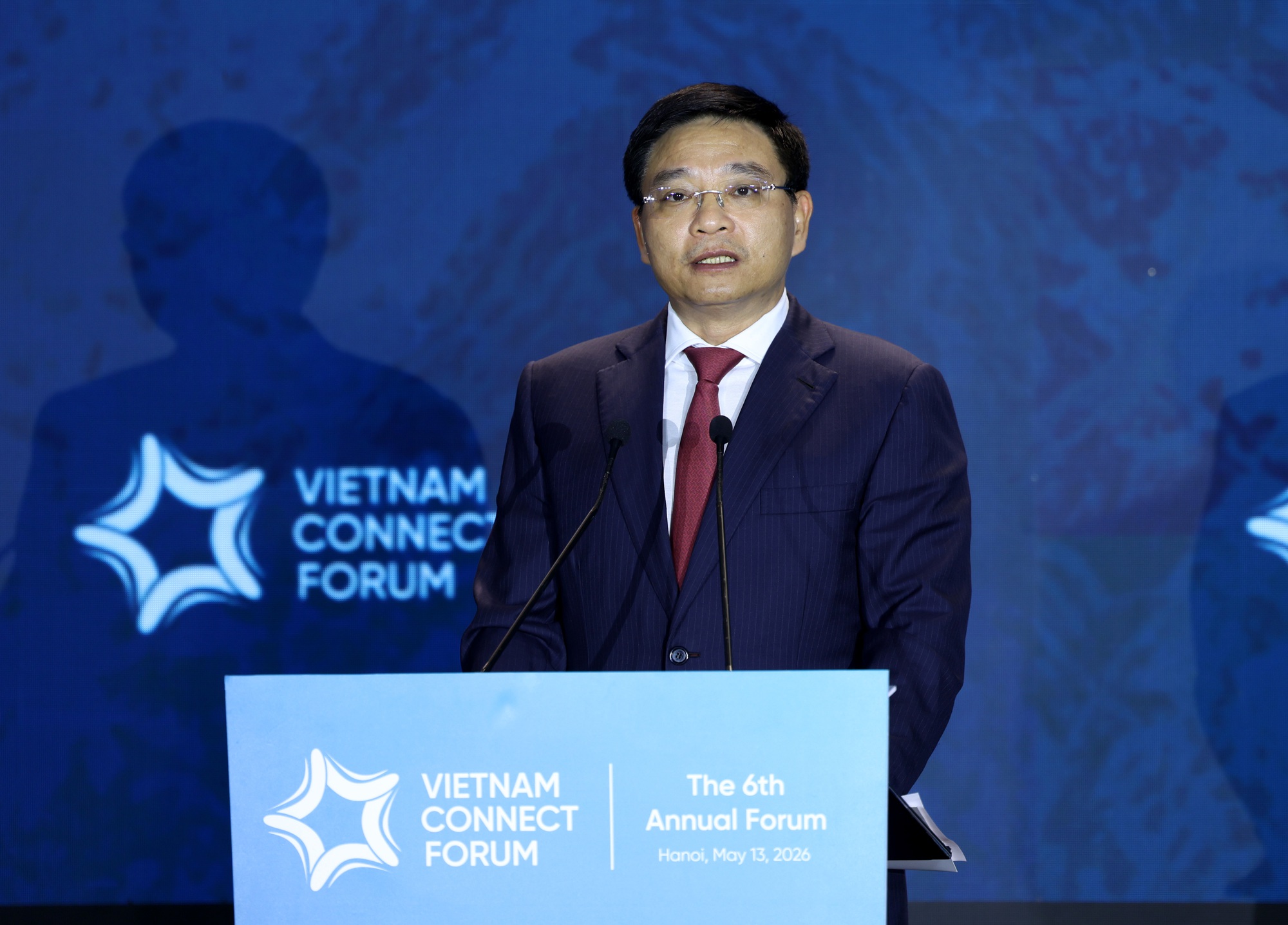 |
Deputy Prime Minister Nguyen Van Thang speaks at the forum, 13/5. *VGP* |
Vietnam currently hosts over 46,500 active FDI projects, with a registered capital exceeding 543 billion USD and cumulative disbursed capital reaching approximately 357.6 billion USD. The FDI sector contributes over 20% of the country's GDP, accounts for about 70% of export turnover, and provides jobs for millions of workers. Despite maintaining its position as a leading FDI destination in ASEAN, attracting many major technology corporations, Deputy Prime Minister Thang noted that linkages between foreign and domestic enterprises remain limited, with local firms primarily participating in low value-added segments of the FDI value chain.
This strategic pivot acknowledges evolving global investment competition, shaped by supply chain restructuring and the green-digital transformation. Investors are increasingly evaluating institutional quality, policy stability, strategic infrastructure, data capabilities, and high-quality human resources, rather than solely focusing on incentives or low labor costs.
To effectively attract this new generation of foreign capital, the government plans to streamline administrative procedures, invest further in infrastructure and human resources, and strictly enforce regulations against transfer pricing, trade fraud, and environmental violations.
Phuong Dung


