Despite supporting sustainable consumption, Vo Tan, 29, residing in Tay Thanh ward, Ho Chi Minh City, admits he rarely buys products marketed as "green". "For me, it's 'nice to have' rather than something I actively seek out. If a green product is readily available on the shelf alongside conventional items, I'll consider it if the price is reasonable," Tan stated.
Similarly, Minh Vy, 33, from Tan Hoa ward, Ho Chi Minh City, has not purchased any green products for six months, with the exception of paper straws and biodegradable plastic trash bags. "I don't think about them because I focus on price, promotions, and urgency," she said.
A recent survey by the High Quality Vietnamese Products Business Association, conducted in four major cities (Hanoi, Da Nang, Ho Chi Minh City, Can Tho), confirmed this trend. The survey indicated that while Vietnamese consumers have high awareness of green consumption, their actions are limited.
Approximately 80% of respondents understand that green consumption involves environmentally friendly products, beneficial health, and sustainable production processes. However, only 20% of consumers regularly use green products.
On a scale of one to 5, the average green consumption level reached only 2.6 points, equivalent to "occasional" frequency, according to Nguyen Van Phuong, head of the association's consumer research board. "Customers purchase more green items in the food and beverage categories, while other product sectors see limited adoption," he noted.
Experts identify three barriers making green products less attractive to consumers: high prices, insufficient information, and difficulty in sourcing. The majority of consumers (86%) are only willing to pay an additional 5-10% for natural or organic products. Vo Tan mentioned he would only accept a maximum price difference of 20% for these types of products.
Tram Nho from Gia Dinh ward has supported green products for many years. To find natural products and organic foods, she orders them from cooperatives in the highlands of Sa Pa, Lao Cai, to be delivered to Ho Chi Minh City, which often incurs high shipping costs. She noted that these items are already expensive and have recently seen further price increases.
"100% linen fabric in salt-and-pepper or indigo dye costs between 180,000-200,000 VND per meter. The store recently announced a 10,000 VND per meter increase due to rising input costs, fuel prices, and yarn scarcity. Dresses made from this fabric are lovely to wear, but now cost millions of dong each," she recounted.
According to Vu Kim Hanh, Chairwoman of the High Quality Vietnamese Products Business Association, despite efforts to promote green consumption, the market's response has not met expectations. "Green consumption faces challenges as customers are tightening their spending," she commented.
Beyond price, Hanh believes that green products lack wide coverage at retail outlets and require buyers to possess specific knowledge for selection.
From her user experience, Minh Vy stated that the supermarkets and convenience stores she frequently visits rarely stock sustainable products, or if they do, the offerings are not compelling enough to persuade buyers.
"To shop 'green', I have to go to specialized stores or brand showrooms, which is quite inconvenient," she shared.
Previously, PwC's "Vietnam Consumer Survey 2025" also revealed a similar trend, with 96% of respondents expressing concern about climate change, higher than the Asia-Pacific average of 86%.
However, in response, many choose to limit shopping rather than switch to sustainable products. For example, 70% of surveyed consumers said they would only buy what they need to reduce food waste. This figure is higher than the Asia-Pacific average of 68%.
This is understandable, as cost remains a primary concern, with 47% of respondents identifying price as the main factor in their food choices. "Today's consumers desire products that are both affordable and offer health benefits and convenience. This creates a challenging environment for businesses," the report stated.
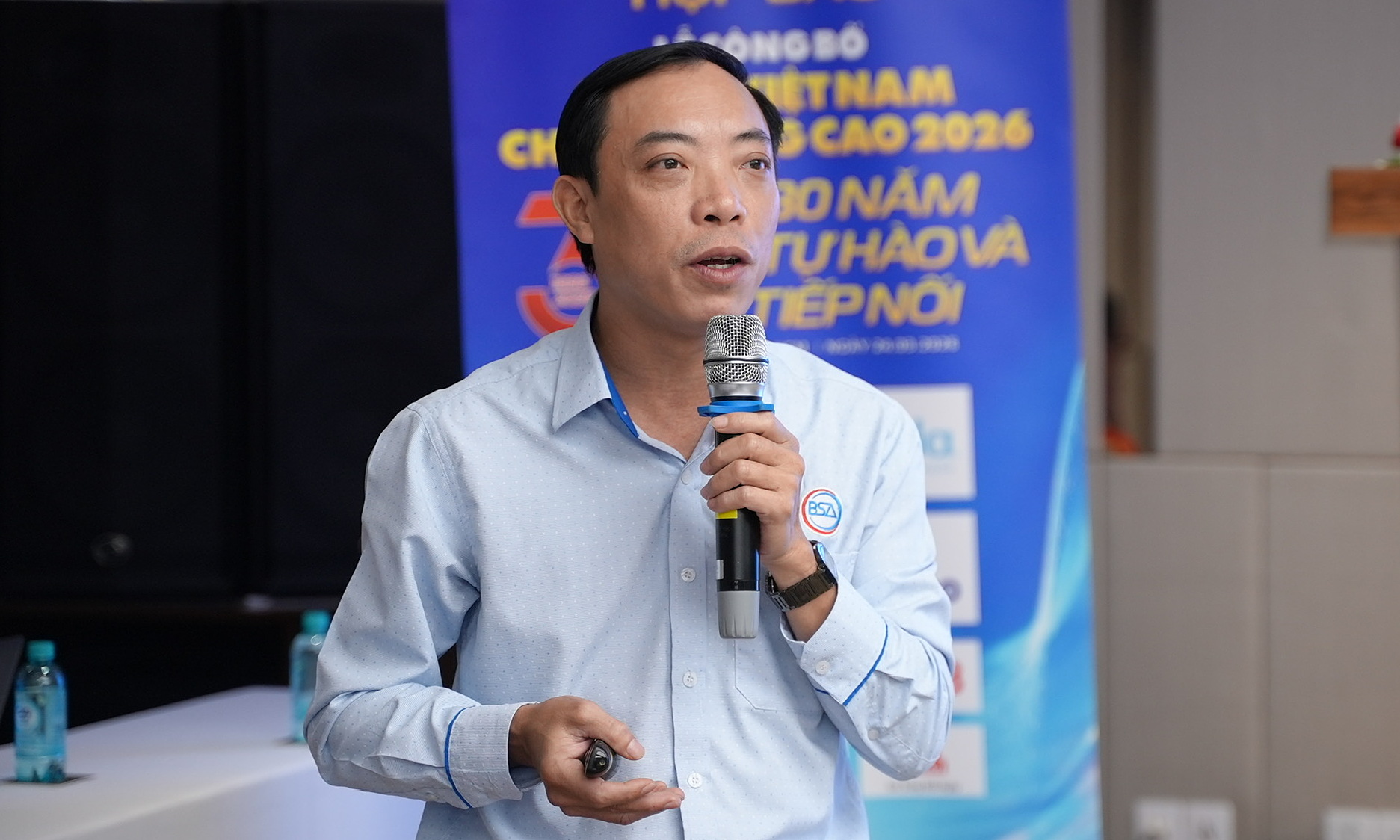 |
Nguyen Van Phuong analyzes the green consumption survey at a press conference on the 30-year High Quality Vietnamese Products activities on 24/3. Photo: BSA |
According to Nguyen Van Phuong, green consumption in Vietnam is entering a stable phase of awareness but experiencing slow growth in behavior. In the medium term (2025-2027), the trend will continue to develop but will struggle to achieve a breakthrough without systemic interventions from policy and market fronts.
Experts suggest addressing market bottlenecks, including narrowing the price gap, standardizing and transparent information, expanding coverage, and focusing on potential customer segments. "For green consumption to become a widespread norm, products must be accessible, reliable, and affordable," he emphasized.
Vu Kim Hanh advises businesses to remain steadfast in their "green" path and continue to explain product value to users. She suggests that businesses consider adjusting product specifications. For instance, instead of only selling large volumes, manufacturers could divide product units into smaller sizes to better suit customers' budgets during each shopping trip.
Vien Thong