EU member states and European Parliament representatives reached a new regulatory agreement on 12/12. Automakers will have 10 years to meet the mandatory target of at least 25% recycled plastic content. Of this, a minimum of 20% of the recycled material must come from end-of-life vehicles.
As an intermediate step, businesses must achieve a 15% recycled content target within six years. This agreement is currently provisional and requires formal approval from the European Council and the European Parliament.
"This provisional agreement marks a significant step towards a circular economy for Europe's automotive industry", stated Magnus Heunicke, Denmark's Environment Minister and the current rotating President of the EU.
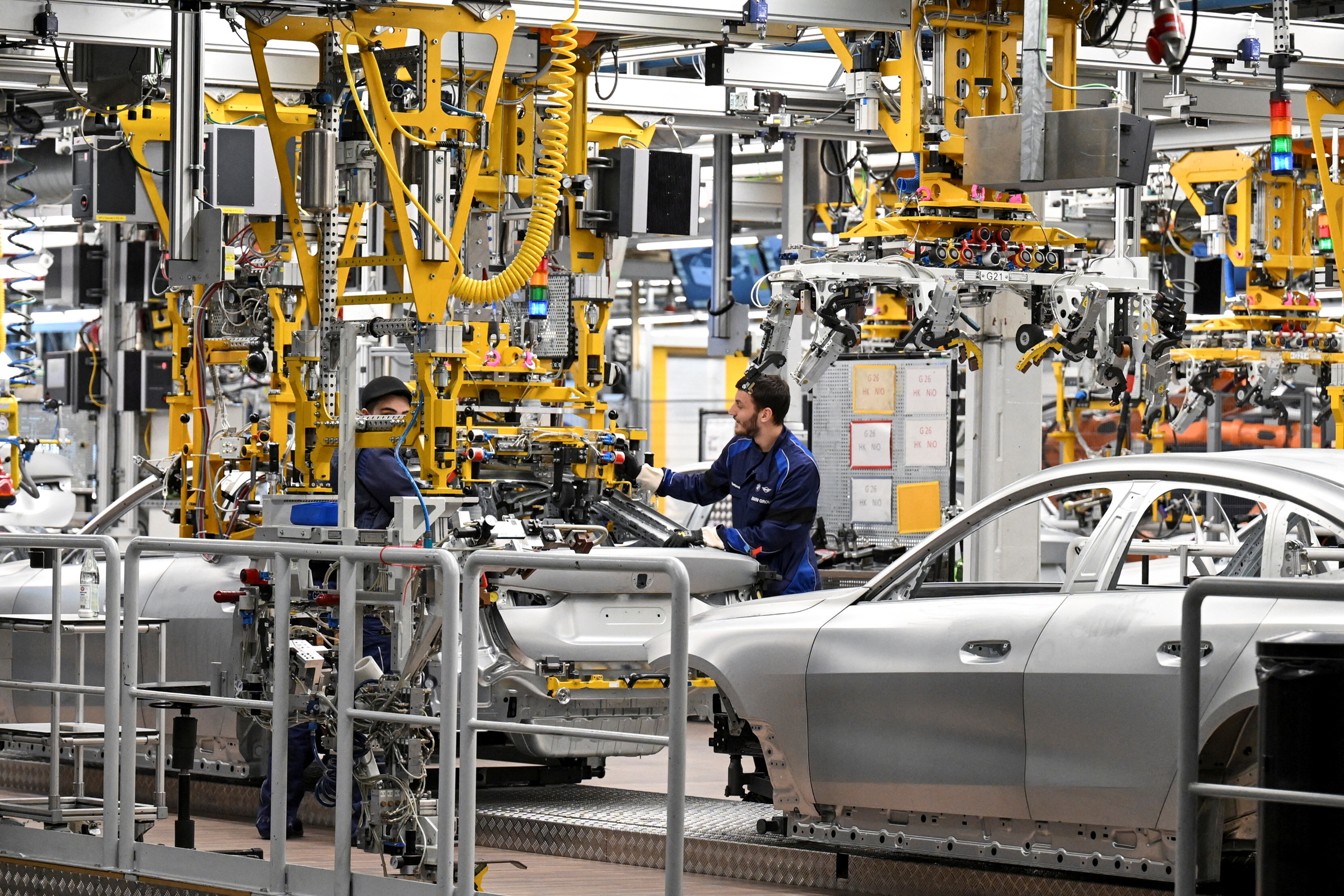 |
Cong nhan lam viec trong nha may BMW tai Munich, Duc ngay 5/12/2023. Anh: Reuters
Initially, the European Commission proposed a six-year timeline to achieve the 25% recycled plastic target. However, member states and the Parliament extended this period during negotiations. This adjustment stemmed from concerns about Europe's slow economic growth, which has taken precedence over green ambitions in Brussels over the past year.
This shift has led to a more business-friendly approach, reducing administrative procedures and scaling back numerous sustainability-related regulations. "This agreement exemplifies a policy setback under pressure from the industry", commented Fynn Hauschke from the environmental organization EEB.
According to Brussels, vehicle manufacturing accounts for approximately 10% of the EU's total plastic consumption and contributes 19% to the bloc's steel demand. Beyond recycled plastic, the agreement reached on 12/12 also sets future targets for recycled steel, aluminum, magnesium, and other critical raw materials.
Europe also aims to prohibit the export of old, unroadworthy vehicles. The EU Council estimates that about 3,5 million vehicles "disappear without a trace from European roads" each year. These are believed to be illegally exported, dismantled, or processed.
The agreement on recycled materials in oto comes just days before the European Commission is expected to review the ban on sales of new gasoline and diesel cars by 2035. On 11/12, Manfred Weber, a German EU parliamentarian and leader of the largest group in the European Parliament, announced that this ban would be replaced by a 90% emissions reduction target.
"For new vehicle registrations from 2035 onwards, manufacturers' fleet target will be a 90% reduction in CO₂ emissions, instead of 100%", he told the German newspaper Bild after a meeting with European Commission President Ursula von der Leyen.
"This means the ban on internal combustion engines will no longer apply. All types of engines currently produced in Germany can continue to be manufactured and sold", he explained. However, European Commission officials emphasized that no final decision has been made.
Phi An (according to AFP)