On December 10, following a two-day policy meeting, the Fed decided to reduce its benchmark interest rate by an additional 25 basis points, bringing the target range to 3,5-3,75%. This decision aligned with market forecasts and marked the third monetary policy adjustment by the central bank this year.
"The economy is expanding at a moderate pace, new job creation has slowed, and the unemployment rate has edged up," the Fed stated in its post-meeting announcement. The central bank assessed the outlook as increasingly uncertain, noting that inflation has accelerated since the beginning of the year and remains elevated. The Fed anticipates only one interest rate reduction annually for the next two years, each by 25 basis points.
During this meeting, three officials dissented from the majority decision: Board of Governors member Stephen Miran, Chicago Fed President Austan Goolsbee, and Kansas Fed President Jeffrey Schmid. Miran advocated for a 50 basis points cut, consistent with his views in previous sessions. Conversely, Goolsbee and Schmid preferred to maintain the current interest rates.
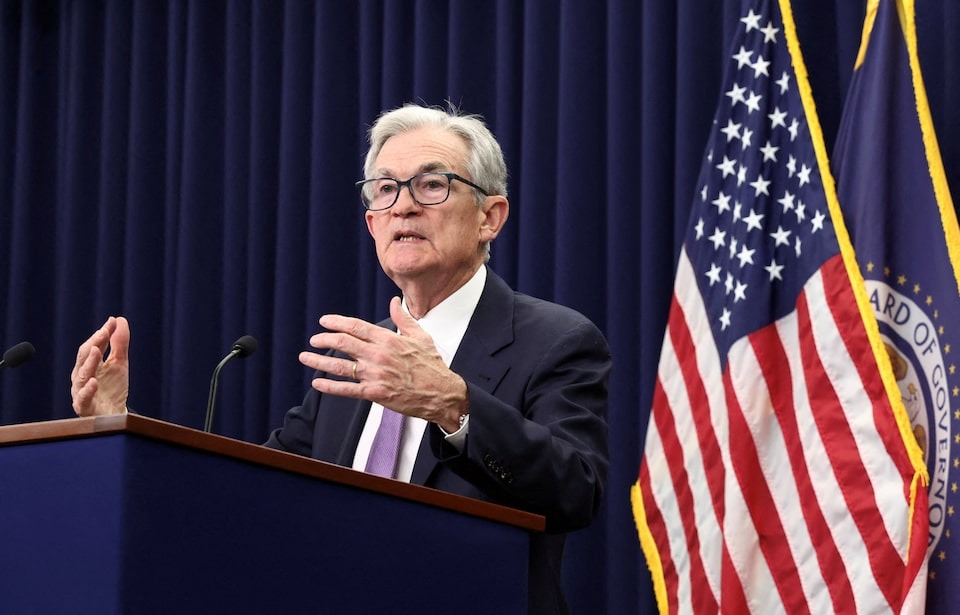 |
Fed Chairman Jerome Powell at a press conference in Washington on October 29. Photo: Reuters |
The Fed's benchmark interest rate applies to overnight interbank loans. While not the rate consumers and businesses directly pay, the Fed's actions influence lending and savings rates. When interest rates are low, borrowing costs decrease, enabling businesses to invest in new projects or hire more staff. Similarly, consumers tend to spend more as saving becomes less appealing.
After implementing three consecutive rate cuts last year, the central bank paused to observe economic developments. Fed officials sought a clearer assessment of US inflation and employment trends, particularly following President Donald Trump's announcement of numerous import tariff policies. It was not until mid-September that the Fed decided to reduce interest rates by another 25 basis points (0,25%).
This series of actions drew significant criticism from President Trump towards the Fed and Chairman Jerome Powell. The US President repeatedly complained about the Fed's monetary policy, asserting that the central bank was "slow" in reducing interest rates and should have acted more aggressively, given that the US experienced "almost no inflation."
Ha Thu (according to Reuters)