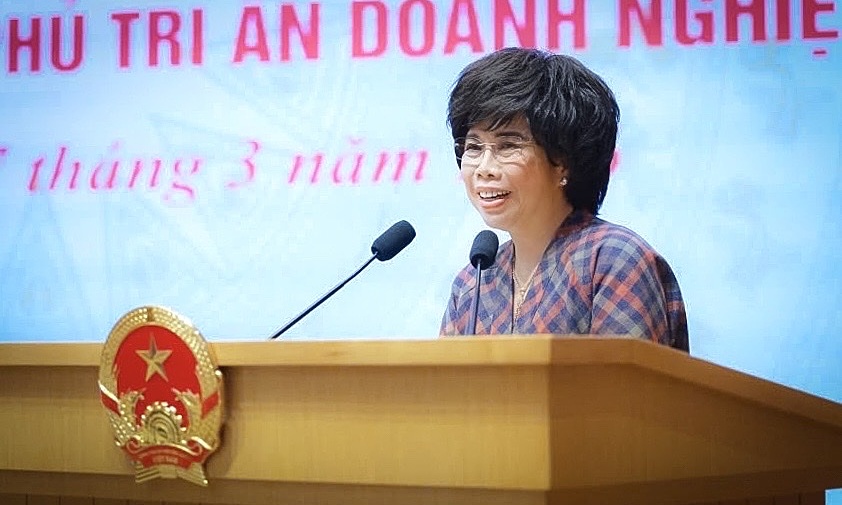
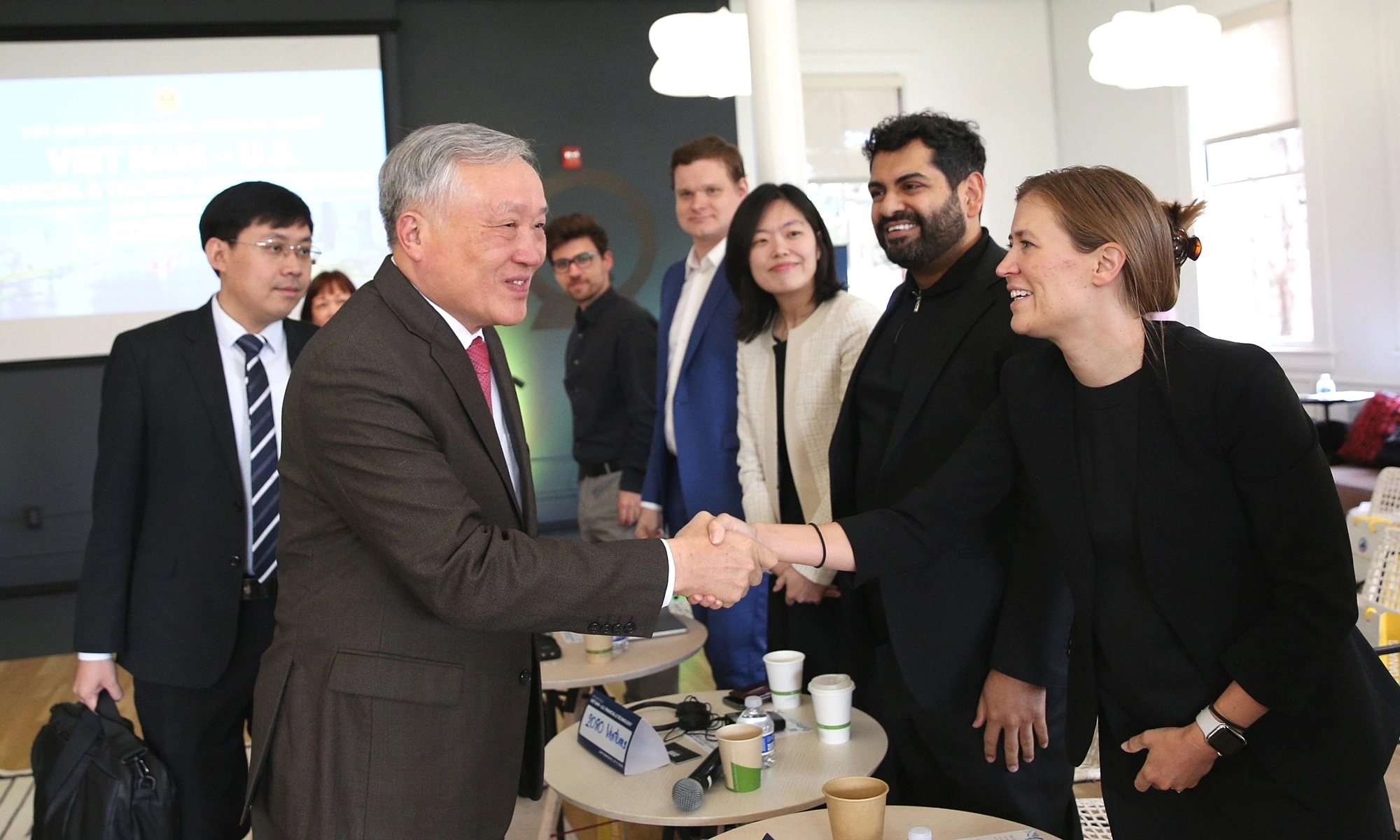
"This morning, I worked with several investors looking to inject hundreds of millions of USD into the International Financial Center (IFC)", Nguyen Hai Minh, Vice Chairman of the European Chamber of Commerce in Vietnam (EuroCham), stated at the "Investment – Business Forum for the Southern Key Economic Region" organized by the Vietnam Chamber of Commerce and Industry (VCCI) on the afternoon of 4/2.
The international financial centers in Ho Chi Minh City (TP HCM) and Da Nang were established under a National Assembly Resolution on 27/6/2025. Last month, Prime Minister Pham Minh Chinh requested the official launch of the Ho Chi Minh City International Financial Center (VIFC-HCMC) by 9/2 at the latest. VIFC-HCMC has already released the first draft of its development strategy plan.
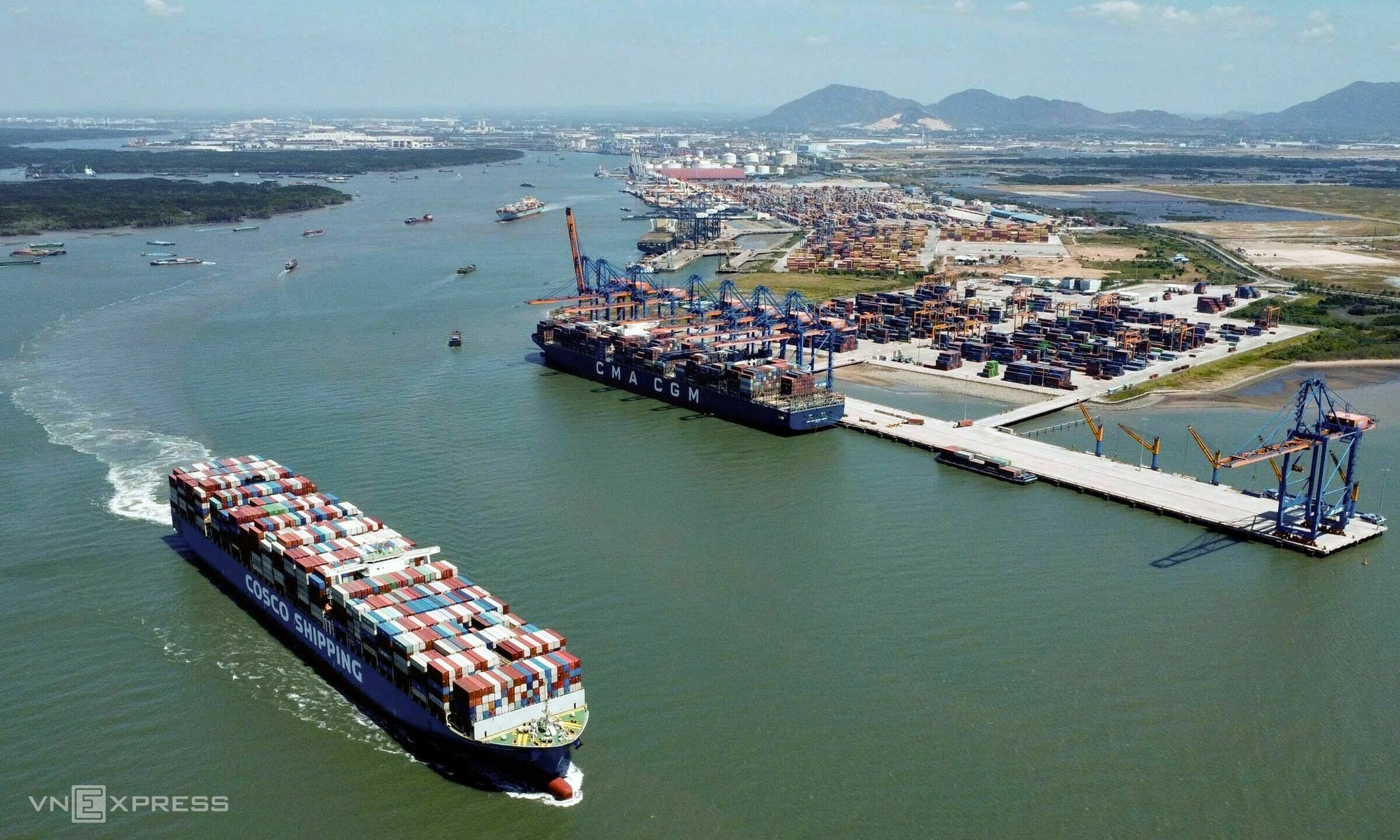
Additionally, the free trade zone (FTZ) model, such as the Cai Mep Ha project that TP HCM is promoting, has garnered substantial interest, according to the EuroCham Vice Chairman. Five years ago, upon the signing of the EVFTA, many investors expressed a desire to establish Vietnam as a logistics hub for Southeast Asia, similar to Singapore.
The evolving legal framework for FTZs is creating high expectations for investors to realize this vision, Minh noted. "EuroCham businesses anticipate clear regulations on 'do's and don'ts', as well as specific incentive policies, to make informed investment decisions in the FTZ", Minh said.
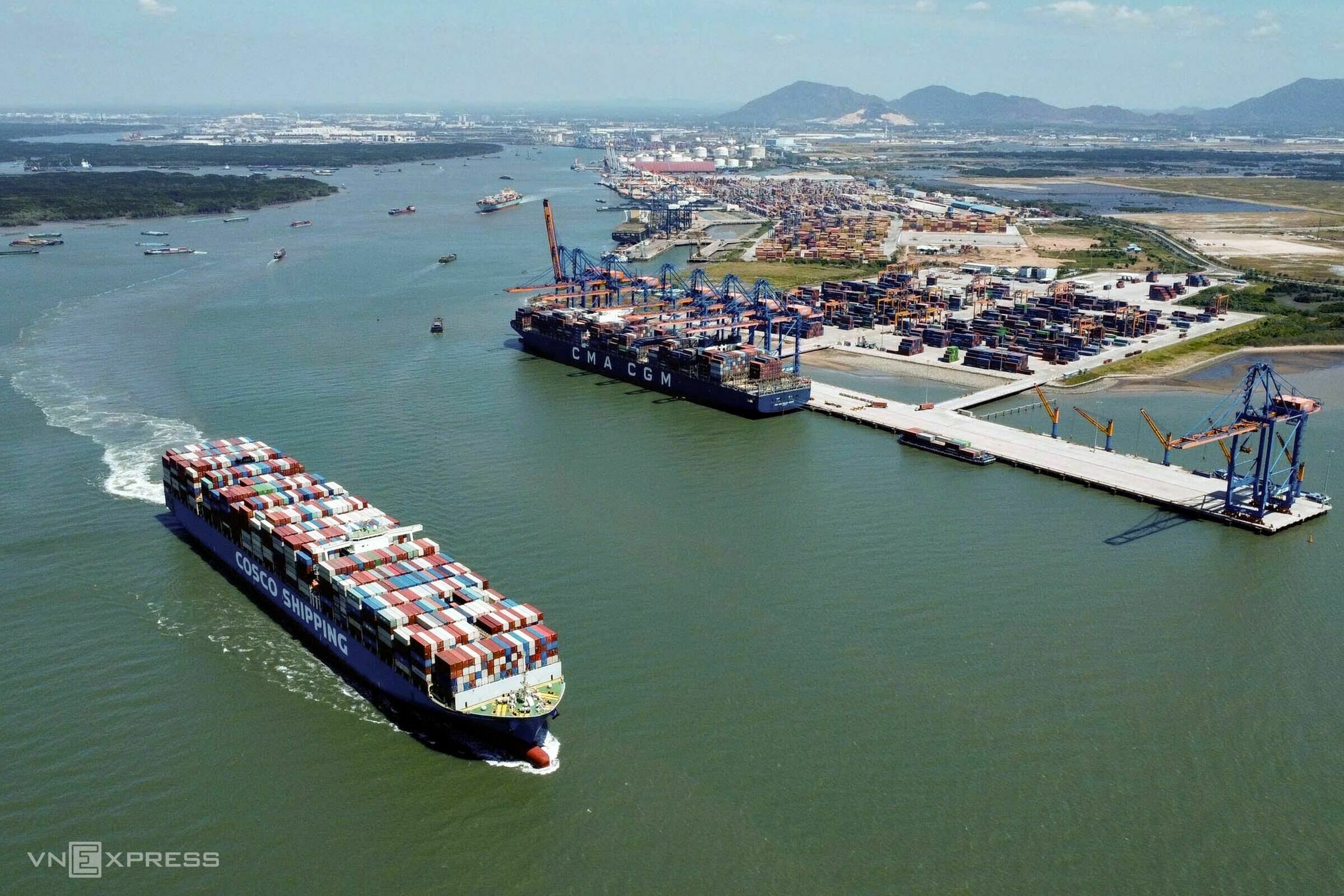 |
The Cai Mep - Thi Vai port complex viewed from downstream in 8/2025. Photo: Truong Ha
Nguyen Thanh Toan, Deputy Director of the Ho Chi Minh City Department of Finance, confirmed that VIFC-HCMC and Cai Mep Ha FTZ are two key projects for the economic locomotive. VIFC-HCMC aims to attract 15 billion USD in direct and indirect investment through financial channels. Meanwhile, the Cai Mep Ha FTZ will help create a logistics corridor to serve import and export not only for TP HCM but also for the wider region.
Beyond the IFC and FTZ, foreign business communities at the forum expressed optimism about the business environment and a desire to expand investment, particularly within the Southern Key Economic Region, which includes TP HCM, Tay Ninh, Dong Nai, and Lam Dong.
As of 2025, this region accounted for 42% of the country's total retail sales of goods and consumer service revenue. It also serves as a manufacturing center, concentrating 26% of the workforce and contributing 30% to export turnover. Last year, the region saw over 78,400 new businesses established, representing 40% of the national total.
Dau Anh Tuan, Deputy Secretary General and Head of the Legal Department at VCCI, highlighted the Southern Key Economic Region as a bright spot for FDI attraction, accounting for 34.5% of the national total, equivalent to 13.3 billion USD in 2025. "This area holds strong appeal for investors due to its short supply chains and complete ecosystem. FDI confidence in this region is also high, with 42% of businesses planning to expand operations compared to the national average of 37%", he stated.
The Ho Chi Minh City Chapter of the Chinese Business Association in Vietnam reported that 75% of its member businesses are satisfied with the business environment. They commend the government's determination in attracting FDI, clear policy directions, and a market with significant potential. "The majority intend to invest for long-term development", a representative from the Chapter noted.
Leaw Wee Ming, General Director of VSIP Can Tho, pointed out a trend where high-quality investors are seeking reliable infrastructure, a transparent and trustworthy operating environment, and long-term partnerships.
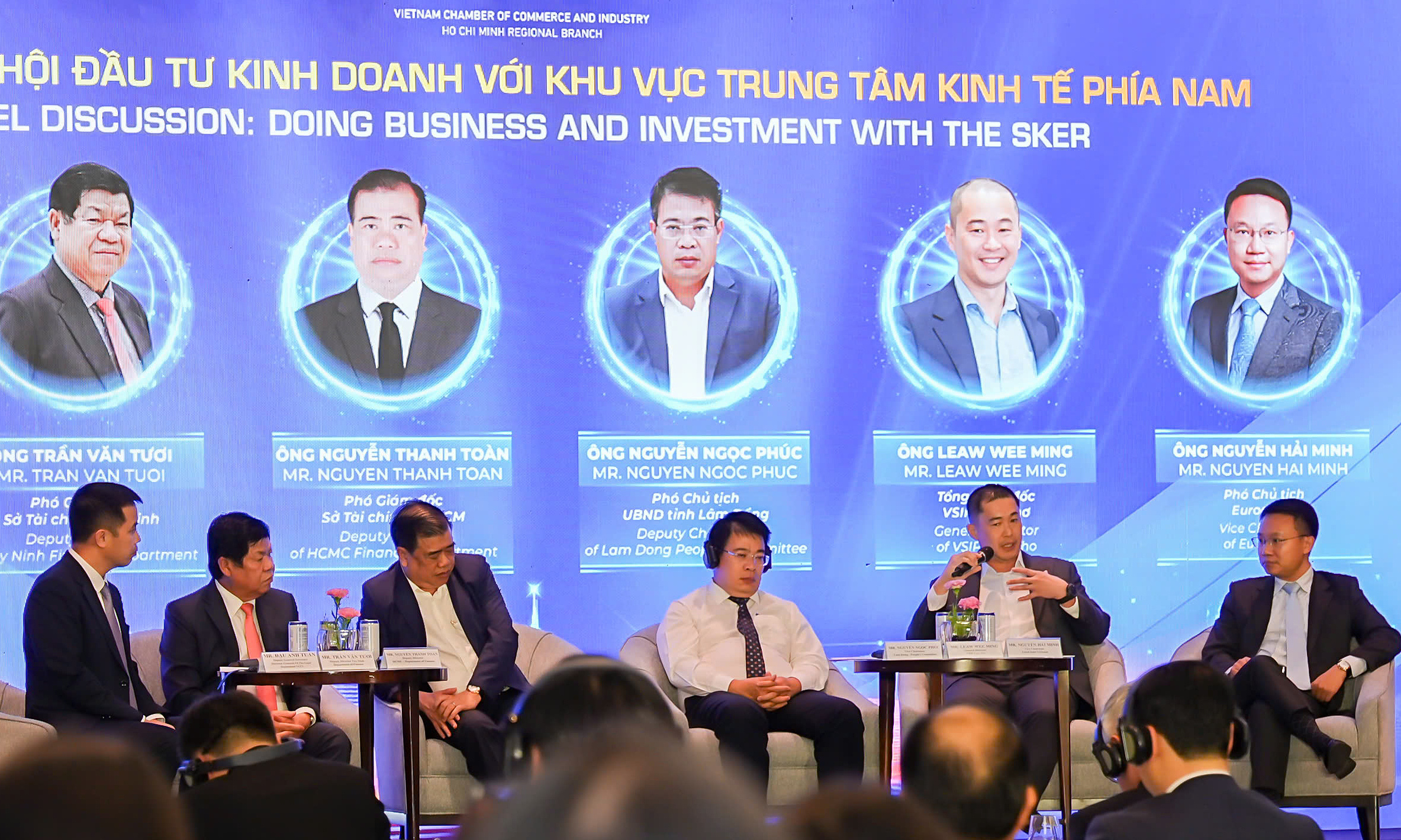 |
Experts discuss at the forum on the afternoon of 4/2. Photo: VCCI
Despite the region's appeal, businesses and experts acknowledge that investing here still faces common challenges found across Vietnam. A survey by the Ho Chi Minh City Chapter of the Chinese Business Association in Vietnam indicated that policies change quickly, while transitional guidelines lack sufficient clarity.
Furthermore, administrative and customs procedures remain complex, leading to lengthy processing times for applications and high coordination costs. This is compounded by inconsistent interpretations and applications of regulations among local agencies.
The organization recommended increasing policy transparency and stability, enhancing inter-agency coordination, providing clearer guidance on foreign labor management, and continuing investment in improving infrastructure and logistics services.
"We anticipate that 2026, with the stable implementation of new policies, will be a favorable year for an increase in investment waves from China", the Chapter representative stated.
Similarly, EuroCham reported that complex administrative procedures and an inconsistent regulatory framework continue to be the most frequently cited challenges by businesses in their Business Climate Index (BCI) survey last quarter. According to Nguyen Hai Minh, seamless coordination among all levels of government will enable investors to make investment decisions more easily.
From a local perspective, Nguyen Ngoc Phuc, Vice Chairman of the Lam Dong Provincial People's Committee, acknowledged that the post-merger organizational structure and the implementation of a two-tier government system have caused difficulties for investors. He noted that institutional and planning obstacles continue to affect businesses. The capacity of commune-level officials, in some areas, has not yet met the demands of their newly assigned responsibilities. He mentioned that the locality is proactively sending officials for training to enhance their legal and economic expertise and is working to finalize the provincial master plan by mid-this-year.
Tran Van Tuoi, Deputy Director of the Tay Ninh Department of Finance, stated that the locality is also accelerating the completion of its provincial master plan by the end of Q1 to shorten investment reception times. Concurrently, Tay Ninh is increasing its linkages with TP HCM and neighboring provinces to leverage the advantages of the country's most dynamic economic region.
Dau Anh Tuan proposed establishing a regional coordination mechanism, such as a "Strategic Task Force" dedicated to processing procedures via a "one-stop shop" for major investors, and a "Regional Business Council" to provide policy consultation and feedback from a practical perspective, with participation from key associations and corporations.
Viet Thong