On 16/3, the average gasoline price in the US was 3,76 USD per gallon (0,99 USD per liter). This marks the highest level since 10/2023, according to data from fuel price tracking site GasBuddy.
"Unless oil flow through the Strait of Hormuz is significantly restored, upward pressure on fuel prices will likely persist," said Patrick De Haan, head of petroleum analysis at GasBuddy.
Since the conflict erupted in the Middle East in late February, gasoline prices in the world's largest economy have climbed by nearly 80 cents per gallon (0,2 USD per liter). Over the past month, the increase totals nearly 30%—the highest surge since Hurricane Katrina made landfall in the US in 2005.
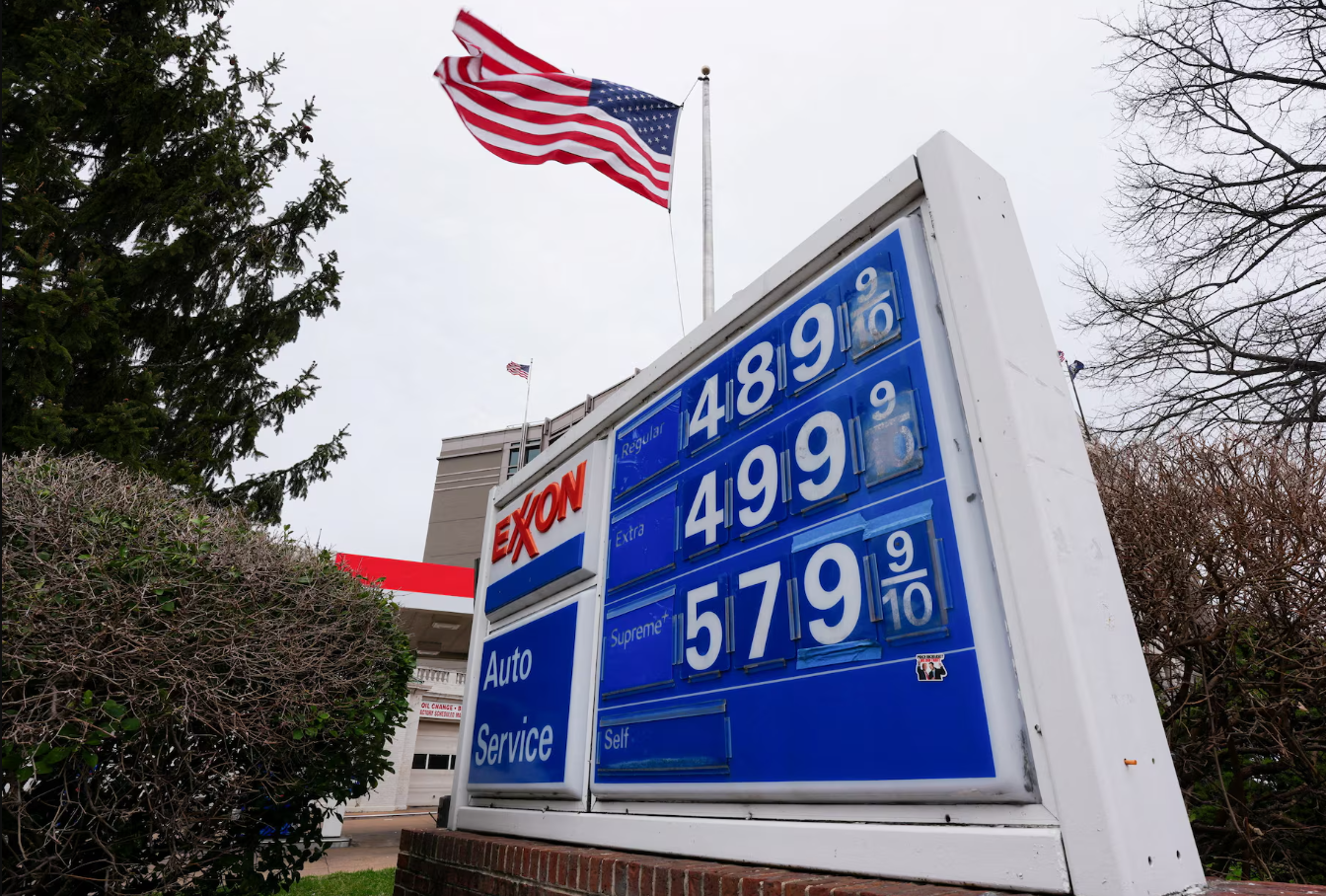 |
Fuel prices at a gas station in Washington, US on 15/3. *Photo: Reuters*. |
The increase in diesel fuel prices has been even sharper. The average retail price for diesel fuel has surpassed 5 USD per gallon (1,32 USD per liter). This marks only the second time in history prices have exceeded this threshold, as the Middle East conflict tightens energy supplies. The first instance was in 12/2022, when global oil markets were volatile due to the Russia-Ukraine conflict.
Economists warn that soaring diesel fuel prices could slow global economic activity, as this fuel is vital for manufacturing and freight transport. The resulting cost increases will be passed on to consumers. Fuel price inflation could also pose a risk for US President Donald Trump as the country prepares for its midterm elections in November.
The conflict in the Middle East is severely disrupting the global diesel fuel supply chain. This region is a major supplier of both diesel fuel and the most suitable crude oil for its production.
A series of recent measures announced by the US and other countries, including a record release from the International Energy Agency (IEA) oil reserves, have so far failed to curb the rise in fuel prices. After yesterday's trading session, crude oil prices fell 3-5% on news that some ships had passed through the Strait of Hormuz, but rebounded this morning.
WTI and Brent crude prices are currently up nearly 3%, reaching 96-103 USD per barrel, respectively. This price increase stems from supply concerns as the Strait of Hormuz remains largely closed and US allies have declined calls to send warships to escort oil tankers through the area.
Ha Thu (according to Reuters, CNN)