Ho Chi Minh City's gross regional domestic product (GRDP) is estimated to grow by 8.03% in 2025, reaching 2.74 quadrillion VND. This figure accounts for 23.5% of the nation's gross domestic product (GDP), with per capita economic growth estimated at 8,066 USD. Nguyen Loc Ha, Vice Chairman of the HCMC People's Committee, reported these figures at the year-end session, which commenced on the morning of 9/12.
The city's expansion into a "mega-city" began on 1/7 with the merger of Binh Duong and Ba Ria - Vung Tau. This integration created an urban area spanning over 6,700 km2 with a population of approximately 14 million people. Prior to the merger, Ho Chi Minh City, Binh Duong, and Ba Ria - Vung Tau recorded GRDP growth rates of 8.07%, 8.88%, and 5.44% respectively, excluding oil and gas contributions.
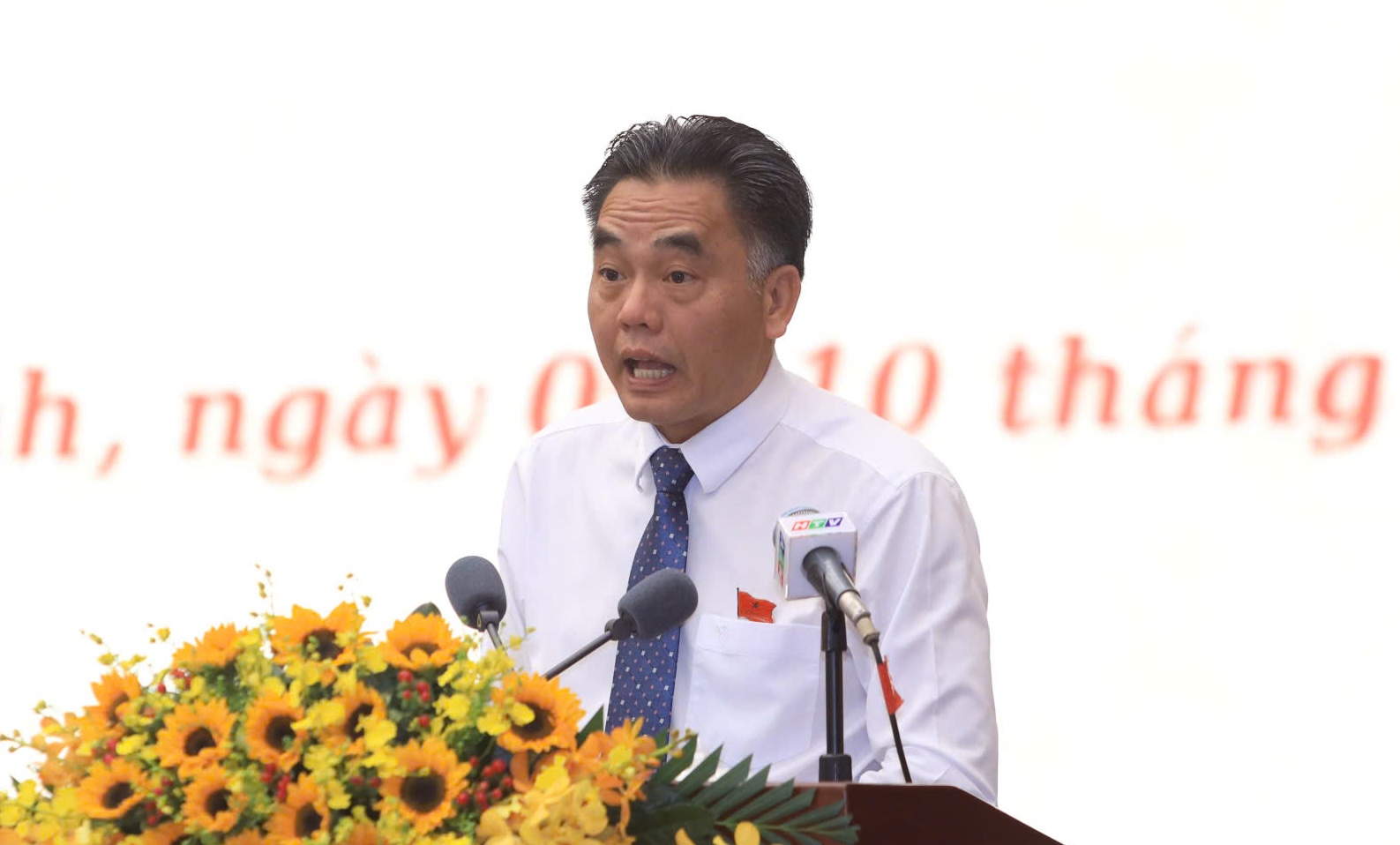 |
Vice Chairman of the HCMC People's Committee Nguyen Loc Ha reports at the session, morning of 9/12. Photo: An Phuong
The primary drivers of the city's overall growth are the industrial, construction, and service sectors, which collectively account for nearly 90% of the economic structure. Total retail sales of goods and consumer service revenue are estimated to increase by 13.5%, while the industrial production index is projected to rise by 9%.
According to the HCMC People's Council, the 9% increase in the industrial production index, compared to 5.7% in the same period last year, reflects a stable recovery and growth. This growth is largely fueled by positive domestic consumption, which serves as a vital force in maintaining economic stability and reinforces the city's role as a leading industrial and commercial hub nationwide.
Total tourism revenue is estimated to reach 260 trillion VND, marking an increase of over 36% compared to the same period last year. The city expects to welcome 8.5 million international visitors, a 39.3% increase, and 45 million domestic tourists, an 18.4% rise from the previous year.
Agricultural, forestry, and fishery production continues to develop towards urban and high-tech agriculture. However, the livestock sector still faces difficulties. The transport sector recorded a 14.3% increase.
The city saw the establishment of 59,750 new enterprises, with total registered and additional capital exceeding 2 quadrillion VND. Foreign direct investment (FDI) reached 8.16 billion USD, an increase of 21.1% compared to 2024.
In addressing problematic projects, the city has resolved or provided guidance for 670 out of 838 projects, achieving an 80% resolution rate. Ho Chi Minh City's total budget revenue is estimated at 748.438 trillion VND, surpassing targets set by the central government and the HCMC People's Council.
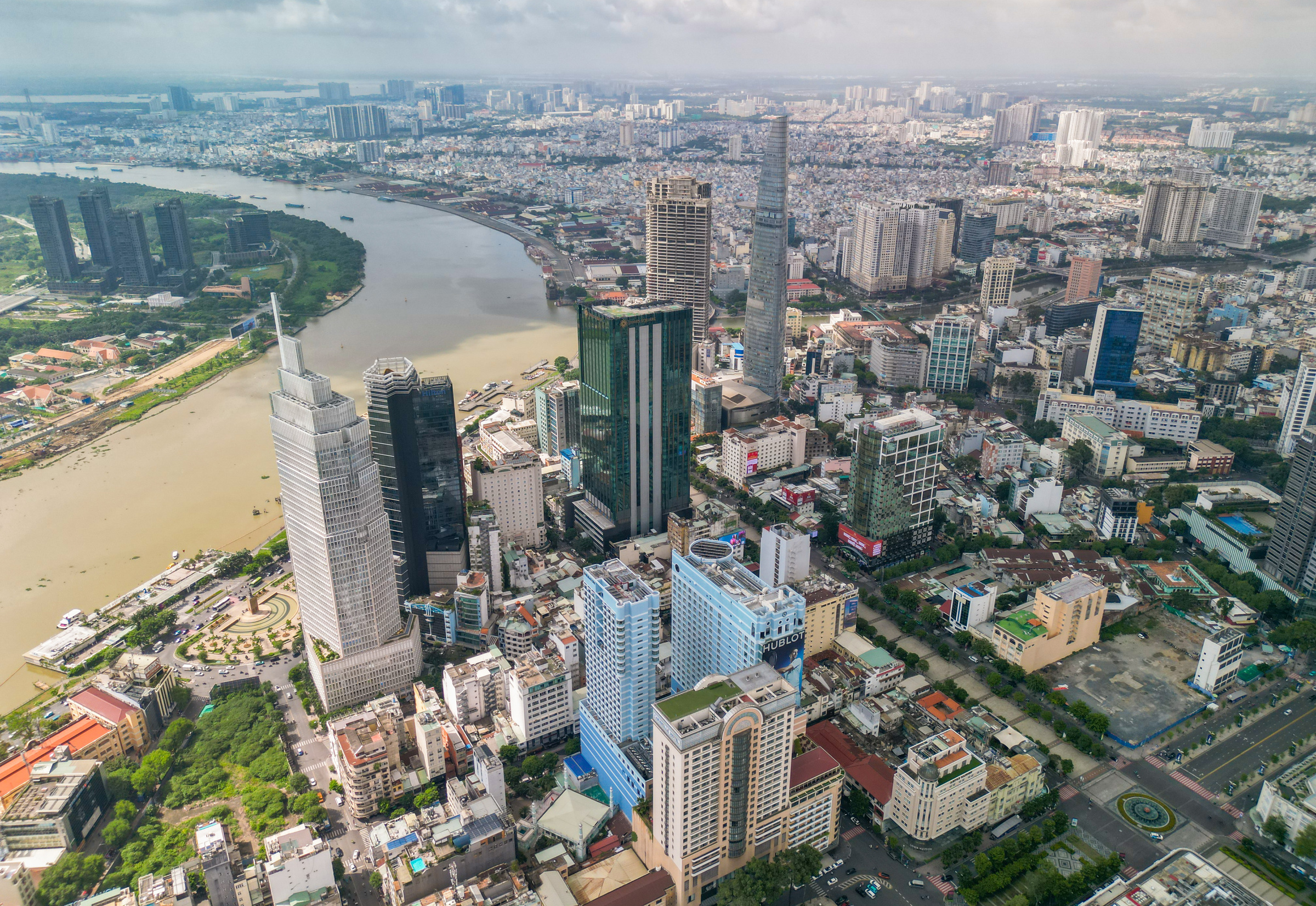 |
Ho Chi Minh City center facing Thu Thiem peninsula, July 2025. Photo: Quynh Tran
Despite high growth, Ho Chi Minh City still faces several socio-economic limitations. According to Nguyen Loc Ha, the city confronts infrastructure overload, pollution, flooding, and traffic congestion.
Industrial productivity and competitiveness indices, including PCI (Provincial Competitiveness Index), Par-Index (Public Administration Reform Index), and SIPAS (Satisfaction Index of Public Administrative Services), have not shown significant improvement. Public investment disbursement remains low, reaching only 59.6% of the central government's allocated capital and 46.7% of the city's capital plan. Ho Chi Minh City has also not fully leveraged the specific mechanisms of the mega-city model, and its regional and international connectivity has not yet matched its potential.
The year 2026 is pivotal for the 2026-2030 socio-economic development plan and the implementation of the Party Congress Resolution, especially as the city transitions into a mega-city post-merger. Building on this year's growth of over 8%, Ho Chi Minh City aims for a GRDP growth rate exceeding 10% in 2026.
Accompanying tasks include: restructuring the economy based on science and technology, expanding the digital economy, accelerating innovation and digital transformation, heavily investing in infrastructure, and refining institutions to remove growth bottlenecks.
Specifically, Ho Chi Minh City targets a GRDP per capita of over 9,800 USD, a 7.5% increase in labor productivity, over 11 billion USD in FDI, and total budget revenue exceeding 805 trillion VND. The city also aims to allocate a minimum of 4-5% of its budget to science and technology and digital transformation. Healthcare targets include 35 hospital beds and 18 doctors per 10,000 people, with health insurance coverage reaching 95%. Housing goals involve completing 1,900 homes along canals designated for relocation and adding 25,287 social housing units.
The city plans to accelerate public investment to nearly 148 trillion VND, prioritizing ring roads, inter-regional expressways, and preparing for the investment of seven metro lines. It will also restructure its development space towards multi-polar, integrated, and connected growth, and implement transit-oriented development (TOD) fee collection.
Le Tuyet