Former US President Donald Trump has long lauded tariffs as key to increasing wealth in the world's largest economy. During his campaign, he mentioned the possibility of replacing federal income tax revenue with tariffs.
In the past week, he twice reiterated his belief that tariff revenue would be sufficient to ultimately eliminate federal income tax. The first instance was during his Thanksgiving speech at Mar-a-Lago, followed by a cabinet meeting on 2/12.
Federal income tax, established by the 16th Amendment in 1913, includes individual and corporate income taxes and is a major source of federal budget revenue. "The amount we will collect is huge. I think we can reduce and completely abolish income tax in the next few years," he said.
At a White House cabinet meeting in August, Treasury Secretary Scott Bessent estimated the country could collect 500 billion USD from import tariffs this year. In October alone, this figure was 34,2 billion USD.
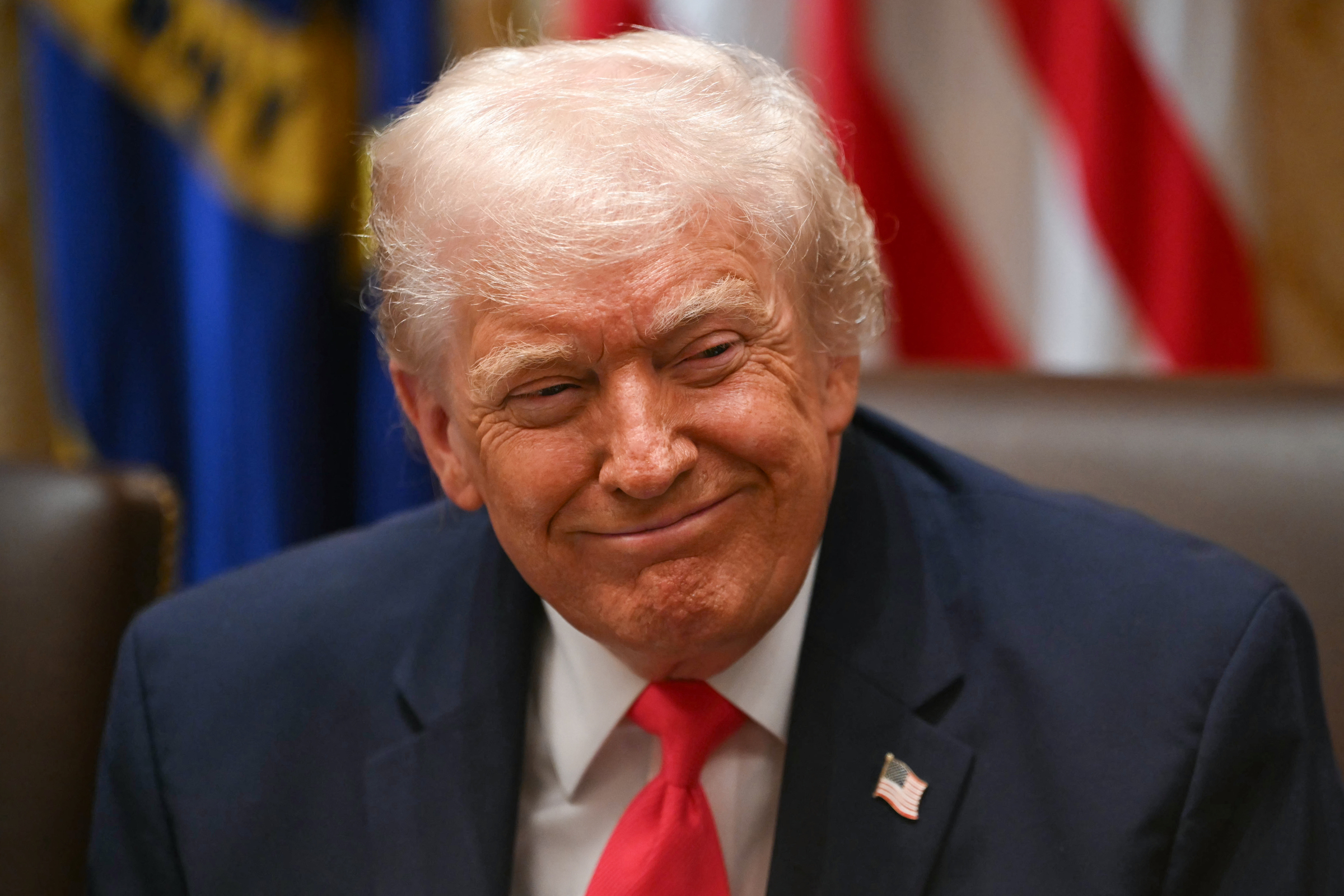 |
US President Donald Trump at a cabinet meeting at the White House on 2/12. *Photo: AFP*
White House spokesperson Kush Desai stated that President Trump anticipates collecting trillions of USD for the federal government in the coming years through tariffs paid by foreign exporters. He also mentioned "trillions of USD in investment commitments" into the US from other countries thanks to tariff policies.
However, experts consider Trump's idea unfeasible. They argue that tariff revenue is unstable and negatively impacts growth and low-income individuals.
Brandon DeBot, senior legal advisor and policy director at New York University's Tax Law Center, asserted that the idea is entirely unfeasible, both mathematically and economically. "Analysts from various perspectives agree with this. Even this year's record-high tariffs, the highest since the post-war era, do not yield revenue close to income tax," he said.
In the past fiscal year, the US Treasury reported total federal income tax revenue reached 5.230 billion USD. This included approximately 2.660 billion USD from individual income tax and 452 billion USD from corporate income tax. Tariffs, meanwhile, stood at nearly 195 billion USD.
The first month of the current fiscal year shows a similar trend. Individual income tax reached approximately 217 billion USD out of a total revenue of 404 billion USD. Corporate income tax and import tax were 15 billion USD and 31 billion USD, respectively.
Even if tariff revenue could expand to replace federal income tax, negative consequences would follow, such as retaliation from other countries and import shortages. In fact, revenue could decrease as tariffs rise. Furthermore, significant uncertainty surrounds tariff collections, especially given Trump's frequently changing policies.
Steve Wamhoff, federal policy director at the Institute on Taxation and Economic Policy, called the idea of tariffs eliminating income tax "nonsense". "There was a time when government budgets were sustained by tariffs. But back then, people traveled by horse and buggy, not by oto. That was an entirely different era," he said.
Experts also point out that importers, specifically US companies purchasing goods from abroad, are the ones who pay tariffs. These companies typically pass those costs to customers through higher selling prices. Rising prices would burden low-income households.
Michael Graetz, a professor of tax law at Yale University, stated that inequality would increase in this scenario. "We have more billionaires and millionaires than ever before. So it's strange to reduce the tax burden on the upper class and increase it for the middle class," he said.
Furthermore, he added, taxes on imported goods are not as flexible as income tax, which can be adjusted as desired. This type of tax also does not allow for incentives such as charitable donations or child tax credits.
Experts are also skeptical about revenue from investment commitments by international countries and companies in the US, supposedly driven by tariff policies. They note that investment terms have not been fully and clearly disclosed. Some committed figures remain controversial or vaguely calculated.
President Trump has not yet detailed his plan to abolish federal income tax. Moreover, this would require congressional approval if he genuinely intends to implement it.
Phien An (according to AP)