Over the past few years, the United Arab Emirates (UAE) has emerged as a significant destination for digital asset capital flows. According to a report released by global consulting group Henley & Partners in early November, the UAE ranks among the top 5 most digital asset-friendly countries, particularly noted for its progressive tax policies and legal framework. The nation received approximately 34 billion USD in digital asset inflows between 7/2023 and 6/2024, marking a 42% increase compared to the previous year.
More than 30% of the UAE's population, equivalent to about 3 million people, has invested in digital assets. The number of active daily traders in the UAE exceeds 500,000. By 2026, digital asset penetration in the country is projected to reach nearly 33,5% of the population.
Henley & Partners assesses that the UAE has transformed from a "prominent regional player" into a global "crypto powerhouse" in just three years. Simple, consistent, and transparent tax policies are credited with helping the UAE emerge as a "safe haven" for investors and businesses operating in this sector.
Explaining their success, Omar Al Olama, UAE Minister of Artificial Intelligence, Digital Economy, and Remote Work Application, stated at Binance's Blockchain Week 2025 in Dubai that the country approaches new sectors not through the lens of "what is Bitcoin's price today, where will it fall tomorrow". They view digital assets and blockchain technology as new infrastructure capable of reshaping financial, administrative, and social operating systems. The UAE chose not to "gamble" on price fluctuations, but instead invested in legal frameworks, institutions, infrastructure, and crucially, a national mindset.
"Governments should not focus on price, but must look at the foundation. If a technology works effectively, it will work regardless of the price of a coin," he added.
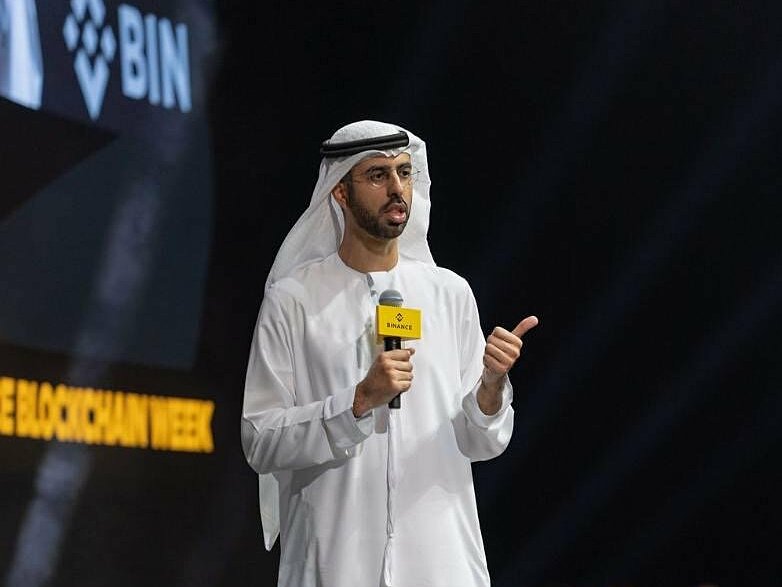 |
Omar Al Olama, UAE Minister of Artificial Intelligence, Digital Economy, and Remote Work Application. Photo: Organizer provided |
To explain why the UAE chose to embrace blockchain and digital assets, the 35-year-old minister shared a story of two children: one who grew up in the desert, and one who grew up in a lush forest.
The child in the desert wakes up each morning to "vast, empty stretches of land" and spends the day imagining what could be built there, what new things could be created, or how "nothingness" could be transformed into something valuable. In contrast, the child in the lush forest awakens to existing trees, waterfalls, wildlife, and beautiful scenery, living with the mindset of "there isn't much more I can add".
He clarified that the UAE is the desert child. "Throughout our 54 years of existence, as a startup nation, every day we ask ourselves what we can build here, how we can do things differently," he said.
From an empty desert, the UAE has built cities, seaports, financial centers, and tourism infrastructure. With digital assets, they continue to apply that same spirit to a new frontier: not desert dunes, but the digital space.
While much of the world remained hesitant, the UAE chose a proactive approach. The UAE Minister recalled that in 2015, when most people still considered digital currency or blockchain a distant technology, the UAE established its first blockchain council. They invited industry stakeholders to meet, not to prohibit, but to "understand what this technology brings to the country".
According to him, early adoption is an advantage, but it is not sufficient for success. The core lies in the self-imposed goal: to become the world's most stable place for blockchain technology. Al Olama emphasized that stability is not just about a secure environment or tax incentives, but about policy stance. The UAE does not want to open its doors today and close them tomorrow; or call something the future today and view it as a threat tomorrow.
"Why is this approach important for digital asset capital flows?" he asked. Because for businesses, investment funds, exchanges, or blockchain projects, they are not just looking for a place with many incentives, but primarily need a government that does not panic over price volatility, maintains a consistent stance for many years, and an ecosystem ready to experiment with new services, from stablecoins, electronic wallets, and exchanges, to asset tokenization.
The UAE states it does not chase buzzwords (trendy, catchy but empty terms). They evaluate technology with a pragmatic question: do they improve people's lives? With blockchain and digital assets, the country aims for smooth, seamless implementation, and once deployed, people will not want to revert to old methods.
Al Olama also believes that digital currency, in the eyes of the UAE, should not be "just a green-red price chart on a screen". They must facilitate payments, reduce transaction costs, increase transparency of cash flows, and enhance the efficiency of public-private finance. Only then will new capital from businesses, investment funds, or individuals be willing to "run on the new tracks" created by this technology.
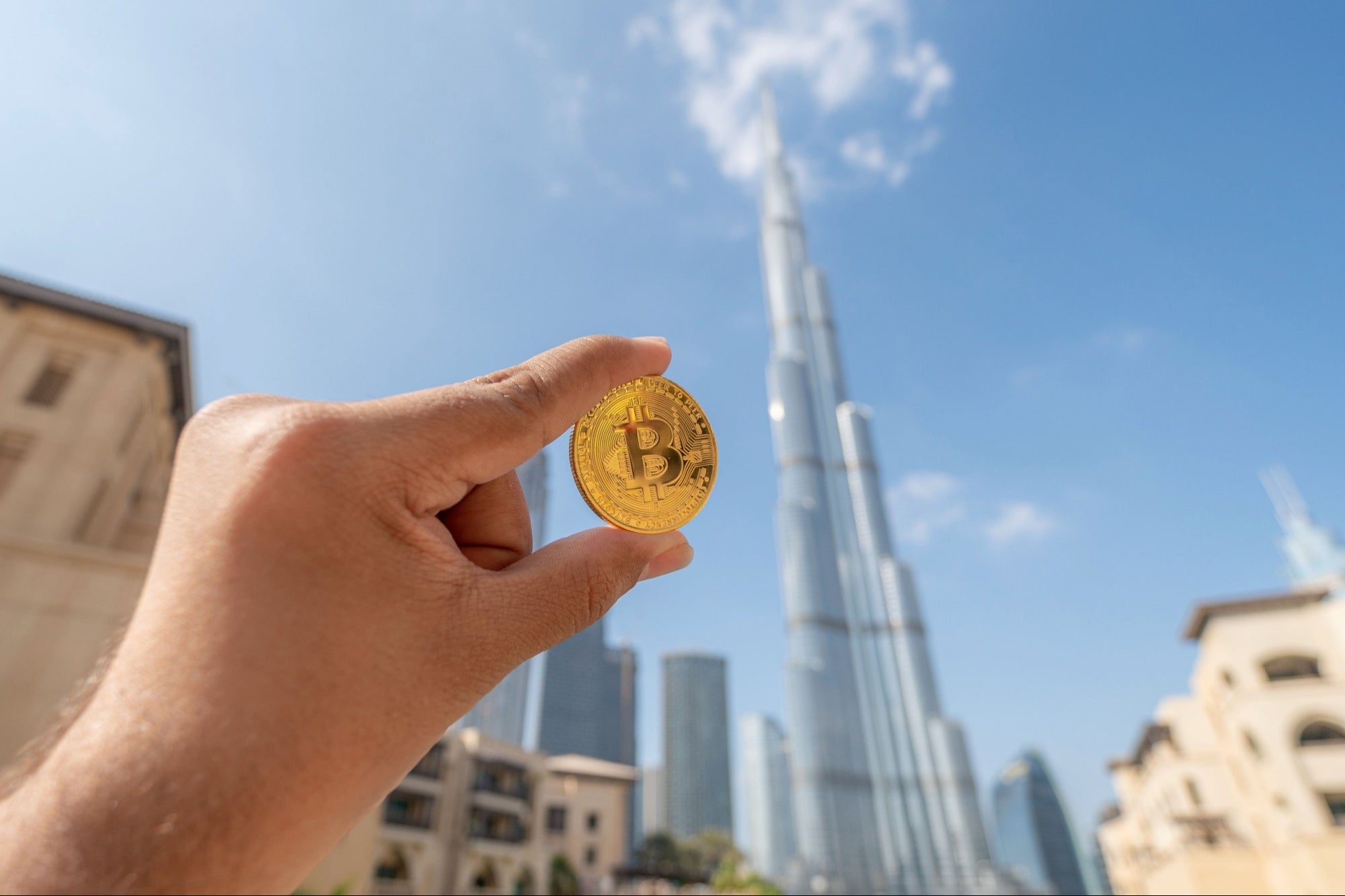 |
A Bitcoin logo photographed below a building in Dubai, UAE. Photo: Entrepreneur |
Previously, in 2022, auditing firm PwC also praised the UAE for fostering an environment conducive to the development of the digital asset industry. The country adopted a light-touch approach, aiming to attract global companies and boost the domestic industry.
Their policy focuses on monitoring risks through the Virtual Asset Regulatory Authority (VARA), rather than stifling the market. PwC believes that this friendly regulatory approach has catalyzed the growth of the digital asset economy in the UAE.
Meanwhile, in its report released in November, global law firm Charles Russell Speechlys stated that the Abu Dhabi Global Market (ADGM) Free Financial Zone, founded by the UAE, is the first jurisdiction in the world to introduce a comprehensive and specialized legal framework for regulating digital asset activities.
According to the law firm, the UAE, and particularly the Dubai region, is leading the development of infrastructure for the growth of the digital asset industry.
Tat Dat