While reversing the 0,7% decline seen in Q3/2025, Japan's economic growth still fell short of expert predictions. An economy is technically in recession after two consecutive quarters of contraction.
Japan's annualized gross domestic product (GDP) expanded by 0,2%, significantly below the 1,6% forecast. This followed a 2,3% contraction in Q3/2025. According to data from Japan's Cabinet Office, private consumption was the primary driver of this modest growth, compensating for decreases in exports and public expenditure.
In January, the Bank of Japan (BOJ) increased its economic growth forecast for the fiscal year concluding in 3/2026 to 0,9%, an improvement from its earlier 0,7% projection.
The BOJ anticipates moderate economic expansion as other countries recover. The institution also observed a "virtuous cycle" between prices and wages, bolstered by government economic policies and accommodative financial conditions.
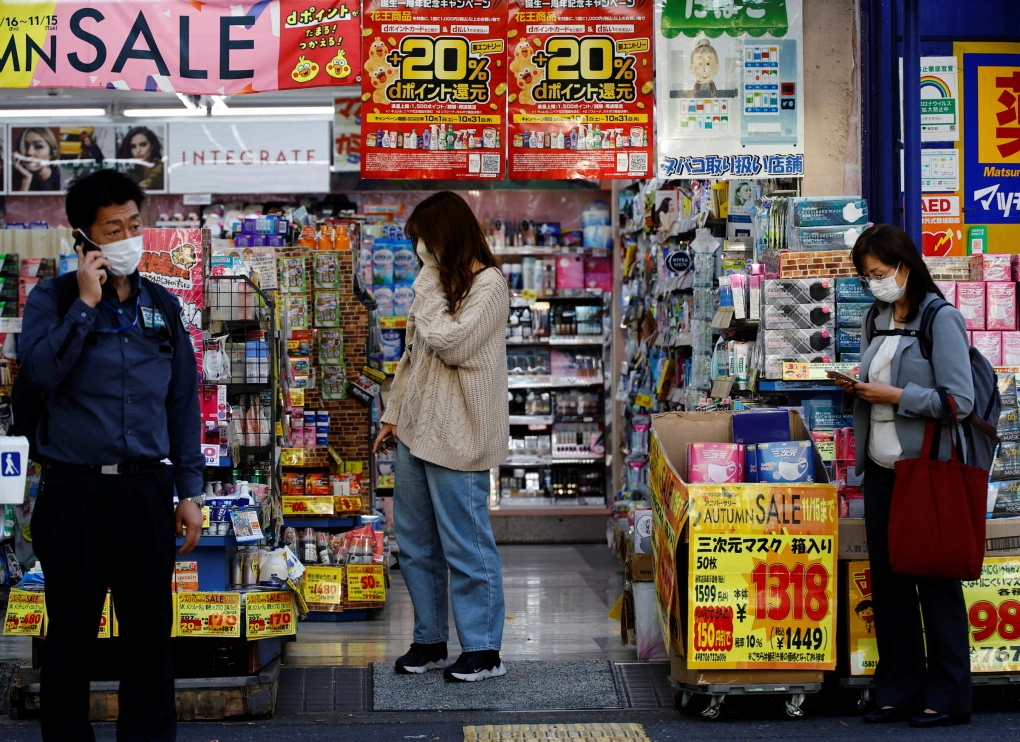 |
Customers outside a pharmacy in Tokyo, Japan. Reuters
This economic data was released amidst ongoing negotiations between Japan and the United States, its second-largest trading partner. The discussions involve a 550 billion USD investment commitment as part of a bilateral trade agreement. NHK reported on Friday that the two nations have not yet reached consensus on the initial projects within this investment package.
Japanese Economy Minister Ryosei Akazawa anticipates the cooperative project portfolio will be finalized before a meeting between Prime Minister Sanae Takaichi and US President Donald Trump. Trump had announced his meeting with Takaichi just prior to the House of Representatives election on 8/2, an election where Takaichi led the ruling Liberal Democratic Party (LDP) to a decisive victory.
Following her electoral success, Prime Minister Takaichi pledged to support growth by boosting investment through "proactive" fiscal policies, despite not yet detailing a specific roadmap. She had previously committed to a two-year suspension of food taxes and an increase in the defense budget to 2% of GDP.
Bruce Kirk, Managing Director and Chief Japan Equity Strategist at Goldman Sachs, suggests that defense will be a significant driver for the country's stock market. He expects the upcoming meeting between Takaichi and Trump to generate "a series of cooperation announcements" between Japanese and American businesses in areas such as industrialization, factory automation, and shipbuilding.
Prior to the election, Takaichi unveiled a record budget of 122 trillion yen for the fiscal year commencing in April. This represents the second consecutive year of record spending by Japan aimed at assisting households facing rising living costs.
Japan's inflation rate significantly decreased to 2,1% in January, marking its lowest point since 3/2022. Despite this drop, prices have consistently remained above the BOJ's 2% target for 45 consecutive months.
Trong Hieu (Source: CNBC)