According to the latest report from MB Securities (MBS), the weakening trend of the US dollar will be the main supporting factor for the exchange rate this year. The DXY index, which measures US dollar strength, is forecast to fall to the 95-point threshold from mid-2026. This comes as most major currencies, including the Japanese yen, British pound, and euro, are all expected to appreciate.
With these supporting factors, MBS analysts assess that the dong will be more stable in 2026 and will only depreciate by approximately 2,5-3% against the US dollar.
In fact, the greenback fell to near a 4-year low of 96,19 points at the end of january, losing 2,1% compared to the beginning of the year. This development occurred after the US Federal Reserve (Fed) maintained interest rates and conducted a "rate check" at its New York branch. Investors view this as a signal that the US and Japan may collaborate to intervene in the currency market to halt the yen's decline.
A "rate check" is a probing method where the Fed asks brokers and banks about the exchange rates they could execute if the agency were to buy or sell foreign currency.
Furthermore, the US dollar's depreciation became more pronounced after president Trump stated that the greenback's value was "very good." This signals the White House's acceptance of the dollar's weakness, encouraging sell-offs of the currency.
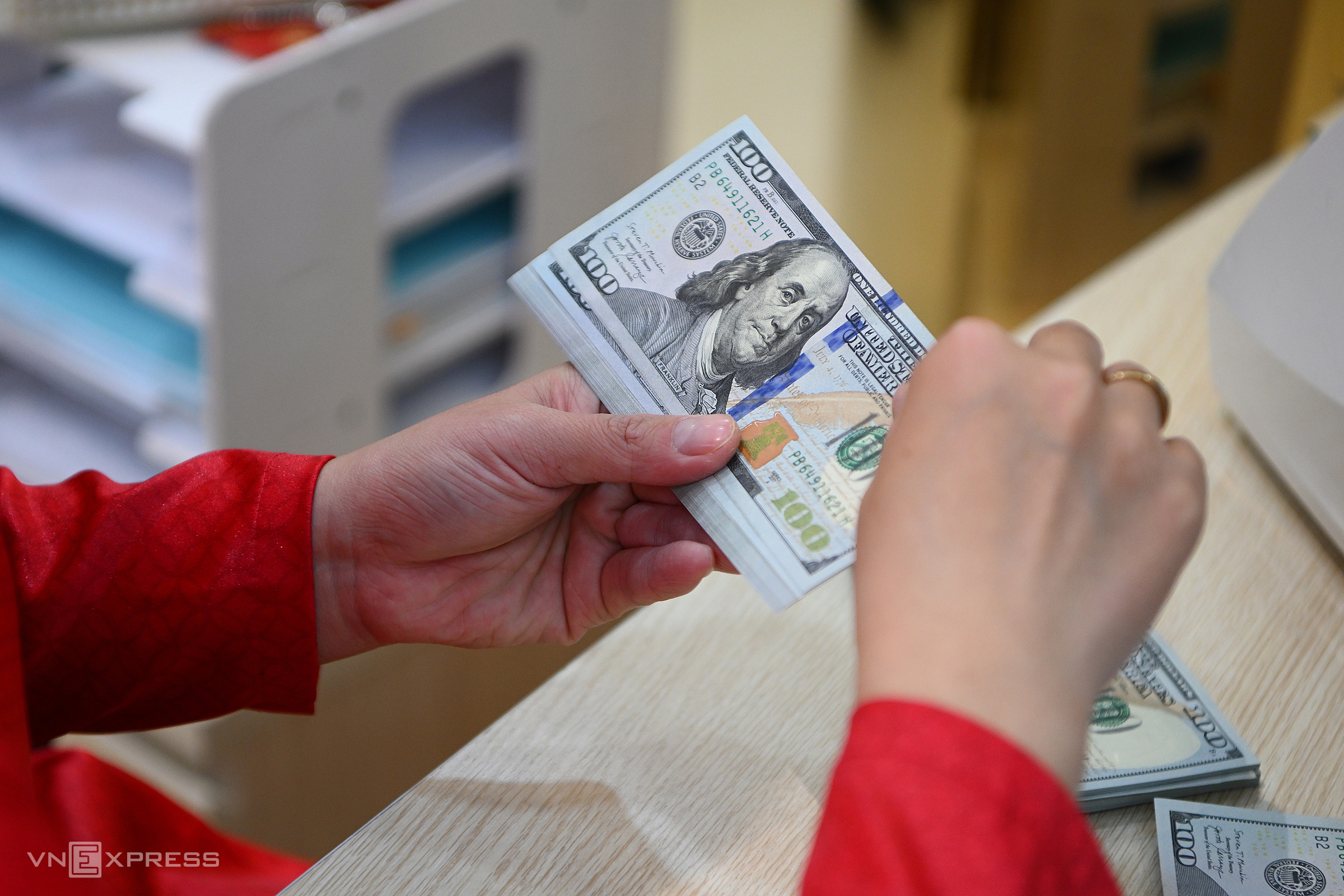 |
USD transactions at a bank. Photo: Giang Huy |
Thanks to reduced international pressure, the domestic foreign exchange market has eased. The interbank exchange rate at the end of january decreased by 0,9% to 26.025 dong per US dollar, the lowest since june 2025. In the free market, the US dollar price also dropped 2,6% compared to the beginning of the year, currently around 26.225 dong per US dollar.
However, MBS analysts warn that pressure on the dong persists. Vietnam recorded a trade surplus of over 20 billion USD last year, but most of it came from the foreign direct investment (FDI) sector, while domestic businesses faced a deficit of nearly 30 billion USD. This indicates a significant domestic demand for US dollars.
This year, imports are forecast to continue increasing to support the production expansion cycle. Additionally, international gold prices may remain above 5.000 USD per ounce in the near future due to geopolitical instability and increased demand for safe-haven assets. Rising gold import demand, mirroring global trends, will add further pressure on the domestic exchange rate at certain times.
Quynh Trang