Non-stick metal technology is commonly used in household products such as pots, pans, and frying pans. However, when applied in industrial environments, non-stick properties extend beyond simply preventing material adhesion. They become part of a comprehensive engineering challenge involving friction, wear, and operational stability.
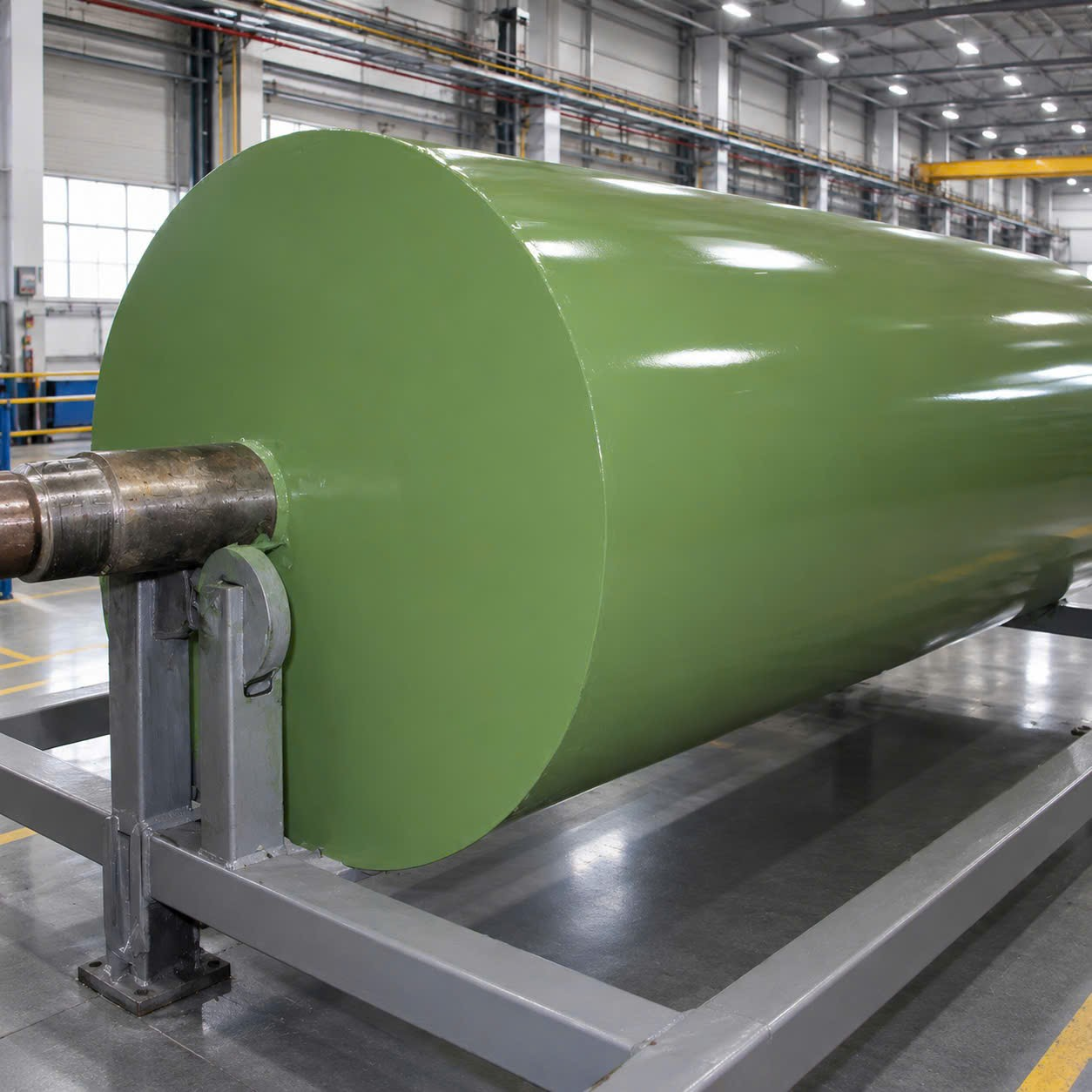 |
Large roller shafts in a production line are coated with a non-stick layer, enabling them to withstand high loads and operate stably in continuous contact environments. Photo: Thai Binh Minh |
Large roller shafts in a production line are coated with a non-stick layer, enabling them to withstand high loads and operate stably in continuous contact environments. Photo: Thai Binh Minh
During manufacturing, material buildup on the surfaces of shafts, rollers, molds, or moving parts can cause product deviations, increase cleaning time, and shorten equipment lifespan. Therefore, industrial non-stick solutions require careful surface treatment calculations to optimize machine working conditions, rather than merely addressing surface adhesion issues.
Current metal non-stick coatings are widely used in various sectors, including shafts and rollers in production lines, forming molds, precision engineering, robotic systems, food and confectionery processing equipment, and automated production lines.
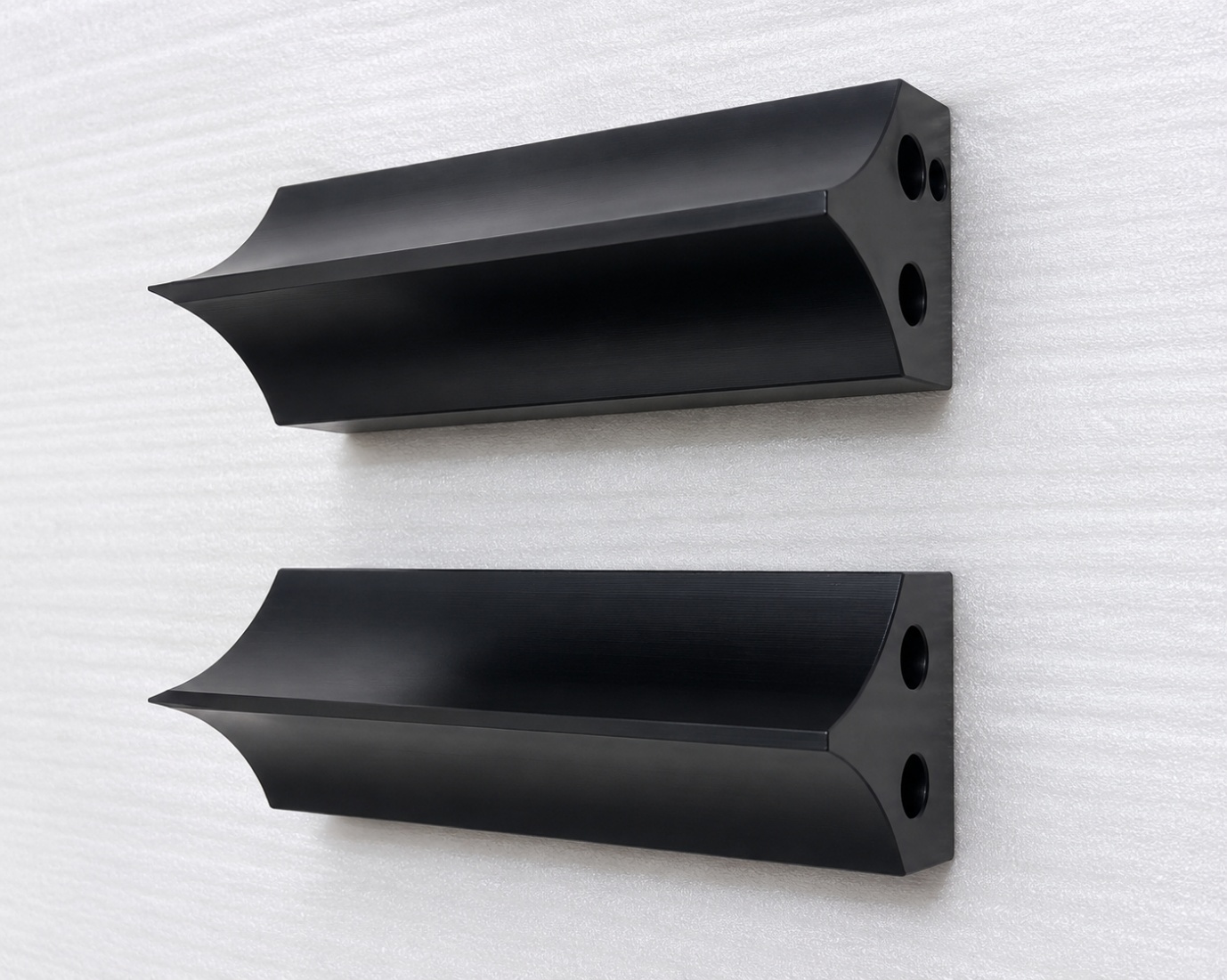 |
Specialized non-stick coating on mechanical blades reduces friction and prevents material adhesion during operation. Photo: Thai Binh Minh |
Specialized non-stick coating on mechanical blades reduces friction and prevents material adhesion during operation. Photo: Thai Binh Minh
Each sector has specific operational characteristics concerning temperature, load, movement speed, and contact environment. Consequently, the same non-stick solution may yield different results if working conditions change. This reality highlights that selecting a non-stick coating requires a specific analysis of each application, rather than applying a general solution across various equipment types.
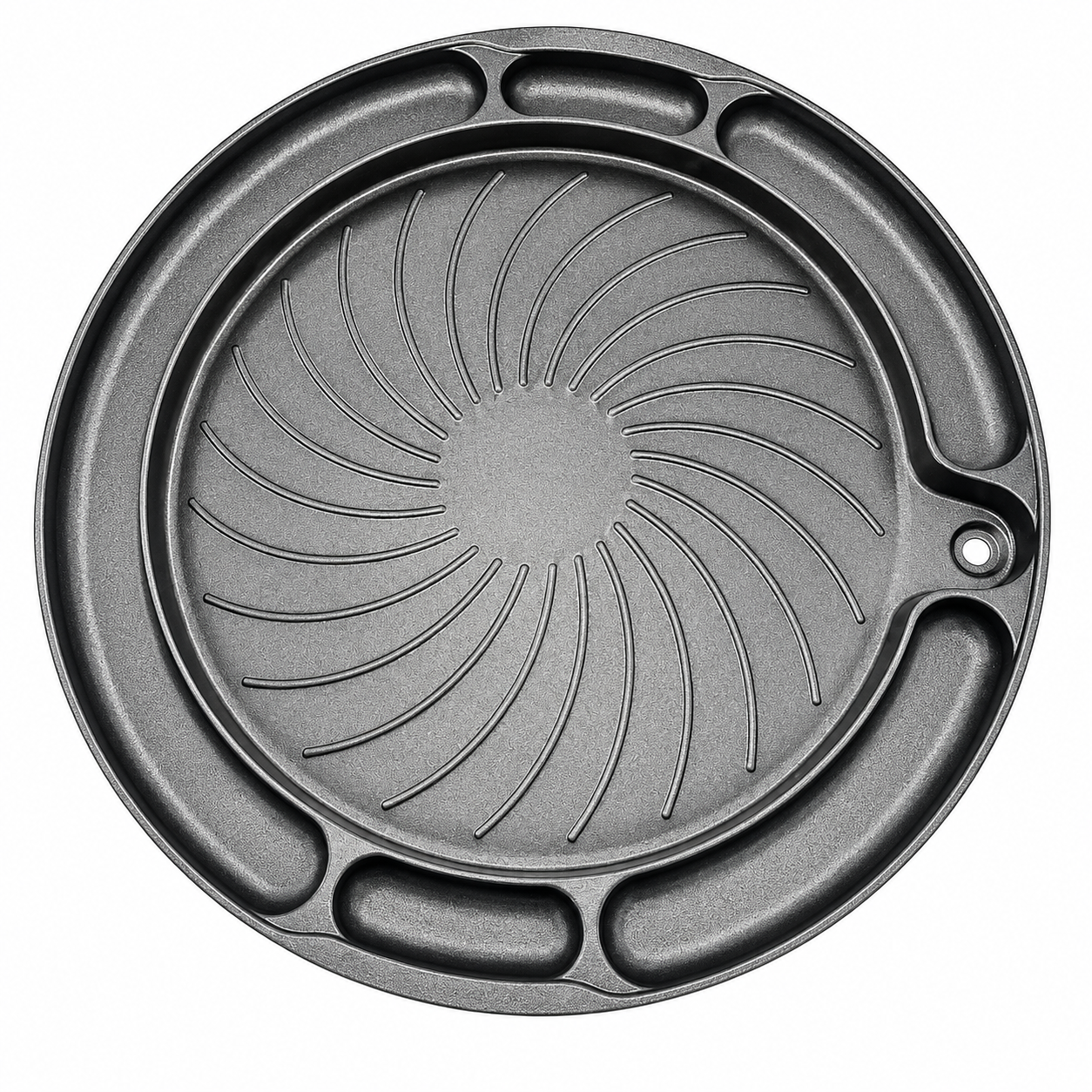 |
Application of heat-resistant non-stick coating on food grilling plates. Photo: Thai Binh Minh |
Application of heat-resistant non-stick coating on food grilling plates. Photo: Thai Binh Minh
For industrial metal non-stick solutions, most currently available options are developed based on "fluoropolymer" technology. This group of materials features a low coefficient of friction, good heat resistance, and chemical resistance, making them suitable for many different operating conditions.
Teflon, in fact, is one of the most well-known fluoropolymer brands widely recognized for non-stick applications. However, it is a trade name registered by Chemours, a US chemical corporation, for specific lines of fluoropolymer materials, and does not represent the entirety of non-stick technology on the market.
Within the industrial sector, the concept of non-stick is approached more broadly, encompassing various material systems and coating technologies. The selection depends on the specific working conditions of each piece of equipment.
Therefore, non-stick effectiveness relies not only on the base material but also significantly on the metal surface treatment process, coating technique, and quality control capabilities. Selecting a non-stick solution requires simultaneous evaluation based on criteria such as: coefficient of friction, heat resistance, chemical resistance, wear resistance, dimensional stability, and continuous operation capability under harsh conditions.
Furthermore, in modern production lines, especially those with automation and smart control systems, mechanical stability is fundamental. When metal surfaces are treated with appropriate non-stick coatings, friction and adhesion are controlled, ensuring smooth and precise mechanical movements. This contributes to the efficient operation of control systems and artificial intelligence, reducing operational deviations and enhancing the stability of the entire production line.
In Vietnam, Nam Dai Duong is a brand operating in industrial metal non-stick coating solutions. It focuses on researching and implementing solutions tailored to the actual operating conditions of individual equipment and production lines. Through practical experience and updated surface coating technology, their solutions aim for stable and sustainable operation. Selecting and implementing the correct non-stick solution from the outset helps businesses minimize production downtime, limit unnecessary wear, and optimize long-term operating costs.
Beyond non-stick solutions, Nam Dai Duong provides hydraulic pressing services with a 5,000-ton press. This service handles thick steel plate pressing, shape forming, structural straightening, mechanical component processing, and large load product manufacturing as required. Businesses needing to assess, improve, or optimize non-stick capabilities for shafts, rollers, molds, or other components in their production lines can contact them for consultation and implementation of suitable solutions based on actual operating conditions.
(Source: Thai Binh Minh)
Factory: Duong so 1A - Cum Cong nghiep Hoang Gia, Long An - Tay Ninh
Office: 54 Duong So 4A, phuong Binh Tan, TP HCM
Phone / Zalo: +84 94 140 0099
Website: sonchongdinh.net