During a government press conference on 3/6, Deputy Minister of Industry and Trade Nguyen Sinh Nhat Tan stated that the agency is developing a plan to inspect and control the quality of biofuel gasoline. The list of units to be inspected has not been disclosed to ensure the surprise element and effectiveness of these activities.
According to the Ministry of Industry and Trade leadership, quality inspections of biofuel gasoline have been ongoing since 2018, when E5 gasoline was first distributed, and will continue with E10 gasoline to ensure the fuel meets standards.
Penalties for businesses found not to comply with E10 gasoline quality standards include: administrative fines, suspension of operations, and other measures depending on the severity of the violation.
The Ministry of Science and Technology has issued standards and technical regulations for all types of biofuel gasoline. Therefore, according to the Deputy Minister, improper fuel blending procedures and technical standards must be prevented.
"Quality control is implemented at every stage, from production, blending, transportation, distribution, and circulation to the retail system", Deputy Minister Tan stated, emphasizing that products reaching consumers are rigorously checked and monitored from prior stages.
He also recommended that consumers provide feedback and assessments when using the product to support fuel quality inspection and control efforts.
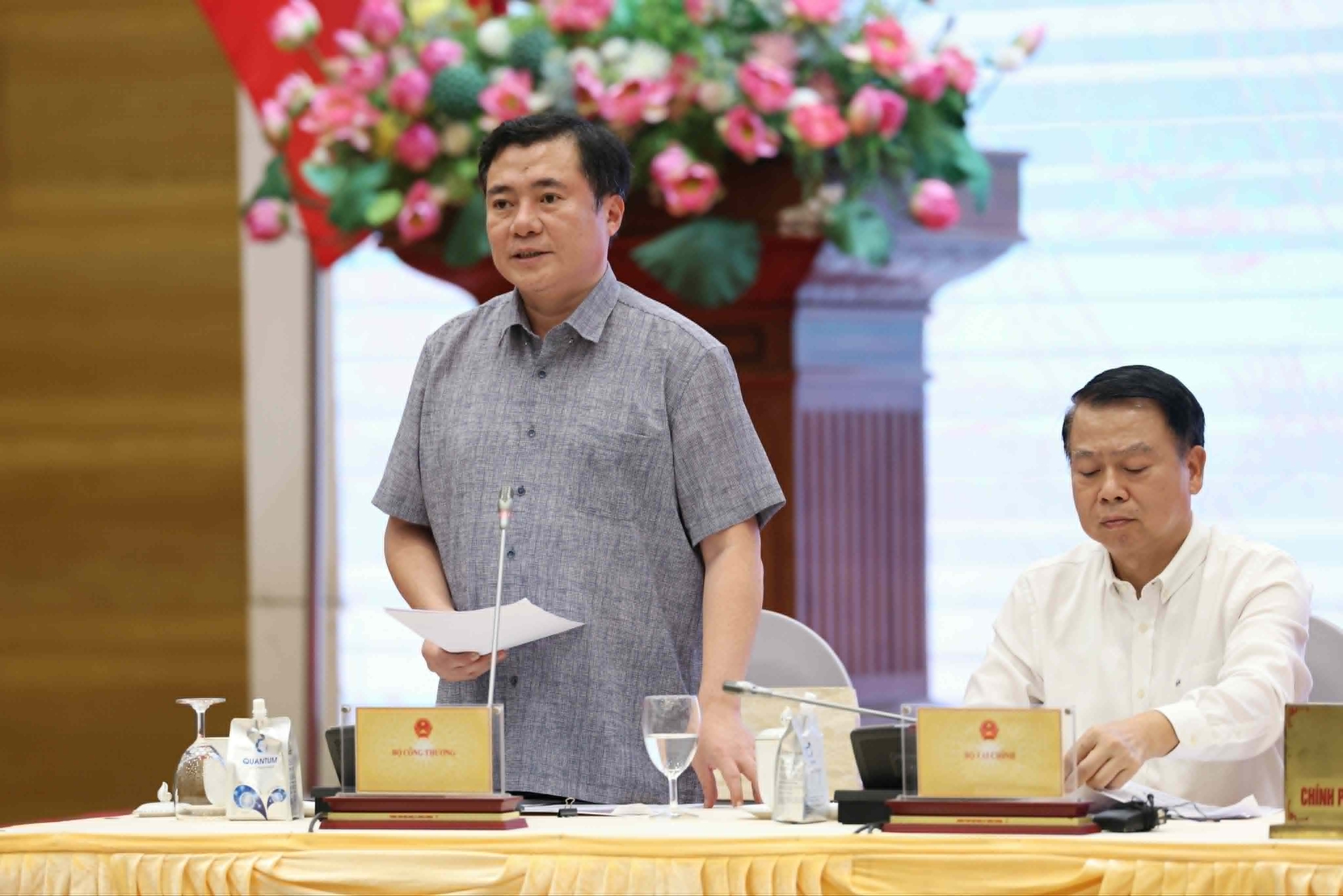 |
Deputy Minister of Industry and Trade Nguyen Sinh Nhat Tan speaking at the press conference, 3/6. Photo: VGP
Biofuel is a blend of fuel ethanol (bio-alcohol) and mineral gasoline. The biofuel roadmap was developed by regulators many years ago. Since 2018, Vietnam has sold E5 RON92 gasoline nationwide. By 8/2025, E10 will be piloted in some localities before national expansion.
From 1/6, all mineral gasoline is blended with ethanol to become E10 gasoline before being sold to the market. Meanwhile, E5 RON92 gasoline will continue to be maintained until the end of 2030.
Deputy Minister Nguyen Sinh Nhat Tan affirmed that the transition to biofuel gasoline aims for the highest benefit for citizens and consumers.
To protect consumers, he emphasized that receiving feedback and complaints from the public is a crucial solution. Ministries, state management agencies, petroleum businesses, and vehicle manufacturers must increase information provision, respond to feedback, and offer technical advice to users.
The Ministry of Industry and Trade is currently developing handbooks and a set of frequently asked questions and answers to explain and guide the public. Additionally, information reception channels will be diversified, including the establishment of an automated hotline to receive, answer, and update objective information for citizens.
The ministry also required automakers and engine manufacturers to review and reassess vehicle compatibility with biofuel gasoline. Automakers have uniformly published these assessment results. Concurrently, regulators mandated that businesses continue to instruct users, prepare maintenance and repair facilities, and anticipate potential technical issues.
Current ethanol demand for E10 blending is about 100,000 cubic meters per month. Approximately 25,000 cubic meters are domestically produced, with the remainder imported. Current blending capacity largely meets market consumption needs. Since its pilot distribution in 8/2025, E10 gasoline prices have consistently been a few hundred dong per liter lower than comparable mineral gasoline.
Phuong Dung