The Middle East conflict has nearly disrupted oil exports through the Hormuz Strait, a shipping lane that transports 20% of global oil and liquefied natural gas (LNG) supplies. As a result, energy prices have escalated, putting pressure on many import-dependent economies.
According to AP, Asia, the primary destination for oil flows, has been hit hardest, though Europe has not been immune to the impact. Even Africa faces the risk of rising fuel costs and inflation.
However, unlike previous oil shocks, renewable energy has emerged as an effective buffer for some economies. Experts note that countries with a high proportion of renewable energy are less affected because this source relies on domestic resources like sun and wind, rather than imports.
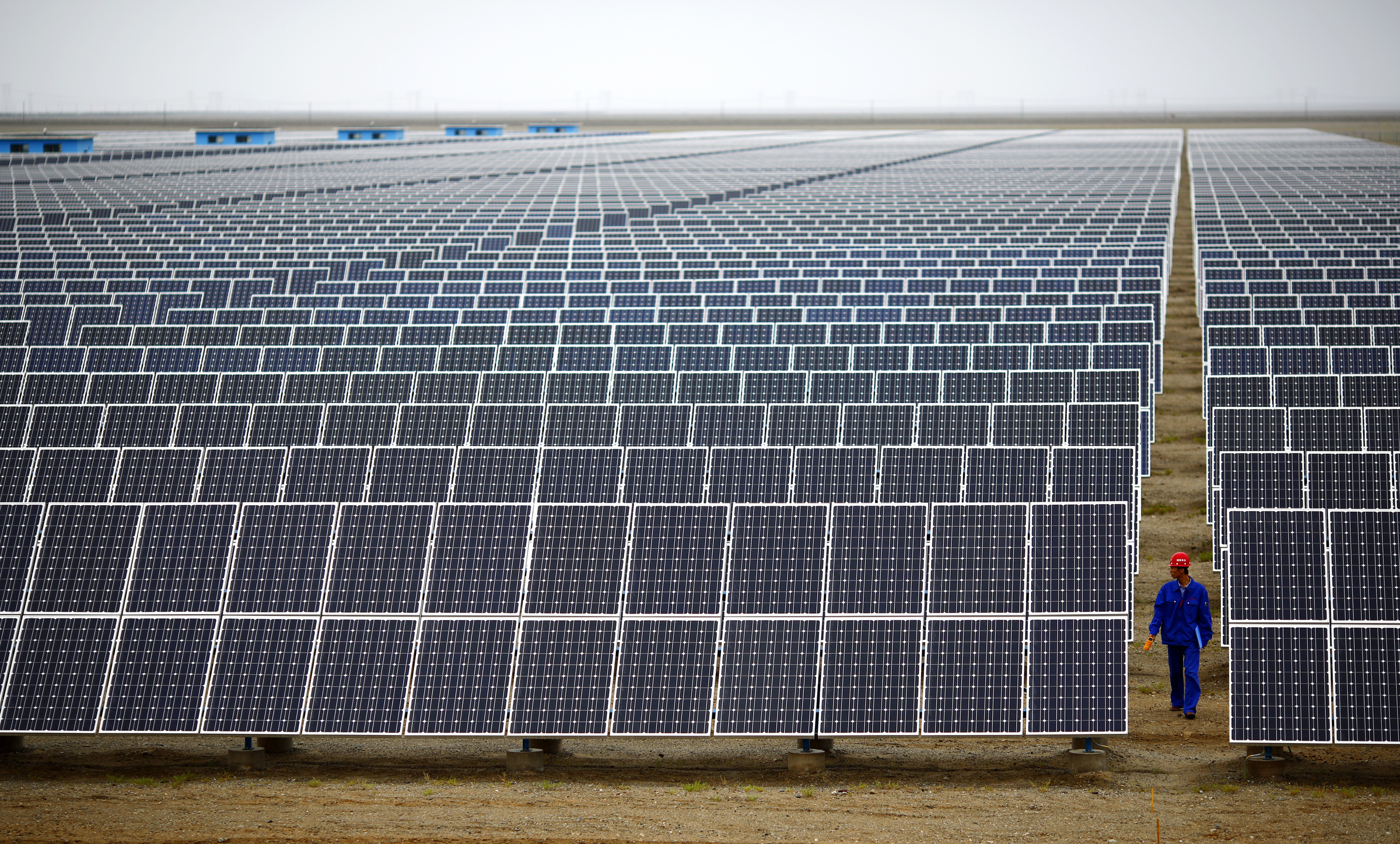 |
A solar energy farm in Dunhuang, China. Photo: Reuters |
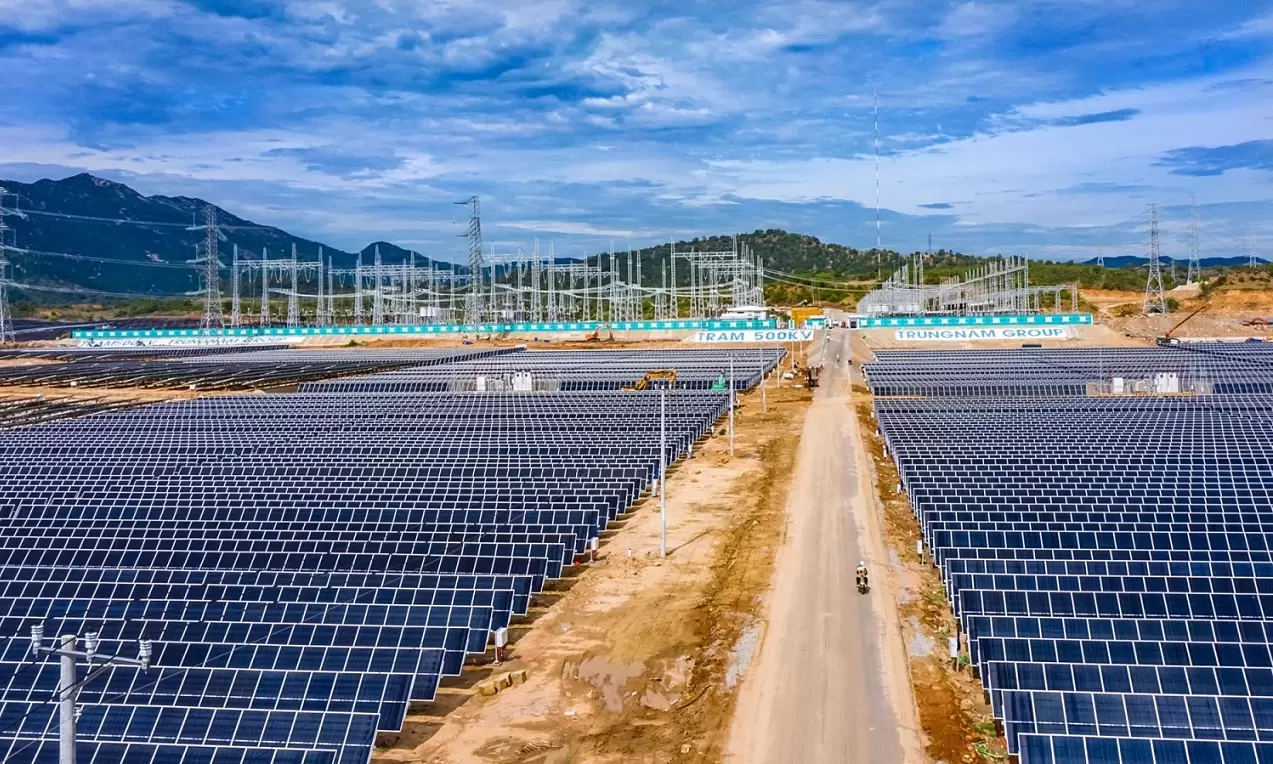
China leads the world in renewable energy, having continuously expanded its renewable capacity despite still relying on coal power. According to the International Energy Agency (IEA), about 10% of cars on the road in the country are electric vehicles. While China remains the largest crude oil importer, the electrification of its economy with renewable energy has helped reduce import dependence.
Without this shift, the world's second-largest economy would be "much more vulnerable to supply shocks and price volatility," stated Lauri Myllyvirta from the Centre for Research on Energy and Clean Air.
Increased use of renewable energy has also helped other Asian countries mitigate the impact. In Pakistan, a boom in solar power has helped reduce over 12 billion USD in fuel import costs since 2020. Research organizations estimate the country could save an additional 6,3 billion USD this year if energy prices remain high.
India has also accelerated the development of clean energy, especially since the Ukraine conflict erupted in 2022. The world's most populous economy is boosting solar and wind power, combined with purchasing cheap oil from Russia and increasing coal production. However, because renewable electricity is not yet strong enough, the Middle East conflict has led to gas shortages for cooking in India. The fertilizer and ceramics industries also face potential impacts.
Conversely, economies heavily dependent on fossil fuel imports, such as Bangladesh and Thailand in Asia, are expected to bear the primary shock from the Middle East conflict. Recently, Bangladesh closed universities to conserve electricity. Due to low reserves, the government had to begin rationing fuel after a wave of gasoline hoarding, according to economist Khondaker Golam Moazzem at the Centre for Policy Dialogue in Dhaka.
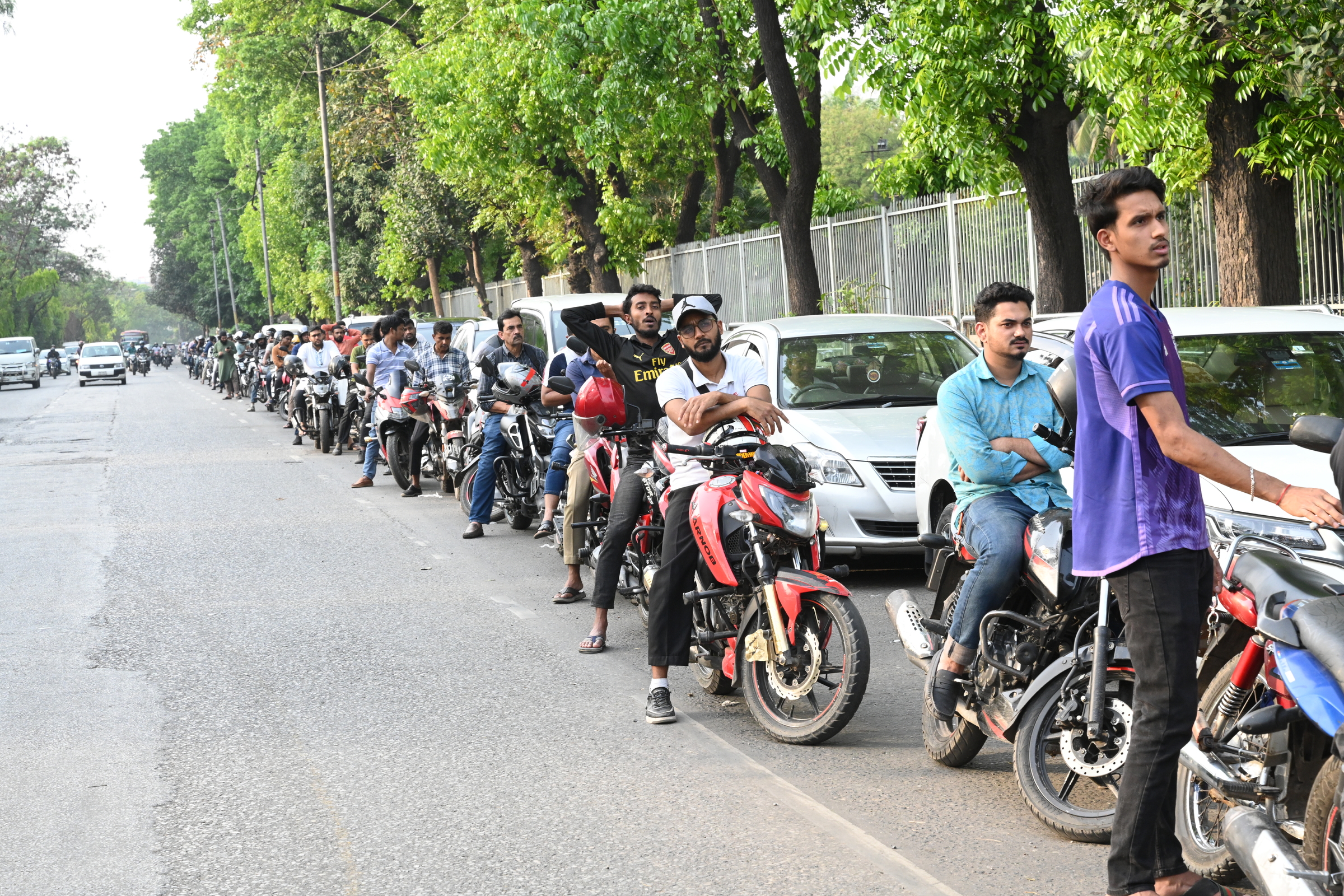 |
People queue for gasoline in Dhaka, Bangladesh, on 17/3. Photo: Reuters |
Thailand has also temporarily halted gasoline and diesel exports, increased gas production, and started using reserves. If the conflict extends into April, limited reserves and a restricted subsidy budget will lead to sharp price increases, warned Areeporn Asawinpongphan from the Thailand Development Research Institute. She commented, "The promotion of domestic renewable energy should have been done long ago."
Some African countries, such as Benin and Zambia, are also vulnerable due to their reliance on imported oil to operate transportation systems and supply chains. High fuel prices increase transport and food costs, while low foreign exchange reserves diminish their ability to pay if energy prices remain elevated.
James Bowen, an expert at ReMap Research, an Australian consulting firm, asserted that fossil fuel energy crises are frequent occurrences. "It's not a random flaw but an inherent characteristic of the fossil fuel-based energy system."
Even the European Union (EU) is no stranger to energy shocks. In 2022, some European countries sought to reduce fossil fuel dependence. However, they subsequently shifted to finding new supply sources rather than accelerating energy transition, according to Pauline Heinrichs of King's College London.
For example, Germany quickly built LNG terminals to replace Russian gas with supplies primarily from the US, while the renewable energy transition slowed. Last week, European natural gas futures on the Dutch exchange reached a 3-year record, nearing 69 euro per MWh. By the close of trading on Friday (20/3), prices had fallen to 59 euro, but still more than double compared to before the Middle East conflict.
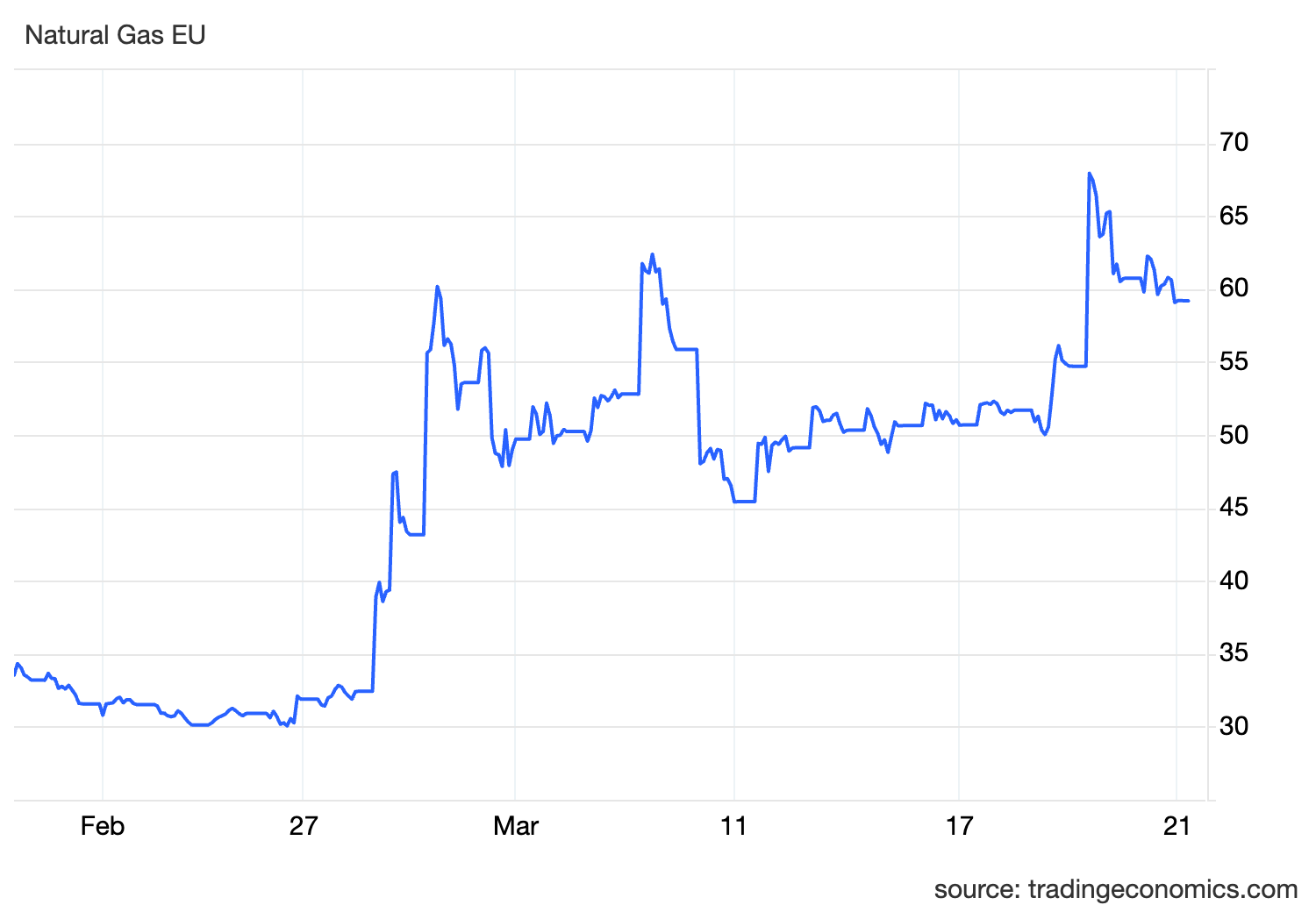 |
Trends in Dutch TTF natural gas futures prices (euro/MWh) from late February to present. |
Previously, a 2023 study indicated that Europe's excessive spending on fossil fuels since the Ukraine conflict was equivalent to about 40% of the funds needed to transition its electricity system to clean energy. "Europe learned the wrong lesson," Heinrichs said.
Given these events, the Middle East conflict has sent a "wake-up call" to the world regarding the urgency of transitioning to renewable energy, according to AP. South Korean President Lee Jae-myung remarked that this crisis could be a "good opportunity" to accelerate the shift to renewable energy.
Similarly, expert Kennedy Mbeva from the University of Cambridge, noted that investing in clean energy to ensure long-term energy security is a sound strategic choice for African nations. Ethiopia, a country that banned gasoline and diesel vehicles in 2024, is heavily focused on renewable energy.
The real challenge is not just overcoming the next shock, but also ensuring it does not "derail the country's development trajectory," stated Hanan Hassen, an analyst at the Institute of Diplomacy, a think tank associated with the Ethiopian government.
A favorable point is that renewable energy is now competitive with fossil fuels in many locations. According to the International Renewable Energy Agency (IRENA), more than 90% of new global renewable electricity projects in 2024 had lower costs than fossil fuel options.
Phien An (according to AP)