During a standing government meeting on December 5, Prime Minister Pham Minh Chinh stated that piloting free trade zones (FTZs) is a new initiative requiring feasibility and effectiveness. The objective is to test policies and contribute to socio-economic development.
The Prime Minister emphasized clarifying the concept of free trade zones, including their similarities and differences with international financial centers. Additionally, the selection of pilot locations must be appropriate and regionally balanced. This approach adheres to the pilot spirit, meaning a limited number of zones and a specific timeframe for evaluation.
"Agencies are required to consult international experience and Vietnam's conditions to develop specific, superior, and feasible mechanisms and policies," he said. The Prime Minister also noted that these policies should not significantly impact the general investment environment and must include both general regulations and specific mechanisms suitable for the zones and localities.
To pilot free trade zones, the Prime Minister outlined that management agencies must transform the policy into action, develop infrastructure, attract resources, apply high technology, implement smart management, and train human resources. He highlighted the importance of ensuring social welfare, environmental protection, establishing a lean organizational structure, increasing decentralization, autonomy, and supervision.
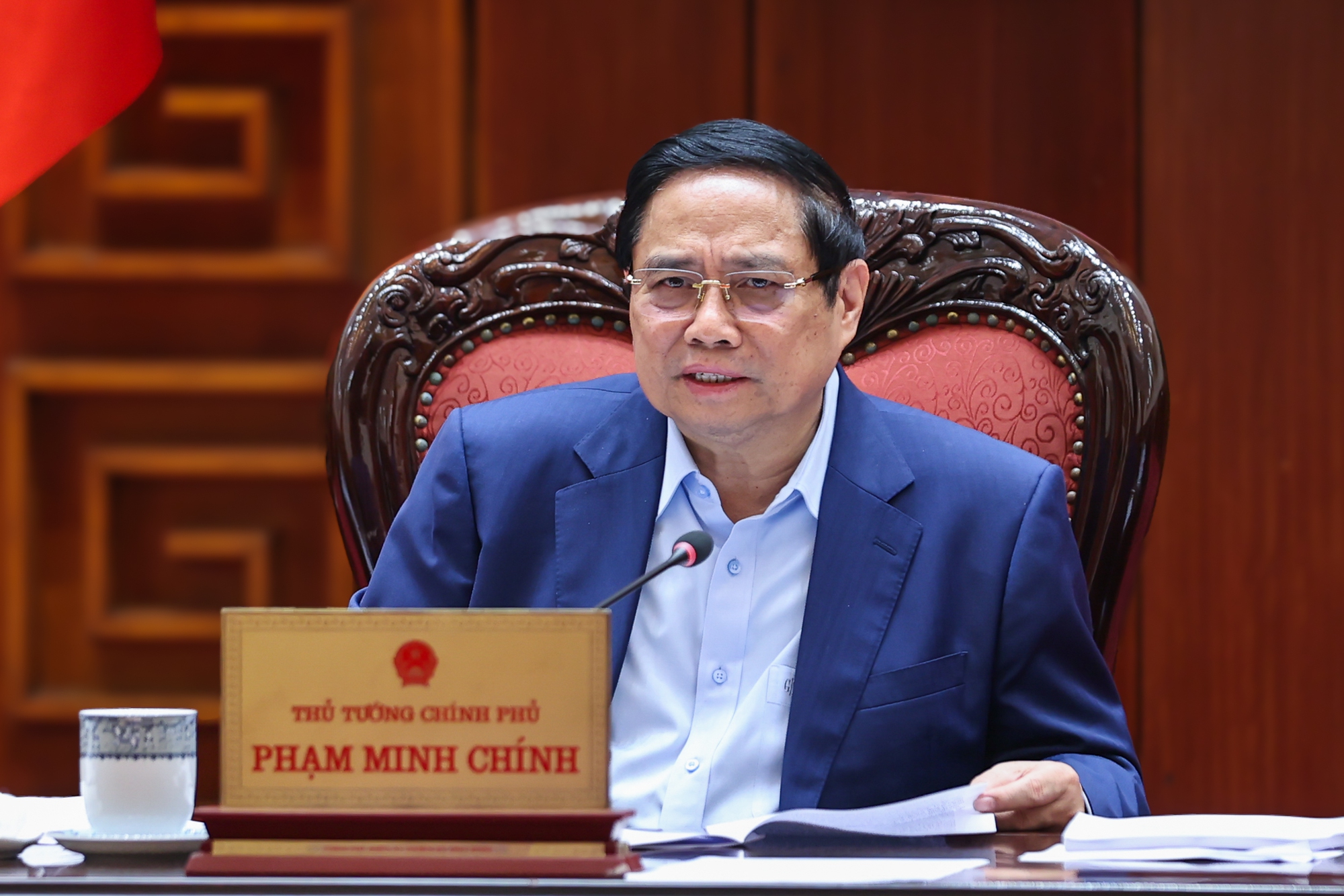 |
Prime Minister Pham Minh Chinh speaking at the meeting, 5/12. Photo: VGP |
The Ministry of Finance is the lead agency responsible for developing the free trade zone project. Currently, over 7,000 special economic zones and free trade zones operate globally. These zones play an increasingly important role in the modern economic development strategies of developing and emerging countries. The free trade zone model is expanding into multi-functional zones encompassing industry, urban development, services, finance, high technology, and innovation, aiming to maximize the attraction of development resources.
In Vietnam, the general legal system lacks specific regulations regarding the mechanisms, policies, management, and operations of free trade zones. Recently, the National Assembly issued resolutions on piloting specific mechanisms and policies for the development of Da Nang and Hai Phong, which include provisions related to free trade zones.
According to discussions at the meeting, the development of the free trade zone project is urgent and important, requiring immediate implementation. This initiative forms the political basis for free trade zones to become new drivers of national development.
The Ministry of Finance announced plans to establish free trade zones in Da Nang, Hai Phong, and Ho Chi Minh City in 2026. By 2030, Vietnam expects to have approximately 6-8 free trade zones and similar models in favorable localities nationwide. By 2045, this model is projected to expand to 8-10 international-standard free trade zones and similar models, competitive with other countries in the region, contributing 15-20% of the country's GDP.
Phuong Dung