The Fensfeltet mine, located 150 km southwest of Oslo, Norway, is estimated to contain up to 15,9 million tons of rare earth oxides, according to calculations by consulting firm WSP in early march. This figure is 81% higher than initial estimates, confirming its status as Europe's largest rare earth deposit.
The Fensfeltet mine's scale significantly surpasses that of Per Geijer in Sweden, previously identified by mining company LKAB as the bloc's largest deposit, with 2,2 million tons.
Nolwenn Coint, an expert at the Geological Survey of Norway, states that further exploratory drilling is necessary to precisely determine the Fensfeltet mine's reserves. Nevertheless, she considers the mine to be of "significant" global scale, even though its rare earth content is lower than currently operating sites in the US (Mountain Pass), Australia (Mount Weld), and China's Bayan Obo, the world's largest mine.
Notably, 19% of the oxides at Fensfeltet are neodymium and praseodymium (NdPr), minerals essential for permanent magnets used in electric vehicles, wind turbines, electronics, and the defense industry.
"These are metals that the European Commission (EC) has identified as having a high supply risk," says Alf Reistad, CEO of Rare Earths Norway (REN), the company holding the exploitation rights for the Fensfeltet mine. In a recent meeting, he expressed impatience, stating it is time for Europe to "stop talking and start acting."
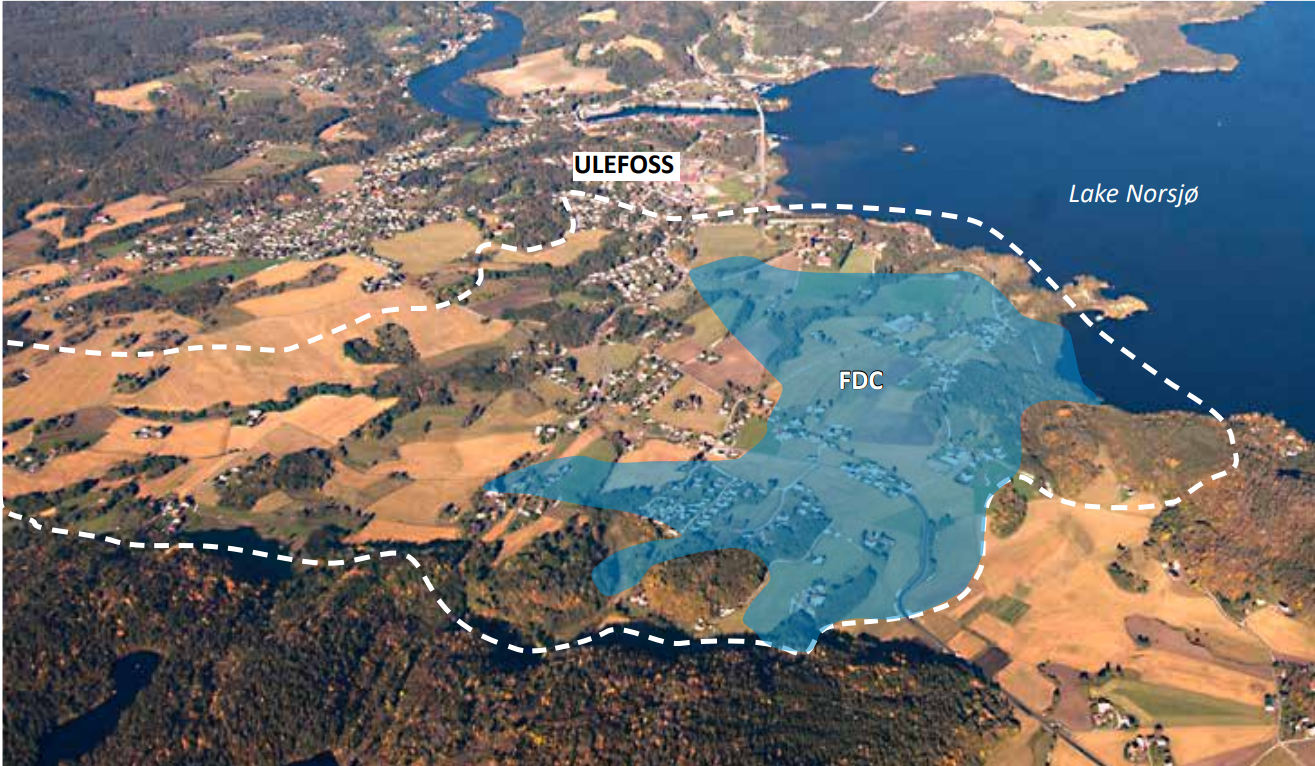 |
The 1,5 km2 rare earth mining area (blue) is located within the Fen complex of the Fensfeltet mine (dashed line). Photo: Sven Dahlgren |
Speaking to Reuters, Alf Reistad anticipates REN could begin production by late 2031, reaching an output of 800 tons of NdPr by 2032, meeting approximately 5% of the EU's demand for these minerals. While the company has been granted an exploitation license, it still requires an operating permit and certain "risk mitigation mechanisms" to achieve competitive pricing against supplies from Trung Quoc.
The REN CEO warns that if Norwegian authorities, the EC, and European Union (EU) member states do not act urgently, the rare earth resources – considered essential raw materials by Brussels – may never be exploited.
"They lie within an ancient volcano that has been dormant for 580 million years and will remain there if exploitation does not become a priority and financial risk mitigation mechanisms are not in place," he states.
Furthermore, the plan to awaken the Fensfeltet mine also faces environmental concerns.
According to geologist Nolwenn Coint, the mine is the root of an ancient volcano, composed of carbonate rock, which is more soluble for rare earth extraction.
Therefore, REN proposes constructing an underground mine, dubbed an "invisible mine", where ore is extracted via vertical wells and crushed. It would then be transported underground by conveyors spanning several kilometers before rare earth elements are separated and at least 60% of the waste is pumped back into the mine.
REN believes this approach minimizes environmental impact. However, the proposed location for surface infrastructure is contentious. Experts have identified at least 78 threatened species, including beetles, butterflies, amphibians, centipedes, fungi, and lichens.
Several environmental organizations are urging the Norwegian government to intervene. They argue that local authorities lack the resources to assess the damage and may not consider alternative sites due to financial interests.
Truls Gulowsen, chairman of the Norwegian Society for Conservation of Nature, acknowledges the positive aspects of the Fensfeltet mine project, specifically its commitment to limiting ecological impact and extracting essential minerals.
"We need to ensure that alternatives are considered before accepting significant harm to biodiversity. The risk is that if we rush, the next steps will take even longer," he warns.
REN spokesperson Tor Espen Simonsen acknowledges the dilemma. "If we move too quickly, we risk getting bogged down in legal disputes that could last for years. But conversely, if we spend all our time analyzing, writing more reports, and researching, we might never start," he says. The company calls on the government to intervene and treat Fensfeltet as a priority project.
Trung Quoc, the nation controlling the global rare earth market, currently supplies 98% of Europe's permanent magnet needs. Manufacturers in the bloc became acutely aware of their vulnerability in spring 2025 when Beijing restricted exports, causing shortages before lifting the restrictions in november.
Europe has no operational rare earth mines. The bloc aims to meet at least 10% of its rare earth demand by 2030. According to Reistad, the mine in Norway could reduce import dependence, meeting up to 30% of the bloc's rare earth needs.
However, a mining project in Europe typically takes 20 years to become operational. Therefore, he proposes two solutions: accelerating procedures and providing financial support, if the EU does not want to be caught between Trung Quoc and My.
Former US President Donald Trump recently invested approximately 2 billion USD in two My companies specializing in rare earth extraction and processing. The My government also committed to guaranteeing purchase prices for the first 10 years. Meanwhile, Trung Quoc has supported this industry since the 1980s and can control global rare earth prices, according to Reistad.
"If we do not do the same, we are like participating in a sporting event where everyone else is doping, except us," he says.
Phien An (according to Le Monde, Reuters)