Donald Trump filed a lawsuit in a Florida state court on 22/1, accusing JPMorgan, the largest US bank, of violating its own policies by closing his accounts for political reasons. This action, he claims, followed the riot at the US Capitol in January 2021.
JPMorgan, however, denied the accusation. "We regret President Trump’s decision to sue us. We believe this lawsuit is without merit. We respect the President’s right to litigate, as well as our right to defend ourselves," JPMorgan stated.
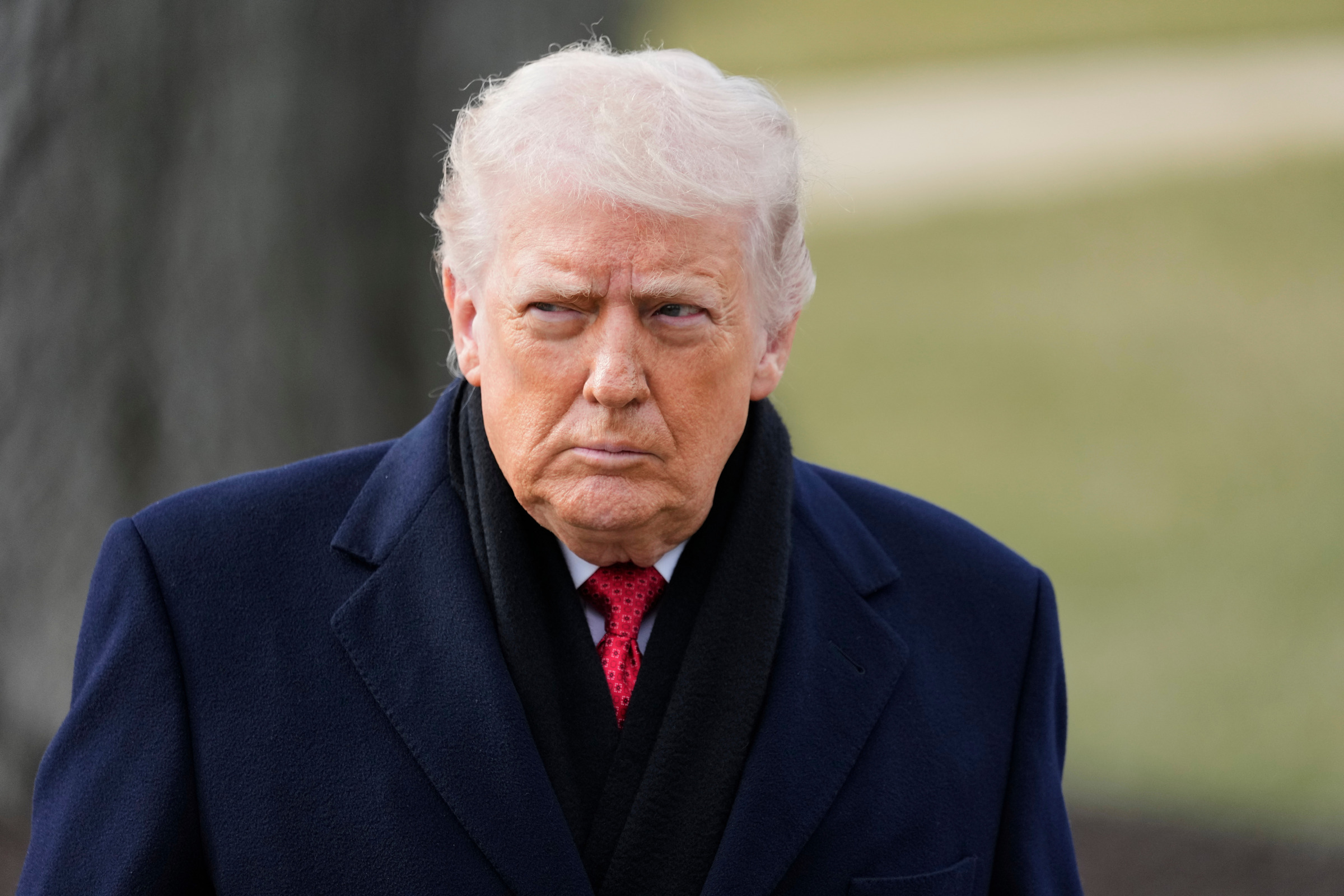 |
President Donald Trump on the White House grounds on 16/1. *Photo: AP*
In an 8/2025 interview with CNBC, President Trump revealed that the two largest US banks refused to serve him. JPMorgan Chase informed him he had 20 days to "transfer hundreds of millions of US dollars in cash" to another bank.
The US President then went to Bank of America to "deposit over 1 billion USD", but was told the bank could not open an account for him. "Bank of America CEO Brian Moynihan said, 'We cannot do this'. So, I went to several other banks, and ultimately had to split my funds to deposit them across multiple institutions," he recalled.
In the lawsuit filed on 22/1, Trump accused JPMorgan of unilaterally violating its own principles by closing accounts belonging to him and his businesses. He also accused Jamie Dimon of directing the creation of a "blacklist" to warn other banks against doing business with the Trump Organization, members of the Trump family, and himself.
"The plaintiff also suffered severe reputational damage by being forced to contact other financial institutions to transfer funds and open accounts," Trump stated in the lawsuit.
JPMorgan, meanwhile, maintained that it only closed accounts posing legal or compliance risks to the bank. "We regret having to do so. However, in many cases, regulations and supervisory requirements compel us to act," the bank said.
Recently, Trump drew attention by calling for banks to cap credit card interest rates at 10%. At the World Economic Forum (WEF) held in Davos, Switzerland, this week, he argued that such a cap would limit many consumers' access to credit and could lead to an "economic disaster". Dimon has led JPMorgan for two decades and is among the most influential figures in US business.
Ha Thu (according to CNN, Reuters)