On 26/7, according to energy specialist publication Oil Price, the US Department of Energy (DOE) granted the first nuclear safety design agreement (NSDA) for a molten salt reactor developed by Abilene Christian University (Texas) and Natura Resources.
This agreement standardizes design requirements, safety analysis methods, and regulatory involvement. It provides a legal framework to support the licensing of nuclear facility construction and operation.
"The NSDA represents a crucial transition from design to deployment," stated Jordan Robison, CEO of Natura Resources. This technology has already secured 120 million USD in private funding, with the Texas state government pledging an additional 120 million USD.
Thorium fluoride is the molten salt commonly used in this technology. Thorium, a radioactive metal named after the god of thunder Thor, is a byproduct of rare earth mining from monazite sand. Its reserves are more abundant than uranium. Utilizing thorium reduces waste from rare earth mining and provides an alternative nuclear fuel source.
Additionally, the water-independent cooling mechanism enhances the safety of this new reactor type by preventing overheating. Should an operational issue arise, the fuel salt cools, solidifies, and is safely contained within the system.
The US Department of Energy states this technology could significantly improve the safety and economics of nuclear power generation. The new reactor design permits continuous waste removal and fuel replenishment without operational shutdowns. This makes molten salt reactors (MSRs) more economical and safer than conventional water-cooled nuclear fission reactors.
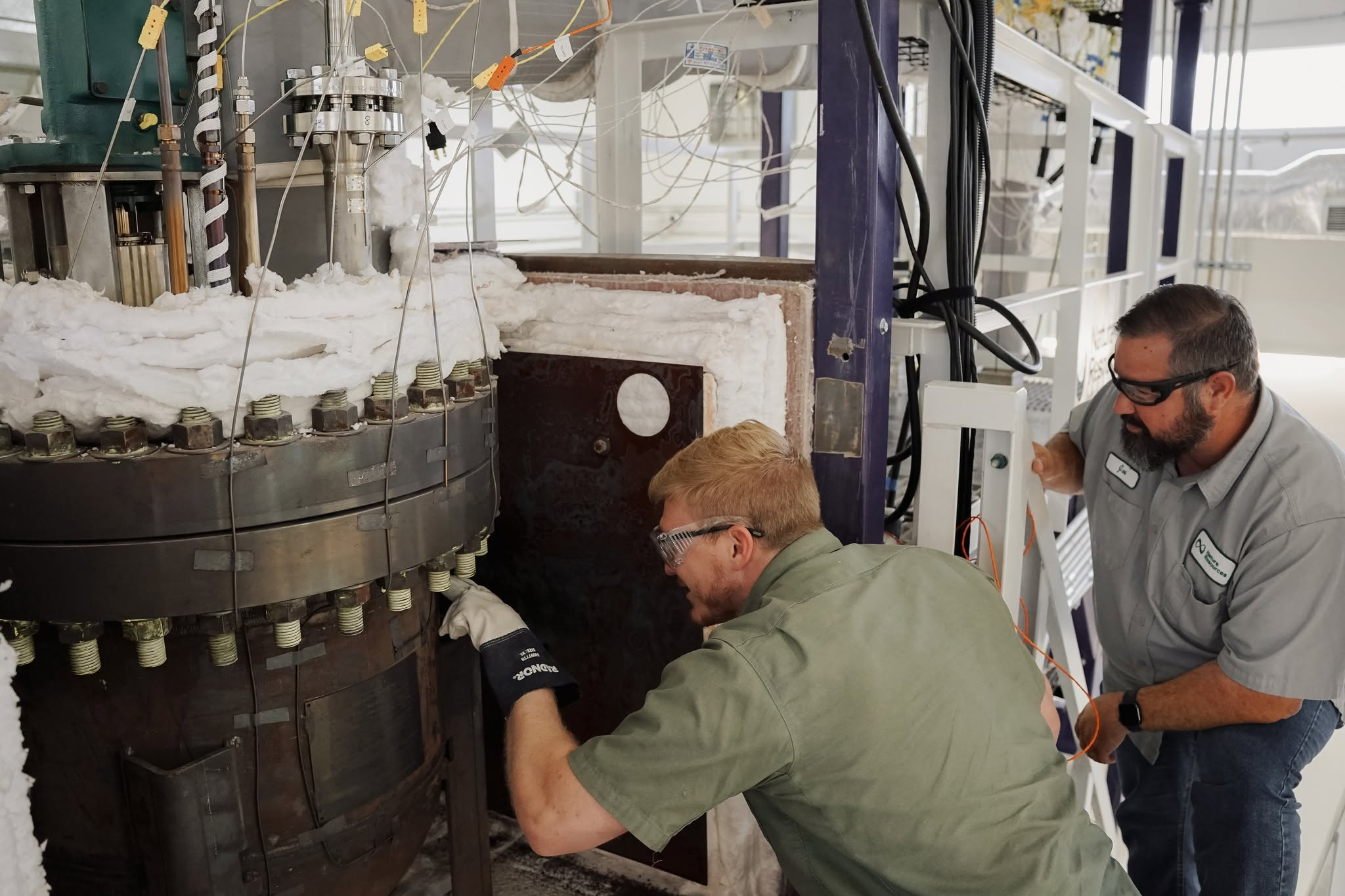 |
Two Natura Resources managers conduct a technical inspection of the reactor, May. Photo: Natura Resources |
This new technology is expected to enhance energy security, especially as super data centers consume vast amounts of electricity, driving up energy costs for both industry and households.
However, analysts suggest the Trump administration's engagement with this technology came too late for its stated ambition of "long-term dominance." Concerns also exist that focusing on unproven next-generation technology might hinder the US goal of quadrupling nuclear power capacity by 2050.
In fact, China initiated construction of the world's first molten salt reactor two years ago, also utilizing thorium, with completion anticipated by 2029. Some scientists estimate that Beijing possesses sufficient thorium reserves to meet its electricity needs for 20,000 years.
Bao Bao (according to Oil Price, Natura Resources)