On December 23, the US Department of Commerce announced that the nation's gross domestic product (GDP) grew by 4.3% in Q3, higher than Q2 and stronger than economists' forecasts. Despite the economy's fastest growth in the past two years, public sentiment remains subdued.
A two-week Gallup poll, released on December 22, indicated that most Americans are dissatisfied with the country's current situation and disapprove of top leaders in the White House and the Federal Reserve (Fed). President Donald Trump's approval rating in the final month of the year was only 36%.
Similarly, a Reuters/Ipsos poll, which concluded on December 14, showed that only 33% of Americans approved of Trump's handling of the economy, the lowest level this year. The president's approval rating regarding the cost of living dropped to 27%, from 31% earlier in the month.
According to CNN, indicators suggest that two seemingly contradictory trends can both be true. This means not everyone necessarily feels the economy is growing rapidly, as GDP may not fully reflect what is happening on the ground.
For instance, the main driver of Q3 GDP growth was consumption, but the report did not specify who was spending. Economists suggest that high-income households and large corporations were the primary contributors, benefiting from a booming stock market and high housing prices. Conversely, low- and middle-income families struggled with living costs and debt repayment.
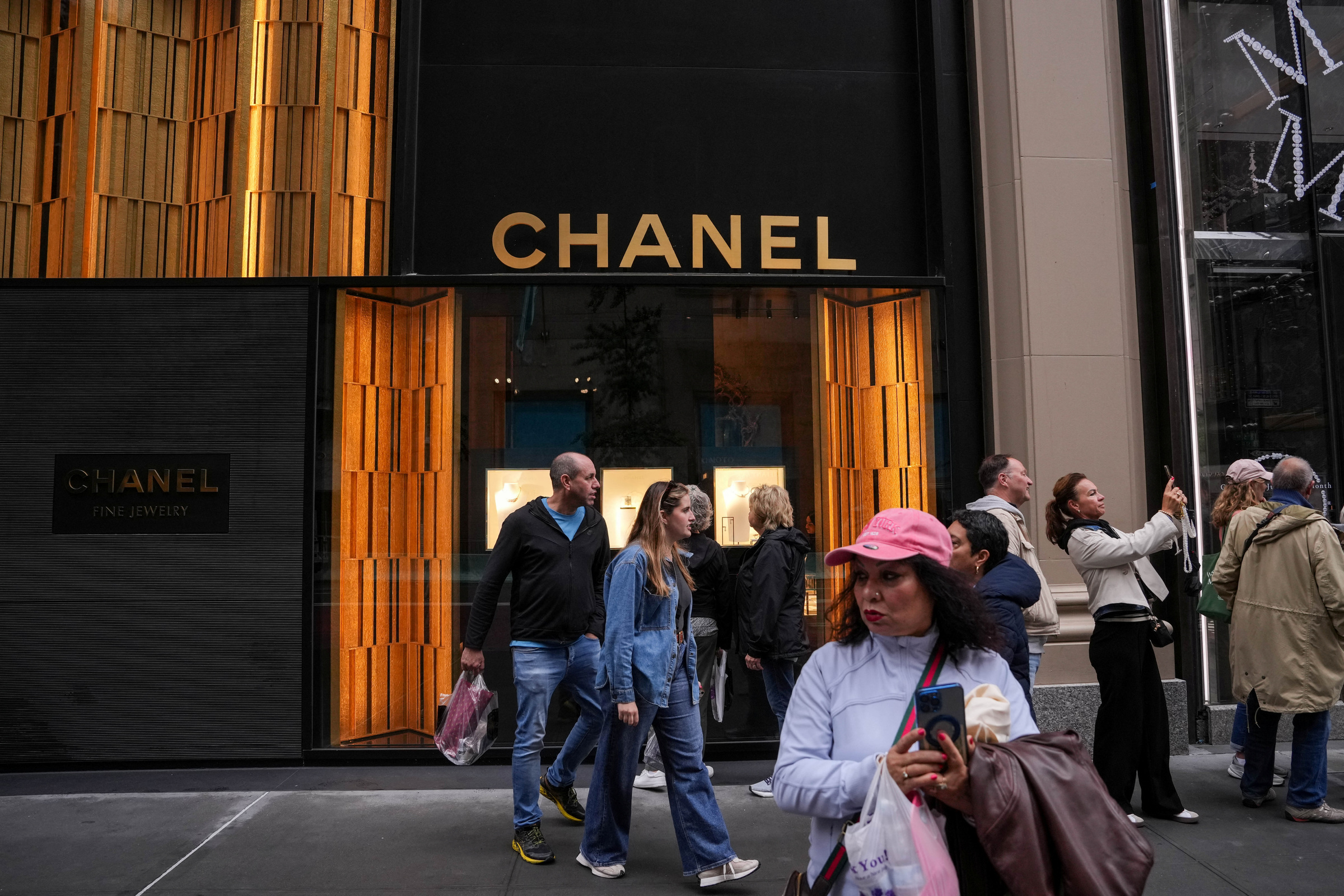 |
People walk past a Chanel store on 5th Avenue, New York, on May 23. Photo: Reuters
Similarly, large businesses possess sufficient resources to offset increased costs from import tariffs. In contrast, small businesses are merely struggling to survive, facing challenges due to a decline in cheap labor amidst stricter immigration policies.
James Knightley, International Chief Economist at ING bank (Netherlands), views this as an indication that the US economy is following a K-shaped recovery. Mike Reid, Senior US Economist at RBC Capital Markets, agrees, stating, "Retirees and the wealthiest 10% continue to drive growth."
Furthermore, strong GDP figures have not led to a hiring boom or stable prices. Mark Zandi, Chief Economist at Moody’s Analytics, pointed out that GDP is an abstract concept for many citizens. What they actually witness are escalating prices. "They see they now have to pay more for coffee, beef, electricity, childcare, and most everything else," he noted.
Inflation this year did not surge but remained at 2.7% in November, higher than the average 1.7% Americans experienced in the decade before Covid. Last month, electricity and gas prices increased by 7% and 9%, respectively. Ground beef prices jumped 15%, and consumers are spending more on car repairs (10%) and coffee (19%), according to the Bureau of Labor Statistics (BLS).
Incomes also increased but often not enough to keep pace with the cost of living. Data from Bank of America shows that wages only grew faster than prices in November for high-income households.
Moreover, Americans genuinely feel the economy is improving when they are not worried about jobs. However, a survey released by The Conference Board on December 23 revealed that the percentage of people believing there will be more jobs in the next six months has fallen to a four-year low.
Early in 2025, for the first time in four years, the number of job seekers exceeded the number of available jobs. Last month, the unemployment rate reached a four-year high of 4.6%, up from 4% in January, making citizens more pessimistic.
One reason for the slowdown in hiring is businesses' efforts to streamline their workforce through artificial intelligence. At the same time, Trump's erratic trade policy changes have paralyzed many companies. Due to uncertainty about future actions, they have paused hiring plans. Additionally, others cut staff to avoid passing tariff burdens onto consumers.
In summary, no matter how high the GDP, it cannot make Americans feel better about the economy. Stable income, greater certainty about the future, and improved employment are what will help them become optimistic, according to CNN.
Phien An (according to CNN, Reuters)