The Harvard Graduate Students Union (HGSU-UAW) staged a strike and protest last week against the Harvard University administration, demanding higher wages and improved working conditions.
The union represents approximately 3,900 graduate students who hold nearly 4,900 positions at Harvard, including teaching fellows, instructors of record, research assistants, and course assistants.
The students demand a minimum annual salary of 55,000 USD to afford living in Boston and Cambridge, where the estimated annual cost of living for one adult is 70,000 USD. They also seek an hourly wage increase from 21 USD to 25 USD.
"It is very difficult to live on the current income," stated Jaswal, a student earning approximately 26,000 USD annually.
Currently, Harvard pays research assistants over 40,000 USD, while teaching fellows receive 26,300 USD annually. In contrast, the Massachusetts Institute of Technology (MIT) and Stanford University pay approximately 60,300 USD and 58,500 USD, respectively.
Harvard University contends that these students are adequately compensated. In a statement last week, the university noted that approximately 60% of union members are doctoral students who already receive living expense stipends, tuition waivers, and full health insurance. The total value of these benefits is estimated at least 425,000 USD over 5 years.
The university administration proposed a 10% wage increase over 4 years for all salaried employees.
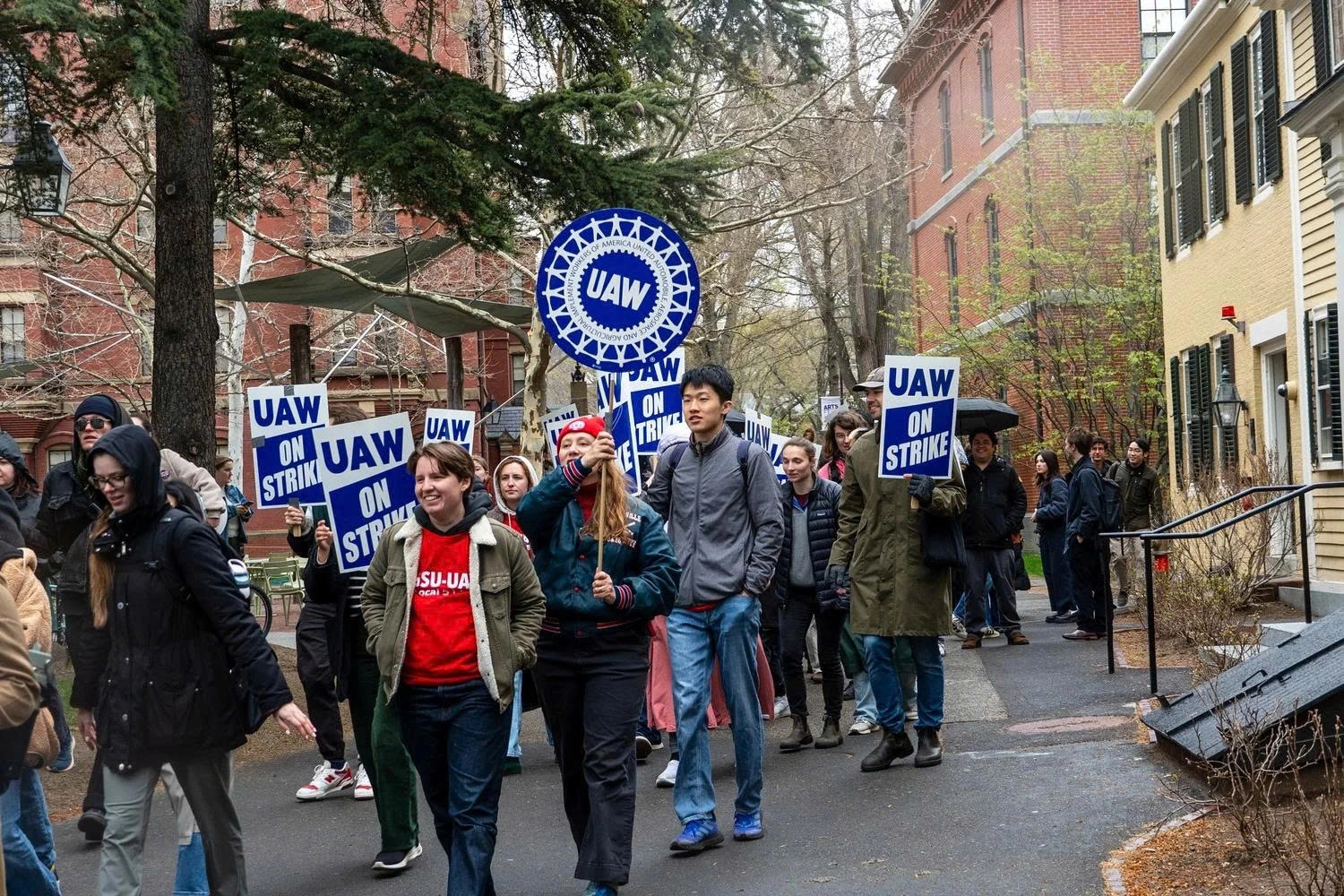 |
Graduate students protest at Harvard University, US. Photo: The Harvard Crimson |
The strike follows a failure by both parties to agree on a new contract. Over the past 14 months and 23 negotiation sessions, they have only reached agreement on workspace and leave time, with 23 other clauses remaining deadlocked.
Beyond financial concerns, the union also demands the right to representation in cases of workplace harassment, the establishment of an emergency fund for legal support, and paid leave for visa processing.
Teaching fellows initiated their strike during the final week of the spring semester, just before undergraduate students' May exam period. Some classes were canceled or moved online. Despite concerns, many undergraduates expressed support for the teaching fellows.
The next negotiation session between the parties is scheduled for 29/4.
A few weeks ago, many New York University faculty also protested low wages. They bear nearly one-third of the teaching workload but receive only 2% of the total payroll, amid record-high housing prices.
By Khanh Linh (According to Bloomberg, The Harvard Crimson, Harvard Independent)