New Oriental Education and Technology Group published a report last month on study abroad trends in China for 2026, based on a survey of over 6,900 students and parents.
The report states that the UK maintained its top position as the preferred destination for the seventh consecutive year. This is attributed to its stable education, flexible visa policies, and robust international student support system. Hong Kong, a special administrative region, ranked second, increasing its appeal due to geographical advantages, a safe environment, and linguistic similarities.
In contrast, the US dropped to third place for the first time, after years of ranking first during 2015-2019 and second during 2020-2025. The unstable policy environment in the US has made families more cautious about choosing it as a study destination.
Data from the OpenDoors report also indicates a decline in Chinese international students in the US. The number decreased from over 370,000 in the 2019/2020 academic year to 265,000 last year. The proportion of Chinese students among all international students also fell from 35% to 22%.
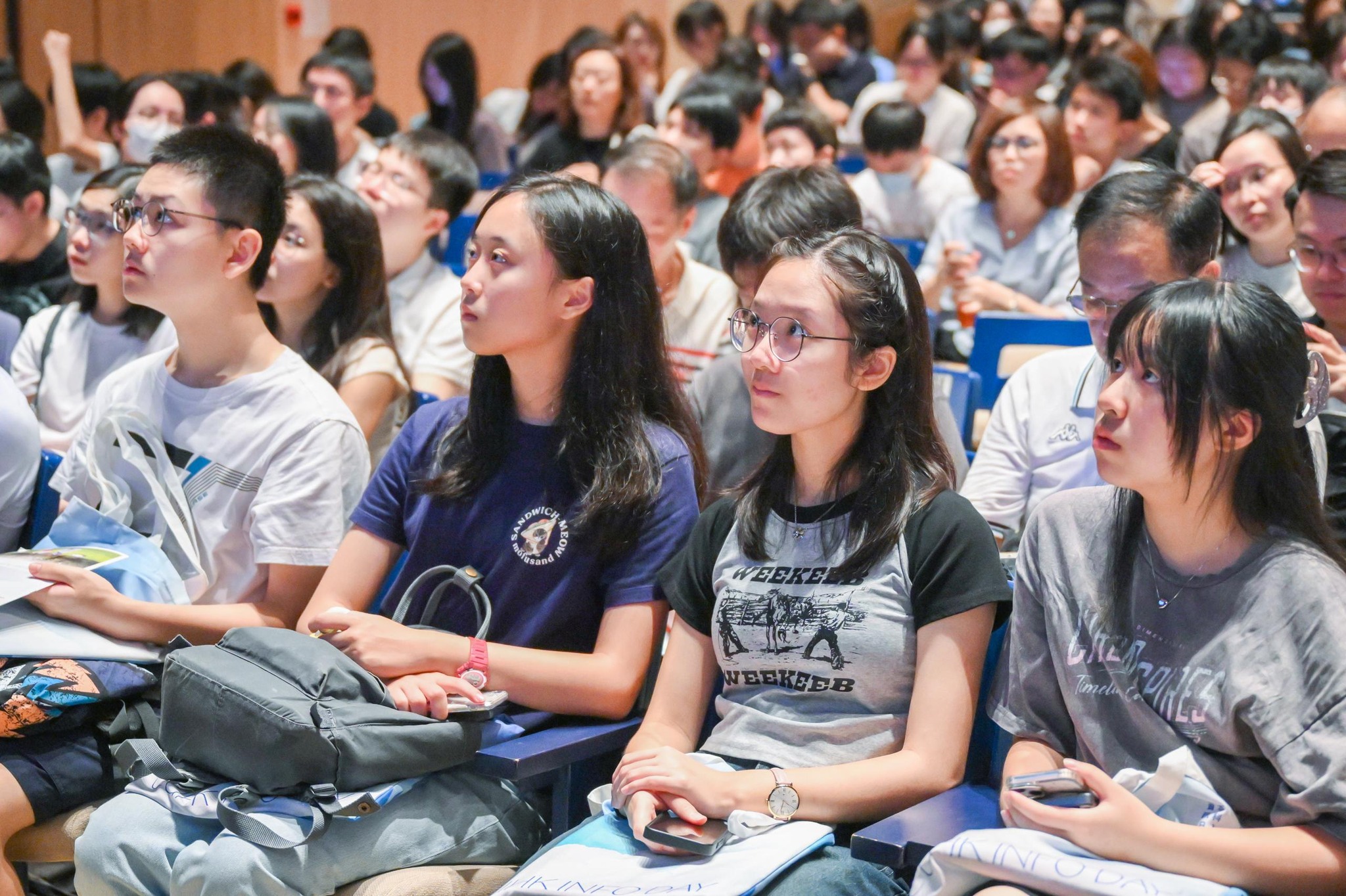 |
Students at The Chinese University of Hong Kong. Photo: The Chinese University of Hong Kong Fanpage |
The report also noted that due to global inflation, the average study abroad cost for Chinese students reached 605,000 CNY (approximately 87,800 USD) last year, the highest in 12 years. Consequently, tuition fees and scholarship policies are the second most important factors for these students to consider.
Many students' study abroad strategies are also more pragmatic. According to Charles Sun, founder of China Education International, families increasingly prioritize return on investment, safety, and career prospects over "chasing prestige".
Over half of respondents indicated plans to apply to two or three countries or territories simultaneously as a hedge against policy changes.
Regarding fields of study, engineering ranked first in popularity for the 10th consecutive time, accounting for 22% of all applications. This is due to strong employment prospects and widely recognized degrees.
Guo Yuqi, 24, a master's student in artificial intelligence at Lingnan University (Hong Kong), shared that having a residence permit in Hong Kong would provide her future children with better access to educational resources. In contrast, opportunities to stay and work in the UK or US are currently "nearly impossible" due to strict visa policies.
"I once considered going to the UK, but ultimately gave up because I felt spending 500,000 CNY on tuition without commensurate results wasn't worth it", she said.
Another student, Zhao Mengyuan, 23, chose to pursue a master's in business economics at Goethe University Frankfurt, Germany. Germany offers tuition-free education, with only a few hundred euros in administrative fees per semester. Her total annual living expenses are around 100,000 CNY, significantly lower than in English-speaking countries.
Zhao plans to return to China after graduation. She believes an international degree will provide a significant competitive advantage in the Chinese job market, even though she currently has no specific expectations for salary or career path.
China is one of the world's largest sources of international students, with significant numbers historically in the US, UK, and Australia. However, recent data from China's Ministry of Education shows that the number of students studying abroad dropped to a decade-low last year, totaling 570,000. Approximately nine out of 10 students return home after graduation.
Khanh Linh (According to China Daily, The Pie News)