


Ms. Hong, 49, a literature teacher and head of the youth union at Le Thi Bach Cat Secondary School in Cua Lo ward, has taught for over 23 years under a long-term contract. An award-winning teacher at the town level, she was appointed a core teacher by the Department of Education and Training but has never had the opportunity to secure a permanent position. With a monthly salary of 14.5 million VND, Ms. Hong carefully managed her finances to support her two children's education and her husband's medication, considering it "enough" to maintain their lives.
Difficulties arose in October 2025 when Nghe An province directly allocated permanent positions to schools. Groups previously contracted at the district level were no longer eligible for salaries from the state budget.
Ms. Hong has not received a salary since early this year, despite teaching two sessions daily.
"My competence is recognized, but I have no salary," she lamented.
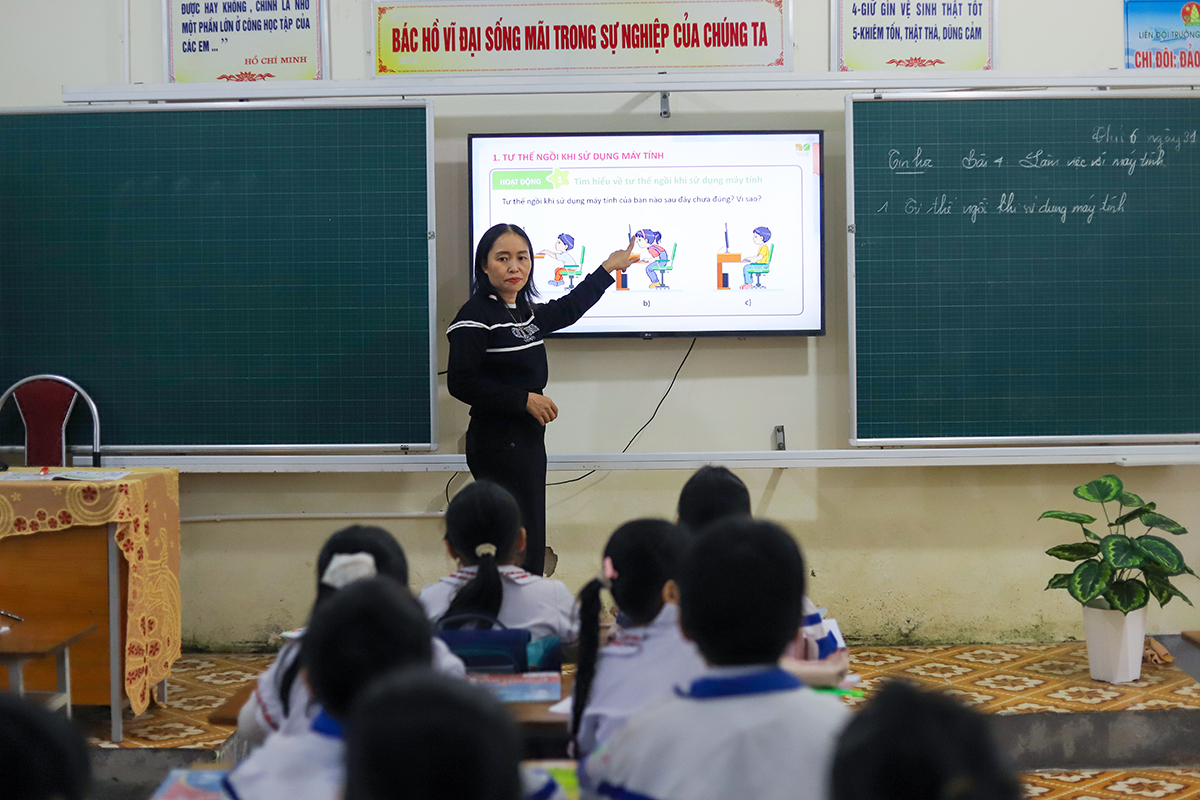 |
Teachers and students at Hung Loi Primary School, Lam Thanh commune, Nghe An province, October 2025. Photo: Duc Hung
For over four months, Ms. Hong's family expenses have relied on her husband's pension of over 7 million VND, supplemented by borrowing a few hundred thousand VND at a time from colleagues and relatives.
"I don't dare to borrow much, just enough to get by," she recounted.
Recently, rising fuel prices have slightly increased the cost of her nearly 20 km commute from home to school. To save money, Ms. Hong cooks her meals to bring along. Expenses such as her children's tuition and her husband's medication have gradually become a burden.
After nearly 22 years of work, Ms. Ha, a school nurse at Binh Minh Kindergarten in Cua Lo ward, earns about 9.8 million VND per month. Previously, she believed her long-term contract, signed by the former Chairman of Cua Lo town, guaranteed a stable job.
With her husband's income from driving for hire, Ms. Ha's family's total monthly income was about 15 million VND. Now, losing this primary source, the lives of her family of five are in turmoil. Ms. Ha must budget carefully and borrow every penny, as she also supports two older children attending university and a younger child in 6th grade.
"I'm spinning like a top," Ms. Ha said, her voice tired, explaining that she has to borrow small amounts, one to two million VND at a time, from friends to cover living expenses.
Despite their hardships, both women continue to work diligently. Ms. Hong teaches two sessions daily, also managing youth union duties, and stays up late preparing lessons. In the classroom, Ms. Hong tries to set aside her worries to maintain her teaching rhythm.
"I work with all my heart," she said, wiping away tears as she spoke of relatives advising her to quit teaching. Leaving the classroom after 23 years is something she has never considered.
Ms. Ha assists teachers with childcare in the morning, and in the afternoon, she handles other tasks, from medical duties to helping clean tables, chairs, and classrooms. At 46 years old, she sought additional work, such as washing dishes at restaurants, but was rejected. She considered taking out a small bank loan to start a business, but she remains stuck because she lacks stable income to prove her repayment ability.
A few days ago, Ms. Hong, Ms. Ha, and several colleagues visited the Nghe An Provincial People's Committee (UBND) to register for a meeting with the Chairman. They hope for a resolution regarding their unpaid salaries and clear answers about their job future.
"We need a satisfactory answer to know how to plan ahead," Ms. Ha said, adding that a meeting has been scheduled for the coming days.
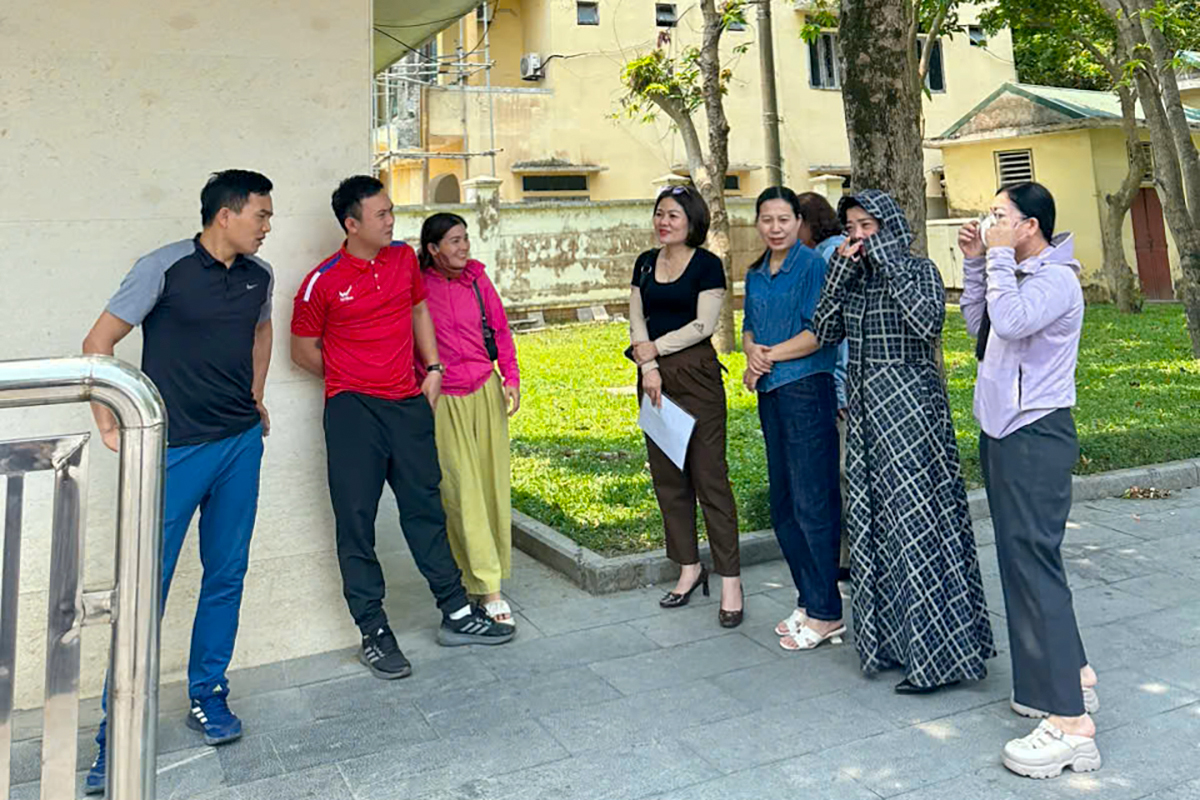 |
Contract teachers and staff arriving at Nghe An province's citizen reception office to register to meet the Chairman and present their requests, morning of 22/4. Photo: Hung Le
Nghe An province currently has 63 teachers and 148 contract staff, including school health personnel, library equipment managers, cashiers, and accountants. Many have worked for over 20 years, with some reaching up to 29 years. Ms. Hong and Ms. Ha are on long-term contracts and receive benefits similar to permanent staff. However, most other contract employees receive a grade one salary of about 5 million VND, and some only 85% of this amount. Due to a lack of quotas or failure to meet recruitment requirements for years, their lives and jobs remain precarious.
Leaders of the Department of Education and Training stated that the issue lies in the allocation mechanism. Salary payments must be linked to permanent staff quotas or assigned job positions, but there is currently no legal basis to allocate funds for contract teachers and staff.
"The money is available, but there is no mechanism to allocate it," the official said.
Authorities are reviewing the situation and reporting to the Provincial People's Committee to find a solution for the unpaid salaries. They are also advising on assigning annual contract quotas for schools. In the long term, qualified individuals will be considered for permanent positions when they become available.
Nghe An currently has over 46,000 teachers and education staff but faces a shortage of over 6,000 people at the preschool and general education levels.
Duc Hung
*Teacher's name has been changed.


